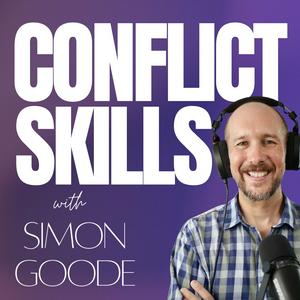
Would you like to feel more calm in the midst of conflict? In this episode of the Conflict Skills Podcast, host Simon Goode talks with mindfulness specialist and former mediator Charlotte Tharup about how mindfulness can support conflict resolution both in personal and workplace settings. Charlotte shares practical techniques for self-regulation during difficult conversations, emphasizing the importance of body awareness and kind curiosity towards uncomfortable emotions. We explore some of the neuroscience behind mindfulness and discuss strategies to cultivate calm, empathy, and constructive engagement amid conflict.
---------------------
CHARLOTTES WEBSITE:
https://themindfulnessclinic.com.au/
You can download a variety of resources as well as sign up to the newsletter.
---------------------
TIMESTAMPS:
00:00 "Mindfulness in Conflict Resolution"
05:41 Journey into Conflict Resolution
06:52 "Mindfulness for Leadership and Conflict"
10:01 "Alternatives to Violence Through Calm"
14:02 Awakening Through Mindful Awareness
19:31 "Mindfulness Through Kind Curiosity"
21:33 Managing Emotions in Conflict
25:50 "Awareness and Emotional Dynamics"
28:51 "Body Leads, Mind Follows"
32:49 Rushing Disrupts Awareness and Empathy
36:42 "Thanks and Stay Connected"
37:33 "Thanks and Goodbye"
---------------
INTRO REFLECTION:
Every thought is an afterthought.
As a human, at any one moment we have more sensory data coming in than we can manage efficiently. As a result, our brain selects what to prioritise.
Our perception acts as a filter, choosing which aspects of our incoming sensory data we become aware of.
Our brain effectively creates an internal model of our current outside world which we experience as 'reality'.
Before that awareness, our body reacts almost immediately to incoming sensory data. This reaction occurs before we become consciously aware (or think or feel anything).
Always retrospectively, our brain creates what seems to be a coherent 'story'. This includes thoughts and feelings, urges and whims, sensations and interpretations.
The brain (pre-frontal cortex) will literally 'lie' to itself to make sense of what is happening - it can only ever make a 'best guess' at predicting what is happening in our context and what we might need to do next.
What an unusual concept to grapple with - our brain lying to itself....
I suppose then, in a sense, so do we all.
By comparison, when we engage with mindfulness, we turn our attention to the texture and nuance of our experience in the moment.
Click here to send me a quick message via FanMail
Support the show
Thank you so much for listening! I'd love to know what you think and connect.
website: simongoode.com
email:
[email protected]













 Portugal