

Ouve este podcast gratuitamente na aplicação: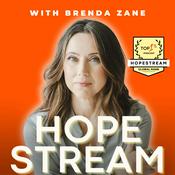 Descarrega gratuitamente na App Store
radio.pt
Sleeptimer
Guardar rádio
Hopestream: Parenting Kids Through Addiction & Mental Health
Brenda Zane
Último episódio
346 episódios
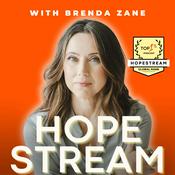
Kratom, 7-OH and Gas Station Drugs: What Every Parent Needs to Know, with Dean Francis
08/10/2026 | 51minABOUT THE EPISODE:
It's the green powder in the shaker bottle, the little blue shot by the register, the "herbal supplement" your kid bought for focus. If you've been quietly wondering whether kratom is something to worry about, drop everything and tune in.
Dean Francis's son Cameron was an elite college runner, closing in on a sub four-minute mile, when he found kratom online, sold as a plant-based boost for energy and focus. For a few months it did exactly what the marketing promised. Then his running slid, the anxiety showed up, and nobody in the family connected any of it to the powder he was shaking into his water bottle every day. It took an ER doctor in 2021 to say it plainly: this is an opioid, he’s addicted, and it's serious.
Dean got mad, and then he got busy. He founded End Kratom Addiction, and he showed up to this conversation with a mountain of knowledge (and a few products to hold up on camera, so the YouTube version is worth a watch). We talk about what kratom actually does in the body, the forms kids are buying it in, why the "safe natural leaf" story isn’t all it’s been touted as, and the Billion-dollar business keeping it on gas station shelves. He also gets honest about what treatment looked like for Cameron, and the gap in care that cost him more than anyone expected.
This is an educational episode, and it's also the wake-up call I think every parent needs, whether or not your child is struggling right now. What's sold at the corner store down the street may not be what you or your child thinks it is.
YOU'LL LEARN
What kratom turns into once it reaches the liver, and why that changes everything
The popular "energy shot" Dean held up that most parents would never look at twice
Why the "used safely for centuries in Southeast Asia" story should be taken with a grain of salt
The treatment mistake Dean wishes someone had warned his family about
How you can add your voice to the push to make kratom a controlled substance
EPISODE RESOURCES:
End Kratom Addiction website
Stop the Magicians campaign, petition, and End Kratom Addiction film
Dopesick series on Apple TV or Disney Plus
Kratomquitters.com
Free parent PDF: What Kratom Products Look Like
This podcast is part of a nonprofit called Hopestream Community
Learn about The Stream, our private online community for moms
Find us on Instagram here
Watch the podcast on YouTube here
Download a free e-book, Worried Sick: A Compassionate Guide For Parents When Your Teen or Young Adult Child Misuses Drugs and Alcohol
Hopestream Community is a registered 501(c)3 nonprofit organization and an Amazon Associate. We may make a small commission if you purchase from our links.The Surprising Power Of Non-Reactivity, with Cathy Cioth
01/10/2026 | 55minABOUT THE EPISODE:
The morning of our move, the pods were in the driveway, my dad had shown up ready to work, and my son was barely awake and in no shape to lift a box. Half an hour in, he asked if we were almost done. I felt the butterflies start up in my chest, and within seconds I was matching his drama word for word, with my dad standing right there taking it all in.
Cathy has her own version of that moment - and I’m sure you do as well. We can laugh about it now, but both of us spent years believing we were responding to our kids when we were really just adding fuel to their fire.
This episode is about non-reactivity, the piece of the Invitation to Change approach that I think quietly gets left behind while we focus on more concrete things like boundaries and natural consequences. Chaos needs two participants, so when you stop supplying your half, something shifts, and it has nothing to do with controlling your child.
Cathy and I talk about where reactivity shows up in your body before your brain catches up, why the rules every "good family" follows can pull you into the wrong fight, and what to do when the demands and gaslighting leave you wondering who the parent is in your house. We also talk about safety, because sometimes that pounding heart is telling you something real.
And we re-share a line from our friend Dina Cannizzaro that I think every parent should memorize. Put it on a sticky note, or your forearm, or bathroom mirror - it’s pure gold.
If your home has started to revolve around your child's moods and you’re tired of losing the same argument over and over, this one is for you.
YOU'LL LEARN:
What Cathy and I each finally did mid-blowup that changed the relationship dynamics
The early warning signs your body sends before you say something you regret
Why the small things you care about most can be the perfect distraction for your kid
Two questions to ask yourself when you feel triggered, and why one of them is about your safety
The powerful line Dina recommends to step away from a fight without walking away from your child
EPISODE RESOURCES:
Hopestream podcast episode 297 with Dina Cannizzaro
This podcast is part of a nonprofit called Hopestream Community
Learn about The Stream, our private online community for moms
Find us on Instagram here
Watch the podcast on YouTube here
Download a free e-book, Worried Sick: A Compassionate Guide For Parents When Your Teen or Young Adult Child Misuses Drugs and Alcohol
Hopestream Community is a registered 501(c)3 nonprofit organization and an Amazon Associate. We may make a small commission if you purchase from our links.What Recovery Looks Like For Parents, with Janice
24/09/2026 | 1hABOUT THE EPISODE:
If you’re parenting a young person struggling with substance and someone tells you that you need recovery too, it can land sideways since you're not the one using. You're just trying to hold everything together while your kid gets better. And you're already doing so much: the books, therapy, podcasts, late-night Googling.
Janice asked that question anyway. A member of The Stream and mom of two adult kids now in recovery, she used to be the one everyone called to get things done not for a hug. When she Googled what drugs her son was using, she chose to get educated instead of feeling sorry for herself. That education pointed straight back at her.
We talk about the two biggest shifts she had to make (one starts before you say a word), the small non-negotiable practices she keeps no matter what's happening with her kids, and a standoff over the air conditioning that taught her more than she expected plus the question she asks herself when her own recovery feels like walking away from her child.
It felt like the right way to close out Recovery Month, with the parent who so often gets left out of the conversation. If you've poured everything into your child's recovery and nothing into your own, this one's for you.
YOU'LL LEARN:
What "doing the work" meant for Janice, after months of research
The two biggest shifts she had to make and why one starts before a word is spoken
The small, unglamorous practices she keeps non-negotiable, no matter what
What a standoff over the air conditioning taught her about the rope she kept picking up
The question she asks when her own recovery feels like abandoning her child
EPISODE RESOURCES:
Beyond Addiction: How Science and Kindness Help People Change, by Jeffrey Foote, Carrie Wilkens, and Nicole Kosanke
Co-Dependency Isn't What You Think, with Rawly Glass, LCSW: Hopestream podcast episode 324
Hopestream Community free two-week trial of The Stream: https://hopestreamcommunity.org/try
Free e-book: Worried Sick by Brenda Zane: https://hopestreamcommunity.org/worried
This podcast is part of a nonprofit called Hopestream Community
Learn about The Stream, our private online community for moms
Find us on Instagram here
Watch the podcast on YouTube here
Download a free e-book, Worried Sick: A Compassionate Guide For Parents When Your Teen or Young Adult Child Misuses Drugs and Alcohol
Hopestream Community is a registered 501(c)3 nonprofit organization and an Amazon Associate. We may make a small commission if you purchase from our links.From Self-Harm to Healing: A Highly Sensitive Girl’s Path to Recovery, with Ciara Fanlo
17/09/2026 | 58minABOUT THE EPISODE:
You’ve heard some version of it: Leave me alone! I know what I am doing! You don't understand me!” Ciara Fanlo said all of that to her mother, but what her mom didn’t know was that those statements were hiding a plea…please help me.
Ciara was a sensitive kid in San Francisco, the kind who felt everything the world hurled at her at full volume before she had language or coping skills for it. Her parents divorced and she started self-harming by age ten, before she’d ever seen anyone else do it. She just knew she needed to displace the emotional pain she felt.
By high school she had been through therapists, medications, and a residential program. She came home on a contract and broke every rule on it in one afternoon, which ended with a wrecked car, police, and her mother angrier than she had ever seen. On the drive home they passed a church, and her mom pulled into the parking lot.
That stop at the church led to a life-changing wilderness therapy experience where she spent three months getting to know and love herself. One night in the wild of Colorado she looked up at the moon and felt something she had never felt in her life, and it changed what she thought was possible. Today she mentors teen girls through her practice, Homing Instinct.
This is a recovery story, and it is also the closest thing to a translation I can hand you. Ciara says out loud what our kids cannot, including one line about hope that will especially resonate if your child currently feels out of control and beyond reach.
If your child is pushing you away with both hands, this one is for you.
YOU'LL LEARN
The second message running underneath every angry "leave me alone," and why parents almost never hear it
What Ciara wanted an adult to say to her to felt heard vs. diagnosed
How she unraveled a home contract in a single afternoon, and her mom’s reaction
Why her mom got the worst of her, and why that was never about her mom
EPISODE RESOURCES:
Homing Instinct: https://www.hominginstinct.org/
Work with Ciara, start here for parents: https://www.hominginstinct.org/mentorship
Peer support groups: https://www.hominginstinct.org/peer-support-groups
Ciara's essays: https://www.hominginstinct.org/blog
Homing Instinct parent support group on Facebook: https://www.facebook.com/groups/hominginstinct
Ciara on Instagram: https://www.instagram.com/ciarafanlo
The Stream, free two-week trial: https://hopestreamcommunity.org/try
Worried Sick free ebook: https://hopestreamcommunity.org/worried
This podcast is part of a nonprofit called Hopestream Community
Learn about The Stream, our private online community for moms
Find us on Instagram here
Watch the podcast on YouTube here
Download a free e-book, Worried Sick: A Compassionate Guide For Parents When Your Teen or Young Adult Child Misuses Drugs and Alcohol
Hopestream Community is a registered 501(c)3 nonprofit organization and an Amazon Associate. We may make a small commission if you purchase from our links.Parents: You Change First, Then Them, with Brook McKenzie
10/09/2026 | 1h 11minABOUT THE EPISODE:
You might already know what needs to change - or at least that something definitely needs to change in the dynamic with your child. Underneath the crisis calls, the covered debts, the conversations you soften before you have them, there’s a quiet voice telling you, “this has to stop.” But how?
Brook McKenzie says that voice is right, and then says the harder part. You must go first.
Brook is a Licensed Chemical Dependency Counselor, the CEO of Burning Tree Programs, and a person in long-term recovery. He’s also the author of the field guide parents truly need, “You’re Waiting On You: Why Real Recovery Starts With You - Not Them.”
Brook didn’t find recovery until his thirties, and he’s clear about why. His parents loved him fiercely and did what most of us do. They softened the truth, absorbed the consequences, and kept the peace. He describes what that felt like from the inside, and it’s not what you might expect.
The moms in The Stream talked about Brook’s book for months before I finally read it, in an hour and a half, and emailed him that same day.
What lands here is that Brook does not perform sympathy. He highlights that the things that feel hardest are usually the effective ones, and the things that feel like relief are usually what keeps everyone stuck. He has his own word for what parents are doing when they rescue, and spoiler alert, it is not enabling. He also has an answer to the question that is in the back of every parent’s head, the one that starts with "but what if they die?"
I asked about the sixteen year old you still have to house and feed, and what belongs on the list of what you will and will not do. He answered both without flinching.
If you have been waiting for your child to be ready and change, this one might sting, and then it will help.
YOU'LL LEARN
Why Brook doesn’t use the word enabling, and the word he uses instead
The two things he says sit underneath every ineffective parenting decision, without exception
What he says to parents who tell him they will not put their child on the street
The one change in how you talk to your child that he has watched work in months, sometimes weeks
What you’re really telling your child when you fix their problems, clean up their mess and make decisions for them
The specific thing he wants you to bring to your next therapy session
EPISODE RESOURCES:
Brook McKenzie’s website
Get the book, “You’re Waiting On You, Why Real Recovery Starts With YOU, Not Them”
Burning Tree Ranch website
This podcast is part of a nonprofit called Hopestream Community
Learn about The Stream, our private online community for moms
Find us on Instagram here
Watch the podcast on YouTube here
Download a free e-book, Worried Sick: A Compassionate Guide For Parents When Your Teen or Young Adult Child Misuses Drugs and Alcohol
Hopestream Community is a registered 501(c)3 nonprofit organization and an Amazon Associate. We may make a small commission if you purchase from our links.
Mais podcasts de Crianças e família
 A Mensagem do PediatraCrianças e família
 ХРУМ или Сказочный ДетективCrianças e família, Histórias para crianças
 Reunião de PaisCrianças e família
 Conta-me uma História| Podcast para CriançasCrianças e família, Histórias para crianças
 Renascença - Só mais uma estóriaCrianças e família, Histórias para crianças
 Vou contar-te uma históriaCrianças e família, Histórias para crianças
 Любить нельзя воспитыватьCrianças e família, Pais e mães, Relacionamentos, Sociedade e cultura
 Bem Mais Que Uma HistóriaCrianças e família, Histórias para crianças
 Wow in the WorldCrianças e família, Educação para crianças
 Vitória, Vitória, Vem Aí Uma HistóriaCrianças e família, Histórias para crianças
Podcasts em tendência em Crianças e família
 Circle RoundCrianças e família, Histórias para crianças
 Smash Boom Best: A funny, smart debate show for kids and familyCrianças e família, Educação para crianças
 Family Feelings - mit Marie Nasemann und Sebastian TiggesCrianças e família, Pais e mães, Relacionamentos, Saúde e fitness, Saúde mental, Sociedade e cultura
- Любить нельзя воспитыватьCrianças e família, Pais e mães, Relacionamentos, Sociedade e cultura
 Good Inside with Dr. BeckyCrianças e família, Enriquecimento individual, Ensino, Pais e mães, Relacionamentos, Sociedade e cultura
 Boa Noite HistóriasCrianças e família, Histórias para crianças
 Raconte-moi une bêtiseComédia, Crianças e família, Histórias para crianças
 Super Great Kids' StoriesCrianças e família, Histórias para crianças
 Is It Normal? The Pregnancy Podcast With Jessie WareCrianças e família, Pais e mães, Saúde e fitness
 Storyland | Kids Stories and Bedtime Fairy Tales for ChildrenCrianças e família, Ficção, Histórias para crianças
 Let’s Read With Lyla and DadCrianças e família, Histórias para crianças
 A Mary Conta - Hora de DormirCrianças e família, Histórias para crianças
 Koala Sleep Sounds: For Babies & ToddlersCrianças e família, Pais e mães, Saúde e fitness
 В гостях у дядюшки ФилинаCrianças e família, Educação para crianças, Histórias para crianças
 Imagina Só - Histórias para CriançasCrianças e família, Educação para crianças, Histórias para crianças
 Koala Shine: The Greatest Kids StoriesCrianças e família, Histórias para crianças
 Super Simple Imagination Time With Caitie!Crianças e família, Educação para crianças
 Jossan & NinaCrianças e família, Negócios, Saúde e fitness
 Klasické pohádkyCrianças e família, Histórias para crianças
 Million BazillionCrianças e família, Notícias
 Koala Moon: Kids Bedtime Stories & Sleep Stories for Kids PodcastCrianças e família, Histórias para crianças
 Tigerenten Club – Die Hör-Spiel-ShowCrianças e família, Educação para crianças
 Deep Sleep SoundsCrianças e família, Saúde alternativa, Saúde e fitness, Saúde mental
Sobre Hopestream: Parenting Kids Through Addiction & Mental Health
When your teen or young adult is misusing drugs or alcohol, you need more than just tactics—you need hope, healing, and a path forward for your entire family.Hopestream delivers expert guidance and emotional support for parents navigating their child's substance use and mental health struggles. Hosted by Brenda Zane, Mayo Clinic Certified health coach and CRAFT-trained Parent Coach who nearly lost her son to addiction, this podcast goes beyond "how to get them into treatment" to address the full ecosystem of this journey.Episodes features:Leading addiction, prevention, and treatment expertsReal stories from families who've been thereEvidence-based strategies for helping your childSelf-care and coping tools for parentsDeeper conversations about finding meaning, joy, and even unexpected blessings through the hardest timesWhether you're dealing with a teen or young adult's drug use, alcohol misuse, or co-occurring mental health challenges, Hopestream offers the comprehensive support other parenting and addiction podcasts miss. This is your safe space to heal, learn, and discover you're not alone.New episodes weekly. Join us between the episodes at hopestreamcommunity.org.
Sítio Web de podcastOuve Hopestream: Parenting Kids Through Addiction & Mental Health, A Mensagem do Pediatra e muitos outros podcasts de todo o mundo com a aplicação radio.pt
Obtenha a aplicação gratuita radio.pt
- Guardar rádios e podcasts favoritos
- Transmissão via Wi-Fi ou Bluetooth
- Carplay & Android Audo compatìvel
- E ainda mais funções
Obtenha a aplicação gratuita radio.pt
- Guardar rádios e podcasts favoritos
- Transmissão via Wi-Fi ou Bluetooth
- Carplay & Android Audo compatìvel
- E ainda mais funções

Hopestream: Parenting Kids Through Addiction & Mental Health
Leia o código,
descarregue a aplicação,
ouça.
descarregue a aplicação,
ouça.
 Portugal