PodcastsHistóriaThe Art Bell Archive

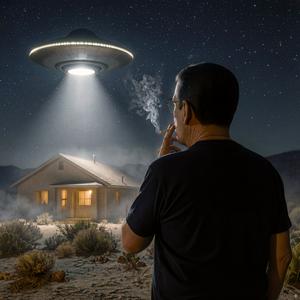
The Art Bell Archive

Arthur William Bell III
The Art Bell Archive

Último episódio

1670 episódios

  • The Art Bell Archive

    February 3, 2007: SETI Research - Seth Shostak

    03/03/2026 | 2h 35min
    Art Bell welcomes Seth Shostak, senior astronomer at the SETI Institute, for a wide-ranging conversation about the search for extraterrestrial intelligence and the scientific challenges of detecting alien civilizations. Shostak discusses the current state of SETI's efforts, including the optical search at Lick Observatory and the upcoming Allen Telescope Array set to begin scanning the center of the Milky Way in mid-2007.

    The two spar over interstellar travel feasibility, with Art raising points from nuclear physicist Stanton Friedman about energy requirements and trip profiles. Shostak acknowledges that fewer than a thousand star systems have been carefully examined so far, a tiny fraction of the hundreds of billions in our galaxy. He describes SETI's new telescopes and methods while maintaining his skepticism about current visitation claims. Art challenges him with recent UFO sightings from O'Hare Airport and North London, where dozens of witnesses reported silent objects hovering in formation.

    The first hour features open lines touching on the landmark UN climate change report, ExxonMobil's offer of $10,000 to scientists willing to critique its findings, the Bush administration's suppression of climate terminology, Edgar Cayce, and Art's visit to Bigelow Aerospace via helicopter.
  • The Art Bell Archive

    January 28, 2007: Flawed Mathematical Models - Orrin Pilkey

    02/03/2026 | 2h 36min
    Art Bell welcomes Dr. Orrin Pilkey, a Duke University professor of geology and expert on shoreline processes, to examine the reliability of mathematical models used to shape major public policy decisions. Pilkey argues that while models can reveal broad trends and general directions, society places far too much confidence in their precise numerical predictions, particularly when applied to complex natural systems.

    The discussion ranges from climate change modeling to the controversial decision to store nuclear waste at Yucca Mountain near Art's home in Pahrump. Pilkey considers climate models the most honest among those he studied, praising the UN panel's transparency about their limitations. However, he warns that specific projections for temperature increases and sea level rises should be taken with a large grain of salt. He also notes that the Bush administration exploits model uncertainties for political purposes while ignoring the overwhelming scientific consensus.

    The first hour features open lines covering the UFO flap at O'Hare Airport and beyond, mysterious ice blocks falling from clear skies in Florida, smoking cessation research involving the brain's insula region, and Art's personal update on his wife Airyn's pregnancy with their daughter Asia.
  • The Art Bell Archive

    January 27, 2007: Science Talk - Charles Seife

    01/03/2026 | 2h 35min
    Art Bell welcomes back science journalist Charles Seife for a wide-ranging second installment covering the origins of the universe, the nature of consciousness, and the future of genetic science. Seife discusses what scientists know about the Big Bang, explaining that while they can simulate conditions microseconds after creation using particle colliders, the actual moment of origin remains perhaps permanently beyond the reach of science.

    The conversation shifts to the possibility that our universe was spawned by a collider experiment in another reality, creating an infinite chain of universes giving birth to universes. Art and Seife explore whether human consciousness could someday be uploaded to silicon, with Seife explaining that quantum properties of the brain may prevent perfect copying due to the observer effect. He introduces quantum teleportation as a method that transfers quantum information perfectly but destroys the original in the process.

    The final hours tackle genetics, with Seife revealing that ancient retroviruses called HERVs hijacked human DNA long ago and still force our cells to produce their proteins. He and Art discuss the implications of discovering genes linked to sexual preference, the ethics of genetic modification, and his conviction that information, like energy, can never truly be destroyed.
  • The Art Bell Archive

    January 21, 2007: Approaching Catastrophes - John Jay Harper

    28/02/2026 | 2h 37min
    Art Bell speaks with retired electronics engineer and mental health counselor John Jay Harper about the approaching Solar Cycle 24 and its potential impact on climate, consciousness, and civilization. Harper, who spent 25 years working at top-secret Department of Defense facilities including the Naval Weapons Center at China Lake, draws on both his scientific background and his research into near-death experiences to paint a picture of converging threats.

    Harper explains that NASA scientist David Hathaway predicts Solar Cycle 24, expected to peak around 2010 to 2011, could be the most intense in 400 years of recorded observation. He connects historical solar flare activity to flu pandemics, citing the 1918 outbreak, and warns of cascading failures if a massive coronal mass ejection were to disable satellite infrastructure. The recent Chinese anti-satellite missile test adds urgency to his concerns about space-based vulnerabilities.

    The discussion expands into the Mayan calendar, galactic core explosions, and electromagnetic pole shifts. Harper presents his worst-case scenario of a multi-layered event coupling energy from the galactic core through the sun and into Earth, triggering undersea volcanic eruptions and catastrophic weather changes that could lead to mass starvation and migration.
  • The Art Bell Archive

    January 20, 2007: Parallel Universes and Quantum Science - Charles Seife

    27/02/2026 | 2h 35min
    Art Bell interviews science journalist and mathematician Charles Seife about the nature of information as a fundamental property of the universe. Seife explains how Claude Shannon's mid-20th century discovery of the laws of information created a third great scientific revolution, revealing that information behaves according to rules as strict as those governing thermodynamics and energy.

    The conversation takes a deep look at quantum entanglement, the phenomenon Einstein called "spooky action at a distance," where paired particles respond to each other instantaneously regardless of the distance between them. Seife explains why, despite this apparent faster-than-light connection, scientists have proven it impossible to send actual messages through entangled particles. He and Art discuss how information theory connects to Einstein's relativity and quantum mechanics, providing a unifying framework for understanding the cosmos.

    Art presses Seife on parallel universes, the origins of the Big Bang, and the possibility that our universe was created by a particle collider in another reality. Seife acknowledges that an intelligent designer cannot be ruled out by science and shares how physicist David Deutsch theorizes that quantum computers may one day tap computational resources from parallel universes.

Mais podcasts de História

Sobre The Art Bell Archive

The Ultimate Art Bell Collection in chronological order, with episodes added daily.
Sítio Web de podcast

Ouve The Art Bell Archive, The Rest Is History e muitos outros podcasts de todo o mundo com a aplicação radio.pt

Obtenha a aplicação gratuita radio.pt

  • Guardar rádios e podcasts favoritos
  • Transmissão via Wi-Fi ou Bluetooth
  • Carplay & Android Audo compatìvel
  • E ainda mais funções
Informação legal
Aplicações
Social
v8.7.2 | © 2007-2026 radio.de GmbH
Generated: 3/3/2026 - 8:40:06 AM