

Ouve este podcast gratuitamente na aplicação: Descarrega gratuitamente na App Store
radio.pt
Sleeptimer
Guardar rádio
176 episódios
Medical Training and the Movement to Unionize | Grant Lin, MD
29/09/2026 | 56minSometimes established physicians experience a strange kind of amnesia when thinking back on their training, causing them to forget just how challenging it was. Worse, some physicians do remember how hard those years were and feel that up-and-coming doctors should suffer the same difficulties they did. To accurately understand what it is like to become a doctor, it helps to talk to those fresh out of training and, of course, trainees themselves.
Our guest on this episode is Grant Lin, MD, a brand new clinical assistant professor in pediatric neurology at Stanford. Grant completed his fellowship in Palliative Care this summer after finishing residencies in pediatrics and child neurology. While in medical school and residency at Stanford, he became a leader in the successful movement to unionize the interns, residents, and fellows that make up Stanford Hospital’s house staff.
Over the course of this episode, Grant shares lessons learned from training in palliative medicine and caring for children with neurologic diseases. We discuss the turbulence of medical training, the difficulty of essentially changing jobs twelve times in a year as a medical student, and what led to the house staff unionization effort at Stanford. Finally, Grant encourages trainees to make their voices heard and for hospitals to care for their staff so the staff can care for their patients.
In this episode, you’ll hear about:
2:30 - Grant’s path to becoming a doctor and specializing in pediatric neuropalliative care
9:45 - The experience of taking care of children who are facing neurodegenerative illnesses
17:36 - How Grant’s approach to difficult patient conversations changed after palliative care training
21:38 - The turmoil of clinical rotations as a medical student
33:30 - Grant’s work leading the unionization effort at Stanford to advocate for better house staff working conditions
48:00 - Grant’s advice to house staff members who might find themselves struggling
If you enjoyed this episode, please subscribe, rate, and review our show, available for free on Spotify, Apple Podcasts, or wherever you get your podcasts. If you know of a doctor, patient, or anyone working in health care who would love to explore meaning in medicine with us on the show, feel free to leave a suggestion in the comments or send an email to info@thedoctorsart.com.
Copyright The Doctor’s Art Podcast 2026In, on, or out of the Loop: Doctors in the Age of AI | Ethan Goh, MD
22/09/2026 | 57minIt wasn’t that many years ago that self-driving cars were the stuff of science fiction. But in what feels like the blink of an eye, driver-less cars now roam the streets of a growing number of cities across the country. In fact, it’s not all that difficult to imagine a future in which the sheer risk of driving one’s own car is considered unethical. The trajectory of Artificial Intelligence in medicine may follow a similar arc. As AI becomes increasingly adept at diagnosing patients and recommending treatment plans, it’s not hard to imagine a day when it would be unethical for a doctor not to consult AI.
Our guest on this episode is Ethan Goh, MD, an internal medicine physician and executive director of ARISE — Harvard and Stanford’s research network focused on advancing the evaluation and deployment of AI in healthcare. In addition to his role at ARISE, Dr. Goh is the Program Director of Stanford’s Healthcare AI Leadership Program and a Visiting Faculty Researcher at Google. His extensive work has been published in Nature Medicine, Science, and JAMA, with media coverage in the New York Times, Washington Post, and CNN.
Over the course of this episode, Dr. Goh details the current capabilities of AI in the medical space, including the surprising finding that AI alone does better at diagnosing disease than doctors who are themselves using AI. We discuss the limitations of studies that compare AI to doctors in relatively noise-free tests and consider the importance of designing workflows that allow healthcare providers to work synergistically with AI. Finally, Dr. Goh reminds us that medicine isn’t just coming to the right answer, it is also about care, making the value of a person in the room who understands a patient’s disease as well as their humanity something that is not easily replaced.
In this episode of The Doctor’s Art:
3:10 - Dr. Goh’s professional journey to the intersection of medicine and AI
9:15 - An update on the status of AI in medicine
20:25 - How is it that AI does better at diagnosis than physicians who are using AI?
29:45 - If AI has become better at diagnosis than humans, why keep humans in the loop?
37:26 - Necessary changes in medical regulation, licensure, and liability to capitalize on AI in medicine
47:54 - Training new doctors in the age of AI
If you enjoyed this episode, please subscribe, rate, and review our show, available for free on Spotify, Apple Podcasts, or wherever you get your podcasts. If you know of a doctor, patient, or anyone working in health care who would love to explore meaning in medicine with us on the show, feel free to leave a suggestion in the comments or send an email to info@thedoctorsart.com.
Copyright The Doctor’s Art Podcast 2026Where Is God in This?: Grappling with a Child’s Cancer | Grant Romoser-Claunch
25/08/2026 | 1h 9minWhen a child tragically gets cancer, parents and families often find themselves grasping for ways to make sense of their new reality. It is one thing to know abstractly that we live in a world where the innocent suffer, but it is another thing entirely to suffer alongside your own child. Such a life-altering experience can raise heavy questions for parents, at times forcing them to reassess their most closely held narratives and cherished beliefs.
Our guest on this episode is Grant Romoser-Claunch. Grant is a Christian pastor at Newsong Fellowship in Illinois and a husband and a father. When his four-and-half month old son Simon was diagnosed with leukemia, Grant was confronted with the daunting question: Where is God in this? His 2025 book Bone of my Bone chronicles his journey with Simon and captures the spiritual challenges and growth he experienced along the way.
Over the course of our conversation, Grant shares Simon’s cancer story from diagnosis all the way to remission. We explore how Grant’s faith was challenged and re-formed while caring for Simon and reflect on how deeper learning often requires a preceding process of unlearning. Finally, Grant reminds medical professionals of their moral duty to wield the power of their position with love.
In this episode, you’ll hear about:
2:30 - Grant’s work as a pastor and the path that led him to his work
9:30 - The heart wrenching story of Grant’s son’s journey with leukemia
33:50 - How Grant’s experience with his son’s cancer challenged his faith and motivated him to write
41:50 - The ways in which Grant’s understanding of God transformed throughout his son’s journey
48:20 - How the concrete details of life can lead us to profound insights
1:00:30 - The impact of doctors who wield their power for their parents instead of over their patients
If you enjoyed this episode, please subscribe, rate, and review our show, available for free on Spotify, Apple Podcasts, or wherever you get your podcasts. If you know of a doctor, patient, or anyone working in health care who would love to explore meaning in medicine with us on the show, feel free to leave a suggestion in the comments or send an email to info@thedoctorsart.com.
Copyright The Doctor’s Art Podcast 2026Weight and See: The Ongoing GLP-1 Revolution | Marilyn Tan MD, FACE, FACP
07/07/2026 | 58minGLP-1s have taken the country by storm. Patients are losing and keeping off weight at levels previously only seen through bariatric surgery. Research trials have shown the drugs to be effective at reducing the risk of heart attack, stroke, and cardiovascular death. They protect the kidneys, reduce sleep apnea, and treat fatty liver and peripheral artery disease – all while being studied for a laundry-list of additional indications. The drugs originally designed for glucose control in diabetes are transforming lives — and raising big social questions.
Our guest on this episode is Dr. Marilyn Tan, clinical professor of medicine at Stanford University and chief of the Endocrine Clinic at Stanford Health Care. Dr. Tan focuses on diabetes management in both her clinical practice and research, and she is on the front lines of using GLP1-1s in patient care.
Over the course of our conversation, Dr. Tan provides a brief history of the development of GLP-1s and describes just how large a leap forward these medications are in weight management. We discuss the patient experience of being on GLP-1s for weight loss – and the stunningly wide array of other uses for the drug beyond weight loss and diabetes. Finally, we discuss the curious effect these medications seem to have on cravings beyond food, and reflect on the use of GLP-1s in the context of an addiction-saturated society.
In this episode, you’ll hear about:
2:37 - Dr. Tan’s path to endocrinology and her work in the field
7:45 - The challenges and rewards inherent in treating a disease like obesity or diabetes that is strongly affected by factors beyond the control of the patient but still requires behavioral interventions
15:45 - The landscape of obesity treatment prior to GLP-1s
22:45 - How GLP-1s function and how they differ from the drugs that came before them
28:10 - Common patient experiences and treatment courses with GLP-1s
35:30 - The growing evidence that GLP-1s can be effective in treating addiction, and the complexity of medicating individuals to address issues with systemic roots
49:00 - Improving your overall health while living a busy life
If you enjoyed this episode, please subscribe, rate, and review our show, available for free on Spotify, Apple Podcasts, or wherever you get your podcasts. If you know of a doctor, patient, or anyone working in health care who would love to explore meaning in medicine with us on the show, feel free to leave a suggestion in the comments or send an email to info@thedoctorsart.com.
Copyright The Doctor’s Art Podcast 2026Musical Rounds | Melanie Ambler
02/06/2026 | 1h 5minThe hospital can be a harsh backdrop to many of life’s most pivotal events. Alarms blare at inopportune times, rounding doctors intrude on delicate conversations, and vigilant nurses disrupt rare periods of rest. All the chaos can add to the stress of a patient’s hospital stay and create an emotionally discordant experience — seemingly out of step with the profound grief, joy, or intimacy one might expect to accompany the weighty moments that happen in the hospital. In the face of this challenging environment, what can be done to connect patients to the emotional threads of their lives — to invite meaning during these critical times? The answer, at least in part, may lie in music.
Our guest on this episode is Melanie Ambler, fourth-year medical student at Stanford and professional cellist. As an undergraduate at Brown, Melanie began researching the intersection of music and medicine. She then completed a Fulbright fellowship in France where her master’s work centered on the effect of music on patients with dementia. Once she got to Stanford, Melanie and her cello Shelby got to work bringing music to hospitalized patients. In 2024, she founded Musical Rounds – a music and storytelling project for patients in palliative care.
Over the course of our conversation, Melanie shares how her musical and medical journeys melded into one. We discuss the power of music to prompt reflection, draw out stories, and even transform the ugliness of the hospital into beauty. Best of all, Melanie plays for us live while sharing her early patient experiences that motivate her work at Musical Rounds — including the launch of her new Musical Rounds podcast.
In this episode, you’ll hear:
3:00 - How playing the cello became a central part of Melanie’s life
13:45 - Melanie play a piece that showcases the beauty of the cello
18:10 - How Melanie became interested in medicine
27:10 - How Melanie merged music and medicine in her research and in the hospital
46:00 - Reflections on the power of music in the lives of physicians
52:00 - How Melanie’s non-profit organization Musical Rounds is working to provide patients moments of reflection through music and storytelling
55:22 - A patient story that exemplifies the power of music at a patient’s bedside
If you enjoyed this episode, please subscribe, rate, and review our show, available for free on Spotify, Apple Podcasts, or wherever you get your podcasts. If you know of a doctor, patient, or anyone working in health care who would love to explore meaning in medicine with us on the show, feel free to leave a suggestion in the comments or send an email to info@thedoctorsart.com.
Copyright The Doctor’s Art Podcast 2026
Mais podcasts de Filosofia
 Pergunta SimplesCiência, Ciências Sociais, Comentários de notícias, Diários pessoais, Documentário, Enriquecimento individual, Ensino, Filosofia, Gestão, Negócios, Notícias, Sociedade e cultura
 Philosophize This!Ensino, Filosofia, Sociedade e cultura
 The Shawn Ryan ShowFilosofia, Sociedade e cultura
 The Gray Area with Sean IllingFilosofia, Notícias, Política, Sociedade e cultura
Podcasts em tendência em Filosofia
Sobre The Doctor's Art
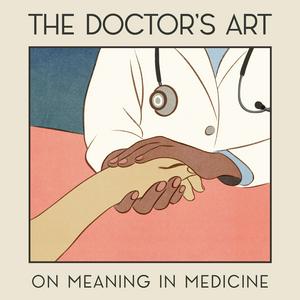
The practice of medicine–filled with moments of joy, suffering, grace, sorrow, and hope–offers a window into the human condition. Though serving as guides and companions to patients’ illness experiences is profoundly meaningful work, the busy nature of modern medicine can blind its own practitioners to the reasons they entered it in the first place. Join resident physician Henry Bair and oncologist Tyler Johnson as they meet with doctors, patients, leaders, educators, and others in healthcare, to explore stories on finding and nourishing meaning in medicine. This podcast is for anyone striving for a deeper connection with their medical journey. Visit TheDoctorsArt.com for more information.
Sítio Web de podcastOuve The Doctor's Art, The School of Life e muitos outros podcasts de todo o mundo com a aplicação radio.pt
Obtenha a aplicação gratuita radio.pt
- Guardar rádios e podcasts favoritos
- Transmissão via Wi-Fi ou Bluetooth
- Carplay & Android Audo compatìvel
- E ainda mais funções
Obtenha a aplicação gratuita radio.pt
- Guardar rádios e podcasts favoritos
- Transmissão via Wi-Fi ou Bluetooth
- Carplay & Android Audo compatìvel
- E ainda mais funções
The Doctor's Art
Leia o código,
descarregue a aplicação,
ouça.
descarregue a aplicação,
ouça.
 Portugal