PodcastsGestãoThe Idealcast with Gene Kim by IT Revolution

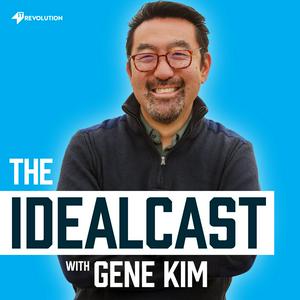
The Idealcast with Gene Kim by IT Revolution

Gene Kim
The Idealcast with Gene Kim by IT Revolution
Último episódio

25 episódios

  • The Idealcast with Gene Kim by IT Revolution

    Behind The State of DevOps Research, Favorite Aha Moments, and Where They Are Now: Interviews with The DevOps Handbook Coauthors (Part 2 of 2: Dr. Nicole Forsgren and Jez Humble)

    27/01/2022 | 1h 29min
    In part two of this two-part episode on The DevOpsHandbook, Second Edition, Gene Kim speaks with coauthors Dr. Nicole Forsgren and Jez Humble about the past and current state of DevOps. Forsgren and Humble share with Kim their DevOps aha moments and what has been the most interesting thing they’ve learned since the book was released in 2016.

    Jez discusses the architectural properties of the programming language PHP and what it has in common with ASP.NET. He also talks about the anguish he felt when Mike Nygard’s book, Release It!, was published while he was working on his book, Continuous Delivery.

    Forsgren talks about how it feels to see the findings from the State of DevOps research so widely used and cited within the technology community. She explains the importance of finding the link between technology performance and organizational performance as well as what she's learned about the importance of culture and how it can make or break an organization.

    Humble, Forsgren, and Kim each share their favorite case studies in The DevOps Handbook.


    ABOUT THE GUEST(S)

    Dr. Nicole Forsgren and Jez Humble are two of five coauthors of The DevOps Handbook along with Gene Kim, Patrick Debois and John Willis.

    Forsgren, PhD, is a Partner at Microsoft Research. She is coauthor of the Shingo Publication Award-winning book Accelerate: The Science of Lean Software and The DevOps Handbook, 2nd Ed., and is best known as lead investigator on the largest DevOps studies to date. She has been a successful entrepreneur (with an exit to Google), professor, performance engineer, and sysadmin. Her work has been published in several peer-reviewed journals.

    Humble is co-author of Lean Enterprise, the Jolt Award-winning Continuous Delivery, and The DevOps Handbook. He has spent his career tinkering with code, infrastructure, and product development in companies of varying sizes across three continents, most recently working for the US Federal Government at 18F. As well as serving as DORA’s CTO, Jez teaches at UC Berkeley.


    YOU’LL LEARN ABOUT

    Projects Jez and Gene worked on together before The DevOps Handbook came out.

    What life is like for Jez as a site reliability engineer at Google and what he’s learned.

    The story behind his DevOps aha moment in 2004, working on a large software project involving 70 developers.

    The architectural properties of his favorite programming language PHP, what it has in common with ASP.NET, and the importance of being able to get fast feedback while building something.

    The anguish that Jez felt when Mike Nygard’s book, Release It!, came out, wondering if there was still a need for the book he was working on, which was Continuous Delivery.

    “Testing on the Toilet” and other structures for creating distributed learning across an organization and why this is important to create a genuine learning dynamic.

    What Dr. Forsgren is working on now as Partner of Microsoft Research.

    Some of Dr. Forsgren’s goals as we work together on the State of DevOps research and how it feel to have those findings so widely used and cited within the technology community.

    The importance of finding the link between technology performance and organizational performance and why it probably was so elusive for at least 40 years in the research community.

    What Dr. Forsgren has learned about the importance of culture, how it can make or break an organization, and the importance of great leadership.


    RESOURCES

    Personal DevOps Aha Moments, the Rise of Infrastructure, and the DevOps Enterprise Scenius: Interviews with The DevOps Handbook Coauthors (Part 1 of 2: Patrick Debois and John Willis)

    The DevOps Handbook: How to Create World-Class Agility, Reliability, and Security in Technology Organizations, Second Edition, by Gene Kim, Patrick Debois, John Willis, Jez Humble, and Dr. Nicole Forsgren

    Nudge: Improving Decisions About Health, Wealth, and Happiness by Richard H. Thaler and Cass R. Sunstein

    Nudge vs Shove: A Conversation With Richard Thaler

    The Visible Ops Handbook: Implementing ITIL in 4 Practical and Auditable Steps by Kevin Behr, Gene Kim and George Spafford

    FlowCon

    Elisabeth Hendrickson on the Idealcast: Part 1, Part 2

    Cloud Run

    Beyond Goldilocks Reliability by Narayan Desai, Google

    Continuous Delivery: Reliable Software Releases through Build, Test, and Deployment Automation by Jez Humble and David Farley

    Release It!: Design and Deploy Production-Ready Software (Pragmatic Programmers) by Michael T. Nygard

    DevOps Days

    On the Care and Feeding of Feedback Cycles by Elisabeth Hendrickson at FlowCon San Francisco 2013

    Bret Victor

    Inventing on Principle by Bret Victor

    Media for Thinking the Unthinkable

    Douglas Engelbart and The Mother of All Demos

    18F

    Pain Is Over, If You Want It at DevOps Enterprise Summit - San Francisco 2015

    Goto Fail, Heartbleed, and Unit Testing Culture by Mike Bland

    Do Developers Discover New Tools On The Toilet? by Emerson Murphy-Hill, Edward Smith, Caitlin Sadowski, Ciera Jaspan, Collin Winter, Matthew Jorde, Andrea Knight, Andrew Trenk and Steve Gross PDF

    Study: DevOps Can Create Competitive Advantage

    DevOps Means Business by Nicole Forsgren Velasquez, Jez Humble, Nigel Kersten and Gene Kim

    Accelerate: The Science of Lean Software and DevOps: Building and Scaling High Performing Technology Organizations by Nicole Forsgren, PhD, Jez Humble, and Gene Kim

    DevOps Research and Assessment (DORA) on Google Cloud

    GitLab Inc. takes The DevOps Platform public

    Paul Strassmann

    The Idealcast with Dr. Ron Westrum: Part 1, Part 2

    Building the Circle of Faith: How Corporate Culture Builds Trust at Trajectory Conference 2021

    The Truth About Burnout: How Organizations Cause Personal Stress and What to Do About It by Christina Maslach and Michael P. Leiter

    Maslach Burnout Inventory

    Understanding Job Burnout at DevOps Enterprise Summit - Las Vegas 2018

    Understanding Job Burnout at DevOps Enterprise Summit - London 2019

    Workplace Engagement Panel at DevOps Enterprise Summit - Las Vegas 2019

    Expert Panel - Workplace Engagement & Countering Employee Burnout at DevOps Enterprise Summit - London 2019

    The Idealcast with Trent Green

    Kelly Shortridge’s tweets about Gitlab S-1


    TIMESTAMPS

    [05:22] Intro

    [05:34] Meet Jez Humble

    [10:19] What Jez is working on these days

    [15:56] What inform his book, “Continuous Delivery”

    [24:02] Assembling the team for the project

    [26:30] At what point was PHP an important property

    [31:56] The most surprising thing since the DevOps Handbook came out

    [35:07] His favorite pattern that went into the DevOps Handbook

    [43:40] What DevOps worked on in 2021

    [44:46] Meet Dr. Nicole Forsgren

    [50:32] What Dr. Forsgren is working on these days

    [52:18] What it’s like working at Microsoft Research

    [55:58] The response to the state of DevOps findings

    [59:18] The most surprising finding since the findings release

    [1:05:59] Her favorite pattern that influence performance

    [1:08:49] How Dr. Forsgren met Dr. Ron Westrum

    [1:11:06] The most important thing she’s learned in this journey

    [1:14:46] Her favorite case study in the DevOps Handbook

    [1:19:12] Dr. Christina Maslach and work burnout

    [1:20:46] More context about the case studies

    [1:25:32] The Navy case study

    [1:29:04] Outro
  • The Idealcast with Gene Kim by IT Revolution

    Personal DevOps Aha Moments, the Rise of Infrastructure, and the DevOps Enterprise Scenius: Interviews with The DevOps Handbook Coauthors (Part 1 of 2: Patrick Debois and John Willis)

    16/12/2021 | 2h 19min
    In part one of this two-part episode on The DevOpsHandbook, Second Edition, Gene Kim speaks with coauthors Patrick Debois and John Willis about the past, present, and future of DevOps. By sharing their personal stories and experiences, Kim, Debois, and Willis discuss the scenius that inspired the book, and why and how the DevOps movement took hold around the world.


    They also examine the updated content in the book, including new case studies, updated metrics, and practices. Finally, they each share the new lessons they have learned since writing the handbook and the future challenges they think DevOps professionals need to solve for the future.

    Kim will conclude the series in Part 2, where he interviews the remaining two coauthors, Jez Humble and Dr. Nicole Forsgren. 


    ABOUT THE GUEST(S)

    Patrick Debois is considered to be the godfather of the DevOps movement after he coined the term DevOps accidentally in 2008. Through his work, he creates synergies projects and operations by using Agile techniques in development, project management, and system administration. He has worked in several companies such as Atlassian, Zender, and VRT Media Lab. Currently, he is a Labs Researcher at Synk and an independent IT consultant.


    John Willis an author and Senior Director of the Global Transformation Office at Red Hat.. He has been an active force in the IT management industry for over 35 years. Willis’ experience includes being the Director of Ecosystem Development at Docker, the VP of Solutions for Socketplane, the VP of Training and Services at Opscode. He also founded Gulf Breeze Software, an award-winning IBM business partner, which specializes in deploying Tivoli technology for the enterprise. 


    Patrick DeBois and John Willis are two of five coauthors of The DevOps Handbook along with Gene Kim, Jez Humble, and Nicole Forsgren, PhD.


    YOU’LL LEARN ABOUT

    The DevOps origin story from coining the term, why it took off, to launching the DevOps Days conference as an offshoot of the velocity conference. 

    How people thought of DevOps when it was first presented (their reactions, their mentalities, and their willingness to adopt it).  

    What has changed in the DevOps world since the first edition of The DevOps Handbook was published.

    How the rise of SaaS companies is altering the DevOps world and participating in its evolution, and how building solid relationships with SaaS vendors and communicating comprehensive feedback to them is integral to DevOps. 

    The significance of speed in changing team dynamics.

    Why resilient companies like Google and Amazon engineer chaos, and why companies like Toyota are happy when production stoppages happen.  

    Why you can’t afford to provide a high variety of products if you also offer high product variation.


    RESOURCES

    Get The DevOps Handbook (Second Edition)

    Nudge vs Shove: A Conversation With Richard Thaler

    Solaris Zones wiki

    Agile Conference in Toronto 2008

    Sys Advent article: In Defense of the Modern Day JVM (Java Virtual Machine) by Gene Kim

    Mob programming

    Breaking Traditional IT Paradigms to... (San Francisco 2015)

    Crowdsourcing Technology Governance (Las Vegas 2018)

    Laying Down the Tracks for Technical Change at Comcast (Las Vegas 2020)

    10+ Deploys Per Day by John Allspaw and Paul Hammond

    10+ Deploys Per Day 

    How chaos engineering works at Vanguard

    Patrick DeBois tweet mapping out all the failure modes of an online conference. 

    Jesse Robins LinkedIn 

    Jesse Robbins on Twitter

    How A Hotel Company Ran $30B of Revenue In Containers (Las Vegas 2020) by Dwayne Holmes

    Google Cloud Certified Fellow Program 

    Operations is a competitive advantage… (Secret Sauce for Startups!)

    Love Letter To Conferences (And What Makes Some Truly Amazing) by Gene Kim

    Toyota Kata: Managing People for Improvement, Adaptiveness and Superior Results by Mike Rother

    Profound podcast by John Willis

    Ben Rockwood on Twitter

    Luke Kanies on LinkedIn

    DevOps 2020 - The Next Decade (London 2020)

    Beyond the Phoenix Project: The Origins and Evolution of DevOps by Gene Kim and John Willis

    The Goal: A Process of Ongoing Improvement by Eliyahu M. Goldratt and Jeff Cox

    The Convergence Of DevOps

    Operations as a Strategic Weapon by John Willis

    Iterative Enterprise SRE Transformation (US 2021)


    TIMESTAMPS

    [00:00] Intro 

    [01:18] What’s new and improved in the second edition of the DevOps handbook 

    [03:56] Meet Patrick DeBois

    [10:35] How faster technology made ideas like DevOps possible

    [18:11] The myths and inefficiencies of team autonomy

    [20:04] What the first DevOps days were like

    [27:59] Different opinions between the dev community and ops community

    [30:49] Mob programming and the future of collaboration

    [39:31] Two surprising things Patrick learned about DevOps

    [47:20] Patrick DeBois’ favorite DevOps patterns 

    [51:28] How fear of not delivering on time can mask technical errors

    [59:45] What Patrick DeBois is working on these days

    [1:04:38] What was expanded in the second edition of the DevOps handbook

    [1:06:30] How Gene Kim entered the DevOps world. 

    [1:07:38] Meet John Willis

    [1:10:42] Why the DevOps movement took off

    [1:16:00] Mastering production disasters

    [1:23:32] The birth of the DevOps Days conference

    [1:37:37] Feelings of belonging and connection in a conference

    [1:41:29] A few clarifications

    [1:49:32] Two of the greatest DevOps open spaces

    [1:52:40] The difference between variety and variation (the cost of knowledge work). 

    [2:07:12] Why you should want more stoppages in your production line

    [2:10:16] John Willis’ two favorite DevOps case studies

    [2:18:55] Outro
  • The Idealcast with Gene Kim by IT Revolution

    Simplifying The Inventory Management Systems at the World’s Largest Retailer Using Functional Programming Principles with Scott Havens

    23/09/2021 | 2h 3min
    In this episode of The Idealcast, Gene Kim speaks with Scott Havens, who is the Director of Engineering at Wayfair, where he leads Engineering for the Wayfair Fulfillment Network. Havens is a leading proponent of applying functional programming principles to technical and organizational design. Previously, Havens was the architect for Walmart's global omnichannel inventory system, unifying availability and replenishment for the largest company in the world by revenue.

    Havens shares his views on what makes great architecture great. He details what happened when an API call required 23 other synchronous procedures calls to return a correct answer. He discusses the challenges of managing inventory at Wal-Mart, how one implements event sourcing patterns on that scale, and the functional programming principles that it depends upon. Lastly, he talks about how much category theory you need to know to do functional programming and considerations when creating code in complex systems.

    Before listening to this interview, please listen to Episode 22, which provides Scott Havens's  2019 DevOps Enterprise Summit talk with commentary from Gene Kim.


    ABOUT THE GUEST(S)

    Scott Havens is a Director of Engineering at Wayfair, where he leads Engineering for the Wayfair Fulfillment Network. Scott cares deeply about scalable data-intensive software systems; he is a leading proponent of applying functional programming principles to technical and organizational design. Previously, Havens was a Director of Engineering at Jet.com and was the architect for Walmart's global omnichannel inventory system, unifying availability and replenishment for the largest company in the world by revenue.

    In his home life, Havens enjoys good food, good wine, bad movies, and asking his daughter to stop "redecorating" his Minecraft castles, pretty please.

    LinkedIn: https://www.linkedin.com/in/scott-havens/

    Twitter: @ScottHavens

    Email: [email protected]


    YOU’LL LEARN ABOUT

    His views on what makes great architectures great

    The details on what happened when an API call requires 23 other synchronous procedures calls to return a correct answer

    How one implements event sourcing patterns on a large scale, using Wal-Mart as an example, and the functional programming principles it depends upon

    The challenges of managing inventory at Wal-Mart

    How much category theory to know to do functional programming


    RESOURCES

    Currying

    Function composition (computer science)

    Idempotence

    Love Letter To Clojure: And A Datomic Experience Report - Gene Kim

    Side effect (computer science)

    Functional Geekery Episode 129 – Eric Normand

    Theory of Functional Programming skill

    Ruby Conf 12 - Boundaries by Gary Bernhardt

    Functional Design in Clojure Podcast - Ep 021: Mutate the Internet

    Lean Summit 2013 - Art Byrne - What does it take to Lead a Lean Turnaround?

    Thoughts On Functional Programming Podcast - 3 Examples Of Algebraic Thinking

    CORECURSIVE #050 - Portal Abstractions with Sam Ritchie: How abstract algebra solves data engineering

    Adam Grant’s tweet about coding


    TIMESTAMPS

    [00:24] Intro

    [02:23] Meet Scott Havens

    [03:48] How architecture fits in functional programming

    [04:48] Event source systems at Wal-Mart 

    [19:45] The effects and behaviors

    [22:36] Duality of code and data

    [26:13] Currying

    [32:34] How the 23 service teams’s world change

    [40:56] Hallmarks of great architecture

    [51:10] How he replaced the dominant architecture at Wal-Mart

    [56:46] Configurations and speculations with couplings

    [1:03:51] How can simple systems suffer from problems like this

    [1:09:11] Idempotence, Clojure and side effect

    [1:17:01] Issues with switching to event-driven asynchronous architectures

    [1:25:15] Vast scale in which these organizations operate in

    [1:29:54] A moment that showed Scott the effects of what he helped create

    [1:33:51] Onboarding new engineers to the new system

    [1:45:11] Working in the Windows 3.1 multicast networking group

    [1:47:32] Reflection on Moda Operandi experience

    [1:52:11] Advice to someone who wants to replicate Scott’s journey

    [1:56:17] What to understand about category theory and algebraic thinking

    [2:01:11] How to contact Scott

    [2:02:48] Outro
  • The Idealcast with Gene Kim by IT Revolution

    (Dispatch from the Scenius) Fabulous Fortunes, Fewer Failures, and Faster Fixes from Functional Fundamentals: Scott Havens’ 2019 DevOps Enterprise Summit Talk with Commentary from Gene Kim

    22/09/2021 | 38min
    In this episode of The Idealcast, Gene Kim shares and gives commentary on Scott Havens’ talk from the 2019 DevOps Enterprise Summit Las Vegas. Havens is a Director of Engineering at Wayfair, where he leads Engineering for the Wayfair Fulfillment Network. He is a leading proponent of applying functional programming principles to technical and organizational design. Previously, Scott was the architect for Walmart's global omnichannel inventory system, unifying availability and replenishment for the largest company in the world by revenue.

    In his 2019 DevOps Enterprise Summit talk, Havens highlights functional programming and e-commerce systems work. He also talks about what he did to massively simplify those systems while also making them more testable, reliable, cheaper to operate, and easier to change. Finally, he discusses the implications of using functional programming to change how to design systems and systems of systems on a larger scale.


    ABOUT THE GUEST

    Scott Havens is Director of Engineering at Wayfair, where he leads Engineering for the Wayfair Fulfillment Network. Scott cares deeply about scalable data-intensive software systems. He is a leading proponent of applying functional programming principles to technical and organizational design. Previously, Scott was Director of Engineering at Jet.com and was the architect for Walmart’s global omnichannel inventory system, unifying availability and replenishment for the largest company in the world by revenue.

    In his home life, Scott enjoys good food, good wine, bad movies, and asking his daughter to stop “redecorating” his Minecraft castles, pretty please.


    LinkedIn: https://www.linkedin.com/in/scott-havens/

    Twitter: @ScottHavens

    Email: [email protected]


    YOU’LL LEARN ABOUT

    Functional programming and what it is.

    How e-commerce systems work.

    What Havens did to massively simplify those systems while also making them more testable, reliable, cheaper to operate, and easier to change.

    The implications of using functional programming to change how to design systems and systems of systems on a larger scale.


    RESOURCES

    Fabulous Fortunes, Fewer Failures, and Faster Fixes from Functional Fundamentals: Scott Havens’ 2019 DevOps Enterprise Summit Talk 

    Slidedeck for the Havens’ 2019 DOES talk

    Clojure

    Pass by reference (C++ only)

    John Carmack

    John Carmack Keynote - Quakecon 2013

    Panther Systems


    TIMESTAMPS

    [00:24] Intro

    [02:52] Functional programming

    [07:59] Gene introduces Scott

    [09:13] Working at Wal-Mart

    [11:13] Disaster struck

    [14:10] One common piece of e-commerce website functionality

    [17:07] The implications of functional programming for system design

    [21:05] Changing how to design systems and systems of systems

    [28:55] Using Panther

    [33:11] How this affects the hot path and cost

    [36:43] One bite a time

    [37:52] Contacting Scott

    [38:13] Outro
  • The Idealcast with Gene Kim by IT Revolution

    Open Source Software as a Triumph of Information Hiding, Modularity, and Creating Optionality with Dr. Gail Murphy

    02/09/2021 | 2h 11min
    In this newest episode of The Idealcast, Gene Kim speaks with Dr. Gail Murphy, Professor of Computer Science and Vice President of Research and Innovation at the University of British Columbia. She is also the co-founder, board member, and former Chief Scientist at Tasktop. Dr. Murphy’s research focuses on improving the productivity of software developers and knowledge workers by providing the necessary tools to identify, manage, and coordinate the information that matters most for their work.


    During the episode, Kim and Dr. Murphy explore the properties of modularity and information hiding, and how one designs architectures that create them. They also discuss how open source libraries create the incredible software supply chains that developers benefit from everyday, and the surprising new risks they can create.


    They discuss the ramifications of system design considerations and decisions made by software developers and why defining software developers’ productivity remains elusive. They further consider open-source software as a triumph of information hiding and how it has created a massively interdependent set of libraries while also enabling incredible co-evolution, which is only made possible by modularity. Listen as Kim and Dr. Murphy discuss how technologists have both succeeded and fallen short on the dream of software being like building blocks, how software development is a subset of knowledge work, and the implications of that insight.


    ABOUT THE GUEST


    Gail C. Murphy is a Professor of Computer Science and Vice President of Research and Innovation at the University of British Columbia. She is a Fellow of the Royal Society of Canada and a Fellow of the Association for Computing Machinery (ACM), as well as co-founder, board member, and former Chief Scientist at Tasktop.


    After completing her BS at the University of Alberta in 1987, she worked for five years as a software engineer in the Lower Mainland. She later pursued graduate studies in computer science at the University of Washington, earning first a MS (1994) and then a PhD (1996) before joining University of British Columbia.


    Dr. Murphy’s research focuses on improving the productivity of software developers and knowledge workers by providing the necessary tools to identify, manage, and coordinate the information that matters most for their work. She also maintains an active research group with post-doctoral and graduate students.

    YOU’LL LEARN ABOUT

    Why defining software developers’ productivity remains elusive and how developers talk about what factors make them feel productive.

    The value of modularity and how one can achieve it.

    Ways to decompose software that can have surprising outcomes for even small systems.

    How open-source software is a triumph of information hiding, creating a massively interdependent set of libraries that also enable incredible co-evolution, which is only made possible by modularity.

    How we have exceeded and fallen short of the 1980s dream of software being like building blocks, where we can quickly create software by assembling modules, and what we have learned from the infamous leftpad and mime-magic incidents in the last two years.

    Why and how, in very specific areas, the entire software industry has standardized on a set of modules versus in other areas, where we continue to seemingly go in the opposite direction.

    A summary of some of the relevant work of Dr. Carliss Baldwin, the William L. White Professor of Business Administration at the Harvard Business School. Dr. Baldwin studies the process of design and its impact of design architecture on firm strategy, platforms, and business ecosystems.

    How software development is a subset of knowledge work and the implications of that insight.

    RESOURCES

    Dr. Mik Kersten on The Idealcast

    Project to Product: How to Survive and Thrive in the Age of Digital Disruption with the Flow Framework by Mik Kersten

    Tasktop

    The Unicorn Project: A Novel about Developers, Digital Disruption, and Thriving in the Age of Data by Gene Kim

    Fred Brooks

    The Mythical Man-Month

    On the Criteria To Be Used in Decomposing Systems into Modules by Dr. D.L. Parnas

    Comparison of embedded computer systems on board the Mars rovers

    Joshua Bloch

    How to design a good API and why it matters by Joshua Bloch

    Tricking Sand into Thinking: Deep Learning in Clojure by Dave Liepmann

    Gene Kim’s reaction on Twitter

    Gource

    Gource in Bloom

    800+ days of Minecraft in 8 minutes

    History of Bitcoin

    History of Python

    Eclipse Mylyn by Dr. Mik Kersten

    How one developer just broke Node, Babel and thousands of projects in 11 lines of JavaScript

    Laurie Voss’ tweet

    Rails 5.2.5, 6.0.3.6 and 6.1.3.1 have been released

    Have there been any lawsuits involving breach of open source licences?

    GNU General Public License

    SemanticConflict

    Fostering Software Developer Productivity through Awareness Increase and

    Goal-Setting by André Meyer

    Gail Murphy on Mik + One Podcast

    On the criteria to be used in decomposing systems into modules

    Thoughts on Functional Programming Podcast by Eric Normand

    Alistair Cockburn’s programming challenge on Twitter

    Gene Kim’s tweet about BLAS: Basic Linear Algebra Subprograms

    Gene Kim’s tweet about the Gource visualization on the scores of people making commits to the Python ecosystem repo

    Gene Kim’s Twitter thread about Dr. Carliss Baldwin’s talk: Part 1, Part 2

    Academy of Management 2015 TIM Distinguished Scholar Prof Carliss Baldwin

    Design Rules, Vol. 1: The Power of Modularity by Carliss Y. Baldwin and Kim B. Clark

    Robert C. Merton

    Black–Scholes model

    Product Design and Development by Karl Ulrich

    Design structure matrix

    Three design structure matrices

    Real Option

    TIMESTAMPS

    [00:27] Intro

    [03:52] Meet Dr. Murphy

    [04:32] Determining where design occurs in software development

    [10:30] Refactoring

    [16:08] Defining developer productivity and why it defies explanation

    [20:26] What is modularity, architecture and why they’re important

    [28:52] An extreme example

    [30:51] Information hiding

    [36:06] The leftpad and mime-magic incidents and SemanticConflict

    [44:13] The work of André Meyer

    [47:23] Open source is a triumph of information hiding

    [52:56] Architectures give different trade offs to different problems

    [57:25] Relationships between a leader’s roles and responsibilities

    [1:05:10] BLAS: Basic Linear Algebra Subprograms

    [1:09:20] Communication paths within an organization

    [1:16:58] The Mylyn project

    [1:20:11] Analysis of Dr. David Parnas’ 1972 paper

    [1:26:23] Falcon missile program and socio-technical congruence

    [1:31:10] The work of Dr. Carliss Baldwin

    [1:40:01] How Dr. Baldwin defines modularity

    [1:47:26] Modularity and open source software

    [1:51:31] Defining real options

    [1:53:17] 1 billion dollar rearchitecture project

    [1:55:29] This work is primarily about making decisions

    [2:01:58] Open source systems are Darwinian systems

    [2:06:33] Dr. Murphy’s ideal of software developer’s daily work

    [2:09:53] How to contact Dr. Murphy

    [2:11:01] Outro

Mais podcasts de Gestão

Sobre The Idealcast with Gene Kim by IT Revolution

Multiple award-winning CTO, researcher, and bestselling author, Gene Kim hosts technology and business leaders to explore the dangerous, shifting digital landscape. Gain insights and solutions to help your enterprise thrive in an evolving business world.
Sítio Web de podcast

Ouve The Idealcast with Gene Kim by IT Revolution, Dog Grooming Business Help & Support e muitos outros podcasts de todo o mundo com a aplicação radio.pt

Obtenha a aplicação gratuita radio.pt

  • Guardar rádios e podcasts favoritos
  • Transmissão via Wi-Fi ou Bluetooth
  • Carplay & Android Audo compatìvel
  • E ainda mais funções

The Idealcast with Gene Kim by IT Revolution: Podcast do grupo

Informação legal
Aplicações
Social
v8.8.12| © 2007-2026 radio.de GmbH
Generated: 4/26/2026 - 6:45:14 AM