

Ouve este podcast gratuitamente na aplicação: Descarrega gratuitamente na App Store
radio.pt
Sleeptimer
Guardar rádio
303 episódios
Improve First, Automate Second
13/10/2026 | 27minWhat You’ll Learn in This Episode:
In this episode, Patrick Adams and Catherine McDonald are joined by David Norris to explore why organizations should improve their processes before automating them. They discuss how jumping too quickly into automation or AI can result in organizations simply automating existing waste and complexity.
David shares how leaders can understand the current state, identify root causes, involve the people doing the work, and eliminate unnecessary steps before introducing technology. The conversation also explores how to identify good opportunities for automation and build a culture where continuous improvement becomes part of everyday work. Episode 37_otter_ai_transcript Episode 37_otter_ai_transcript
Key Takeaways:
1. Don’t automate waste—improve the process before adding technology
2. Understand the current state before designing the future state
3. Involve the people doing the work when identifying problems and improvement opportunities
4. Start small: choose one process, walk it, ask questions, and begin improving
Links:
https://www.linkedin.com/in/david-norris-17016b146/
https://elevatedmtnsolutions.com/
https://www.findleansolutions.com/Stop Managing Lean. Start Growing People.
06/10/2026 | 27minWhat You'll Learn in This Episode:
In this episode, Andy Olrich and Catherine McDonald are joined by Lean culture coach Edwin Proper to explore why organizations need to stop managing Lean and start growing people. They discuss how lasting Lean cultures are built through small, consistent leadership habits rather than tools or one-time improvement initiatives.
Edwin shares practical ways leaders can build engagement, psychological safety, and continuous improvement into everyday work—from morning meetings and celebrating small wins to creating space for employees to identify and solve problems.
Key Takeaways:
Building a Lean culture starts with growing people, not implementing tools
Small, consistent leadership habits create lasting culture change
Psychological safety gives people the confidence to learn, experiment, and improve
Start small, stay consistent, and let continuous improvement become part of the organization's DN
Links:
https://www.linkedin.com/in/edwin-proper-growth/
https://v2.stan.store/ProperGrowth
https://www.findleansolutions.com/How Leadership Behavior Impacts Execution
29/09/2026 | 33minWhat You'll Learn in This Episode:
In this episode, Patrick Adams and Shayne Daughenbaugh are joined by returning guest Olaf Boettger to explore how continuous improvement and daily management apply beyond traditional operations, including sales, commercial teams, innovation, and product development.
They discuss why effective daily management requires the courage to identify problems instead of hiding them, how leaders can create an environment where people feel comfortable sharing bad news, and why curiosity, humility, and consistent leadership behaviors are essential for building a true culture of continuous improvement.
Key Takeaways:
Continuous improvement applies everywhere—not just in operations
You can't improve problems you're unwilling to acknowledge
Leaders build trust by responding to problems with curiosity and support instead of blame
Keep daily management simple, consistent, and focused on action, visual management, and problem solving
Links:
https://www.linkedin.com/in/olaf-boettger/
https://www.findleansolutions.com/Why Smart Leaders Do Stupid Things
22/09/2026 | 29minWhat You'll Learn in This Episode:
In this episode, Shayne Daughenbaugh is joined by Michael Krumpak, executive coach, leadership advisor, and author of Why Smart Leaders Do Stupid Things, to explore why even experienced, well-intentioned leaders sometimes make poor decisions. They discuss how pressure, stress, and blind spots can disconnect a leader's intentions from their actions—and why recognizing those moments is an important part of becoming a stronger leader.
Michael shares examples of how good intentions can create unintended results when leaders fail to understand the perspectives and needs of their people. The conversation explores the importance of curiosity, communication, and feedback in uncovering blind spots, along with why leaders need to continually adapt as they move from individual contributor to increasingly senior leadership roles.
Finally, Shayne and Michael discuss practical ways leaders can become more self-aware by actively asking for feedback. Whether through assessments, 360-degree feedback, one-on-one conversations, or team discussions, the goal is to create an environment where people feel comfortable sharing what leaders may not be able to see themselves.
Key Takeaways:
Good intentions don't always lead to good leadership outcomes
Feedback and curiosity help leaders uncover the blind spots they can't see themselves
Strong leadership requires adapting your behaviors as your role and responsibilities change
Self-awareness grows when leaders create an environment where people feel safe giving honest feedback
Links:
https://www.linkedin.com/in/coachkrumpak/
https://l4learningsolutions.com
https://www.findleansolutions.com/Before You Invest: The AI Readiness Check
15/09/2026 | 26minWhat You'll Learn in This Episode:
In this episode, Catherine McDonald is joined by Dajana Achelpohl to explore the AI readiness gap. The difference between simply giving people access to AI and actually creating meaningful business value from it. They discuss why organizations can invest in AI tools, licenses, and pilot programs yet still struggle to see measurable results or sustained adoption.
Dajana introduces a practical five-question framework organizations can use to assess their AI readiness: Why? How? Who? What if? Then what? The conversation begins with understanding why AI is being introduced and connecting it to real business priorities rather than adopting it simply because everyone else is.
They also explore why organizations need to understand how work actually gets done before deciding where AI belongs. That means involving the people closest to the work, identifying bottlenecks and repetitive tasks, and integrating AI directly into workflows instead of treating it as another tool sitting alongside the work.
The conversation then turns to the people side of AI adoption, including AI literacy, leadership modeling, ongoing coaching, and giving employees the time and skills they need to become comfortable with new tools. Dajana also explains the importance of preparing for AI mistakes through human oversight, strong data practices, clear governance, and practical AI-use policies.
Finally, they discuss why AI adoption is not a one-and-done initiative. Organizations need to continuously learn, gather feedback, reinforce AI use through leadership, and determine what happens after pilot programs if they want AI adoption to stick.
Key Takeaways:
Having access to AI doesn't automatically create business value
Start with the business problem or opportunity—not the AI tool
AI must be integrated into how work actually gets done
Successful AI adoption requires bringing people along, building AI literacy, and modeling its use through leadership
Links:
https://stephanieangelo.com/
http://www.linkedin.com/in/stephanieangelosphr
https://www.findleansolutions.com/summit-2026/
https://www.findleansolutions.com/
Mais podcasts de Gestão







Podcasts em tendência em Gestão



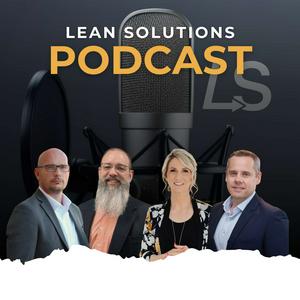
Sobre The Lean Solutions Podcast
This podcast offers business solutions to help listeners develop and implement action plans for lean process improvement and implement continuous improvement projects, cost reductions, product quality enhancements, and process effectiveness improvement. Listeners come from many industries in both manufacturing and office applications.
Sítio Web de podcastOuve The Lean Solutions Podcast, HBR IdeaCast e muitos outros podcasts de todo o mundo com a aplicação radio.pt
Obtenha a aplicação gratuita radio.pt
- Guardar rádios e podcasts favoritos
- Transmissão via Wi-Fi ou Bluetooth
- Carplay & Android Audo compatìvel
- E ainda mais funções
Obtenha a aplicação gratuita radio.pt
- Guardar rádios e podcasts favoritos
- Transmissão via Wi-Fi ou Bluetooth
- Carplay & Android Audo compatìvel
- E ainda mais funções

The Lean Solutions Podcast
Leia o código,
descarregue a aplicação,
ouça.
descarregue a aplicação,
ouça.
The Lean Solutions Podcast: Podcast do grupo
 Portugal