
Ouve este podcast gratuitamente na aplicação: Descarrega gratuitamente na App Store
radio.pt
Sleeptimer
Guardar rádio
'Mind the Kids': an ACAMH podcast
The Association for Child and Adolescent Mental Health
Último episódio
428 episódios
428: Adolescent Self-Diagnosis of Mental Health Issues: Clinicians' Perspectives - Mind the Kids podcast
21/10/2026 | 36minWhat happens when young people diagnose their own mental health conditions? How are clinicians responding to a growing trend shaped by social media, online communities, and increasing mental health awareness?
In this episode of Mind the Kids, host Dr Clara Faria, Academic Clinical Fellow in Child and Adolescent Psychiatry at the University of Cambridge, speaks with Katie Cunningham-Rowe from the Institute of Psychiatry, Psychology & Neuroscience, King's College London, about her qualitative study exploring clinicians' perspectives on adolescent self-diagnosis of mental health disorders.
Together they discuss the complex realities behind self-diagnosis in young people, including the influence of TikTok and online mental health communities, the role of identity formation during adolescence, and the potential benefits and risks of adopting diagnostic labels without formal assessment.
The conversation explores:
🔹 Why self-diagnosis has become increasingly common among adolescents
🔹 The impact of social media algorithms on mental health identities
🔹 How online communities can provide validation, belonging, and support
🔹 Concerns about misinformation and diagnostic accuracy
🔹 The relationship between self-diagnosis and help-seeking behaviour
🔹 Why clinicians view self-diagnosis as valuable therapeutic material
🔹 When diagnostic labels can become restrictive or central to identity
🔹 The importance of empathy, curiosity, and nuanced clinical practice
🔹 Future research on adolescent self-diagnosis and mental health care
Katie highlights that self-diagnosis is rarely a simple issue. While clinicians identified potential risks, they also recognised that young people often turn to diagnostic labels in an attempt to understand genuine distress, seek support, and make sense of their experiences.
This thoughtful discussion offers important insights for clinicians, researchers, educators, students, and anyone interested in adolescent mental health in the digital age.
📖 Read the paper: 'Adolescent Self-Diagnosis of Mental Health Disorders: A Qualitative Study of Mental Health Clinicians' Perspectives' Katie Cunningham-Rowe, Lucy Foulkes
First published: 15 July 2026
Get a free CPD/CME certificate for listening to this podcast by registering for a FREE ACAMH Learn account at https://bit.ly/4fF4BBW
🎧 Subscribe to Mind the Kids for more conversations with leading researchers and clinicians on child and adolescent mental health, evidence-based interventions, and the latest findings shaping youth mental health care.
Visit https://www.acamh.org
Facebook and LinkedIn search / ACAMH
Instagram https://www.instagram.com/assoc.camh
Bluesky https://bsky.app/profile/acamh.bsky.social
X https://x.com/acamh
#MindTheKids #MentalHealth #SelfDiagnosis #AdolescentMentalHealth #CAMHS #YouthMentalHealth #ChildPsychiatry #ClinicalPsychology #TikTokMentalHealth #MentalHealthResearch #ACAMH #KatieCunninghamRowe #ClaraFaria #PsychologyPodcast #ChildAndAdolescentMentalHealth427: Weight Concerns: What 34,000 Teens Said - A 'Mind the Kids' podcast
14/10/2026 | 34minWhy are so many teenagers worried about their weight — and why do so few know where to turn for support?
In this episode of Mind the Kids, host Clara Faria, academic clinical fellow in child psychiatry, University of Cambridge, talks with Dr. Melissa Little, who recently completed her doctorate at the Nuffield Department of Primary Care Health Sciences, University of Oxford, and works clinically as a paediatric dietitian.
They discuss Dr. Little's new paper, 'Weight concern and desire for weight loss support in adolescents: Results from a large cross-sectional school survey', published in JCPP Advances, which analysed data from over 34,000 young people aged 11–18 taking part in the 2023 OxWell Student Survey.
In this conversation on adolescent mental health, body image and weight-related distress, Clara and Melissa unpack:
- Why 41% of adolescents report some level of weight concern — and why it isn't just girls: 1 in 4 boys are affected too
- Why gender-diverse young people have up to eight times higher odds of weight or shape concern than boys, according to the published findings
- Why weight concern doesn't reliably track with BMI — and what that means for who gets excluded from weight management services
- Why 1 in 3 young people want weight-related support, far beyond the capacity of current obesity and weight clinics
- The silos between mental health services and obesity/weight management services, and why disordered eating is too often used as an exclusion criterion rather than a reason to help
- How social media, the UK's under-16s social media ban, and "wild west" online weight-loss content are shaping teen body image
- Practical, non-stigmatising ways for parents, GPs, teachers and clinicians to talk about weight with young people — including why it's best to let them raise the topic first
- What anonymous, digital-first support (chat-based, app-based, or social-media-native) could look like for teens too ashamed to ask for help face-to-face
📄 Read the full paper: Little, M., Fazel, M., Jebb, S. A., Wane, S., OxWell Study Team, & Aveyard, P. (2026). Weight concern and desire for weight loss support in adolescents: Results from a large cross-sectional school survey. JCPP Advances, https://acamh.onlinelibrary.wiley.com/doi/10.1002/jcv2.70124
Get a free CPD/CME certificate for listening to this podcast by registering for a FREE ACAMH Learn account at https://bit.ly/4fF4BBW
Visit https://www.acamh.org
Facebook and LinkedIn search / ACAMH
Instagram https://www.instagram.com/assoc.camh
Bluesky https://bsky.app/profile/acamh.bsky.social
X https://x.com/acamh
🎧 Subscribe to Mind the Kids for more conversations with leading researchers and clinicians on child and adolescent mental health, evidence-based interventions, and the latest findings shaping youth mental health care.
#MindTheKids #ACAMH #ChildMentalHealth #AdolescentMentalHealth #WeightConcern #BodyImage #TeenMentalHealth #EatingDisorders #PaediatricObesity #YouthMentalHealth #OxWellSurvey #CAMHS #ChildPsychiatry #JCPPAdvances426: Is language disorder linked to law breaking? - 'Mind the Kids' podcast
07/10/2026 | 41minListen to the pod and take this 30 second survey to help us improve https://york.qualtrics.com/jfe/form/SV_bJihuLydbcIxPdY
Is developmental language disorder linked to law breaking?
In this episode of Mind the Kids, hosts Dr. Jane Gilmour (Honorary Consultant Clinical Psychologist and Child Development Programme Director at UCL) and Professor Umar Toseeb (Professor of Psychology at the University of York) flip the format — Umar takes the guest seat to discuss his own new paper on developmental language disorder (DLD) and youth offending.
They dig into 'Developmental Language Disorder and Offending: A Prospective Longitudinal Cohort Study with Linked Education and Crime Data', published in the Journal of Child Psychology and Psychiatry, by Megan Frith, Hannah Hobson, Jo Hutchinson, Anna Leyland, Nathan Hughes and Umar Toseeb. The study used the ALSPAC birth cohort (the Avon Longitudinal Study of Parents and Children), linking childhood language assessments at ages 7-9 with school records and police crime data on offences committed between ages 13 and 29.
In this conversation on developmental language disorder, special educational needs, school exclusion and the youth justice system, Jane and Umar unpack:
- What developmental language disorder (DLD) actually is — a "hidden disability" affecting 7-9% of children (roughly two per classroom) — and how it differs from normal language delay or being a "late talker"
- Why DLD is diagnosed in the absence of autism, sensory impairment or physical causes, and how it overlaps with (but isn't the same as) social communication difficulties
- The headline finding: young people with DLD are significantly more likely (74% higher odds) to have a recorded offence — arrested, cautioned or charged — than those without DLD
- Why school suspension is a key mediator linking DLD to offending, supporting a "school-to-prison pipeline" hypothesis
- Why being formally identified with special educational needs (SEN) at school did not reduce the risk of offending
- Why DLD did not affect how young people were treated once in the justice system — no difference in caution vs. charge, or in reoffending rates
- The idea that "behaviour is communication" — how unrecognised language difficulties in the classroom can be misread as defiance, disengagement or bad behaviour
- Why awareness of DLD lags far behind autism, ADHD and dyslexia, and what that means for police, teachers, and the "appropriate adult" safeguarding system
- Practical implications for schools considering suspension as a response to persistent disruptive behaviour
📄 Read the full paper: Frith, M. L., Hobson, H., Hutchinson, J., Leyland, A. F., Hughes, N., & Toseeb, U. (2026). Developmental Language Disorder and Offending: A Prospective Longitudinal Cohort Study with Linked Education and Crime Data. Journal of Child Psychology and Psychiatry. DOI: 10.1111/jcpp.70182
Get a free CPD/CME certificate for listening to this podcast by registering for a FREE ACAMH Learn account at https://bit.ly/4fF4BBW
Visit https://www.acamh.org
Facebook and LinkedIn search / ACAMH
Instagram https://www.instagram.com/assoc.camh
Bluesky https://bsky.app/profile/acamh.bsky.social
X https://x.com/acamh
🎧 Subscribe to Mind the Kids for more conversations with leading researchers and clinicians on child and adolescent mental health, evidence-based interventions, and the latest findings shaping youth mental health care.
#MindTheKids #ACAMH #DLD #DevelopmentalLanguageDisorder #SEN #SpecialEducationalNeeds #SchoolExclusion #YouthJustice #YouthOffending #SpeechAndLanguageTherapy #ChildPsychology #EducationalPsychology #JCPP #ALSPAC #SchoolToPrisonPipeline425: Rates of Anxiety: Is It Time to Press the Panic Button? 'Mind the Kids' podcast
30/09/2026 | 51min📅 Professor Sam Cartwright-Hatton is hosting an ACAMH webinar, 'Helping Anxious Parents Raise Confident Children: Preventing the Intergenerational Transmission of Anxiety', on 17 November 2026 at 2pm UK time.
📷 Follow Fearless Labs on Instagram for practical, evidence-based tips for parents and professionals: @fearless.labs
In this episode of Mind the Kids, hosts Dr. Jane Gilmour (Honorary Consultant Clinical Psychologist and Child Development Programme Director at UCL) and Professor Umar Toseeb (Professor of Psychology at the University of York) sift through the data, dilemmas and debates around childhood anxiety disorders — before bringing in special guest Professor Sam Cartwright-Hatton, Professor of Clinical Psychology at the University of Sussex and Director of Fearless Labs.
Drawing on Tamsin Ford's influential editorial, 'Why I am now convinced that emotional disorders are increasingly common among young people in many countries', published in the Journal of Child Psychology and Psychiatry, Jane and Umar open by questioning society's mixed messaging around anxiety, before Sam joins to unpack the evidence on prevention, parenting and treatment.
In this conversation on childhood anxiety, parenting and prevention, mental health literacy, and digital interventions, the trio unpack:
- Why distinguishing "I'm anxious about this" from "I have an anxiety disorder" matters — and why avoidance, not anxiety itself, is often the real problem
- The latest UK prevalence data: around 3.9% of 5-10 year-olds and 13.1% of 17-19 year-olds have a diagnosable anxiety disorder, according to the British Child and Adolescent Mental Health Survey
- Why it's genuinely difficult to know if anxiety disorders are truly increasing, given changing questionnaires and growing openness about mental health — and the "dark side" of destigmatisation flagged by researcher Lucy Foulkes
- Why anxiety is an adaptive personality trait that evolution needed — and what determines whether it tips over into a disorder
- Sam's "Three L's" framework for parents: Love, Limits, and Little -Pushes — and why good behaviour management matters just as much for anxious kids as for behaviourally-challenged ones
- Why universal, whole-classroom anxiety and mindfulness programmes (including findings from the MYRIAD trial) show weak or even harmful effects — and why targeted, opt-in approaches may work better
- How the school environment itself — nutrition, exercise, relationships — functions as a passive mental health intervention
- Evidence from a randomised controlled trial of over 1,800 families showing that a scalable, unsupported digital parenting course, Parenting with Anxiety, produced real reductions in child anxiety symptoms with no reported harms
- Why an app being popular or "feeling helpful" doesn't mean it's evidence-based — and why unregulated mental health apps could do more harm than good
Get a free CPD/CME certificate for listening to this podcast by registering for a FREE ACAMH Learn account at https://bit.ly/4fF4BBW
Visit https://www.acamh.org
Facebook and LinkedIn search / ACAMH
Instagram https://www.instagram.com/assoc.camh
Bluesky https://bsky.app/profile/acamh.bsky.social
X https://x.com/acamh
🎧 Subscribe to Mind the Kids for more conversations with leading researchers and clinicians on child and adolescent mental health, evidence-based interventions, and the latest findings shaping youth mental health care.
#MindTheKids #ACAMH #ChildAnxiety #AnxietyDisorder #ParentingSupport #ChildMentalHealth #AdolescentMentalHealth #DigitalMentalHealth #FromTimidToTiger #FearlessLabs #EvidenceBasedParenting #ChildPsychology #JCPP #MentalHealthAwareness424: Parenting Intervention: Finding the Goldilocks Zone. A 'Mind the Kids' podcast
23/09/2026 | 47minThis episode of the Mind the Kids podcast is called "Parenting Intervention: Finding the Goldilocks Zone." Hosts Dr. Jane Gilmour, honorary consultant clinical psychologist and Child Development Programme Director at UCL, and Professor Umar Toseeb, Professor of Psychology at the University of York specialising in children and young people's mental health and special educational needs, are joined by a trio of experts: Julia Ruggiero, advanced PhD student in clinical psychology at the University of Oregon, Dr. Xiaolan Liao from the University of Oklahoma, and Professor Elizabeth Skowron from Penn State University.
The guests are co-authors of "Effects of Parent-Child Interaction Therapy Dosage on Child and Parent Outcomes: Differentiating Child-Directed Interaction and Parent-Directed Interaction Session Impacts in Child Welfare-Involved Families," published in the Journal of Child Psychology and Psychiatry (JCPP). Drawing on a sample of 204 child welfare-involved families, the study examines how the dosage of the two phases of Parent-Child Interaction Therapy (PCIT) — child-directed interaction (CDI), which builds warmth and relationship quality, and parent-directed interaction (PDI), which teaches safe, effective discipline and limit-setting — shapes parenting skills and child behaviour outcomes.
The conversation explores:
- What Parent-Child Interaction Therapy actually looks like in the room, including the therapist "in the parent's ear" coaching model
- Why the relationship-building CDI phase and the limit-setting PDI phase teach parents distinct skills, and how the two phases interact with each other
- The evidence base for PCIT with child welfare-involved families, including striking three-year re-abuse rates and cost-effectiveness data
- Why the study's key finding — that dosage in one phase interacts with dosage in the other — challenges the assumption that "more sessions" always means "better outcomes"
- Barriers to engagement facing families experiencing deprivation, and practical strategies (transport, childcare, food, community-based delivery) that improve treatment completion
- How the core principles of PCIT, connection before correction, might translate differently across developmental stages, from preschoolers to teenagers
- Why caution is needed before drawing strong causal conclusions from dose-response data that wasn't itself randomised
This episode is essential listening for clinical psychologists, child welfare practitioners, family therapists, researchers, and policymakers interested in evidence-based parenting interventions, child welfare services, and how treatment dosage and sequencing affect outcomes for vulnerable families.
📄 Read the full paper, published in the Journal of Child Psychology and Psychiatry: 'Effects of parent–child interaction therapy dosage on child and parent outcomes: differentiating child-directed interaction and parent-directed interaction session impacts in child welfare-involved families'
Xiaolan Liao, Julia P. Ruggiero, David E. Bard, Adon F. G. Rosen, Elizabeth A. Skowron
First published: 03 February 2026 https://doi.org/10.1111/jcpp.70106
Mind the Kids is brought to you by ACAMH (Association for Child and Adolescent Mental Health), translating the latest child and adolescent mental health research into evidence-based conversation.
🔔 Subscribe for more conversations on child development, social policy, and the evidence shaping child and adolescent mental health.
Get a free CPD/CME certificate for listening to this podcast by registering for a FREE ACAMH Learn account at https://bit.ly/4fF4BBW
Visit https://www.acamh.org
Facebook and LinkedIn search / ACAMH
Instagram https://www.instagram.com/assoc.camh
Bluesky https://bsky.app/profile/acamh.bsky.social
X https://x.com/acamh
#MindTheKids #ParentChildInteractionTherapy #PCIT #ChildWelfare #EvidenceBasedParenting #ChildMentalHealth #ParentingSupport #ACAMH #MentalHealthResearch
Mais podcasts de Ciência








Podcasts em tendência em Ciência












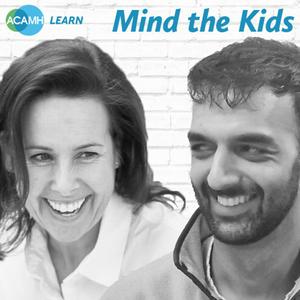
Sobre 'Mind the Kids': an ACAMH podcast
These podcasts are an invaluable resource for anyone interested in child and adolescent mental health. They bridge the gap between rigorous research and practical application, featuring expert discussions on mental health. Each episode highlights cutting-edge studies offering insights into findings, and implications for practice.
The series caters to clinicians, researchers, and those interested in mental health. Available on major platforms like Spotify and Apple Podcasts, it’s an accessible way to stay informed about advancements in the field.
Visit our website for a host of free evidence-based mental health resources.
Sítio Web de podcastOuve 'Mind the Kids': an ACAMH podcast, Radiolab e muitos outros podcasts de todo o mundo com a aplicação radio.pt
Obtenha a aplicação gratuita radio.pt
- Guardar rádios e podcasts favoritos
- Transmissão via Wi-Fi ou Bluetooth
- Carplay & Android Audo compatìvel
- E ainda mais funções
Obtenha a aplicação gratuita radio.pt
- Guardar rádios e podcasts favoritos
- Transmissão via Wi-Fi ou Bluetooth
- Carplay & Android Audo compatìvel
- E ainda mais funções
'Mind the Kids': an ACAMH podcast
Leia o código,
descarregue a aplicação,
ouça.
descarregue a aplicação,
ouça.
 Portugal