Ouve este podcast gratuitamente na aplicação: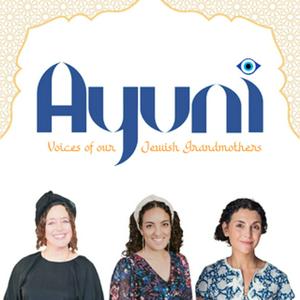 Descarrega gratuitamente na App Store
radio.pt
Sleeptimer
Guardar rádio
Ayuni: Voices of our Jewish Grandmothers
Sarah Sassoon, Dalya Arussy Di Veroli, Drora Arussy
Último episódio
6 episódios

Episode 6: Shabbat, Like Women, Centers the Family
15/1/2026 | 39minJanuary 15, 2026 – 26 Tevet 5786
Episode Summary
In this episode we dive into Shabbat memories from our homes to the homes of our ancestors. We discuss the preparations, scents ant he meaning of this day – then and now.
Enjoyed this episode?
Please like, comment, or leave a review on your podcast platform or send us an email at [email protected]
Your encouragement helps us carry these ancestral stories into the world — story by story, grandmother by grandmother.
Share Your Story
Every family holds a universe of memory.
If you’ve carried a song, a story, a proverb, a photograph, a silence — we welcome you to share it with us at [email protected]
Your voice becomes part of our collective archive.
Email us at [email protected] so we can feature your story on a future episode.
Stay Connected
- Instagram: @ayuni_voices
- YouTube: @JewishUnityDiversity
Support Our Voices
Ayuni is a labor of heart and heritage.
- Become a supporter: If you believe in preserving the lived stories of Middle Eastern and North African Jewish women, please consider supporting this work. Your contribution helps us document what was almost forgotten — and amplify what must be remembered.
- Sponsor an episode: We partner with individuals and organizations who honor storytelling, heritage, and women’s voices. If you’d like to sponsor an episode in memory of a grandmother or in celebration of your family's story, please reach out at [email protected].
Theme music by Oshrat HaimEpisode 5: Evil Eye Practices - Finding Control in the Uncontrollable
08/1/2026 | 42minJanuary 8, 2026 – 19 Tevet 5786
In this episode we explore memories of our grandmothers’ evil eye rituals and search for meaning in those practices for today. While Sarah grew up with these rituals close to home, and in her home, Dalya shares that her family’s connection to such practices were only brought to her attention recently. It’s an interesting discussion that takes part in a larger conversation of the meeting of East and West.
Enjoyed this episode?
Please like, comment, or leave a review on your podcast platform or send us an email at [email protected]
Your encouragement helps us carry these ancestral stories into the world — story by story, grandmother by grandmother.
Share Your Story
Every family holds a universe of memory.
If you’ve carried a song, a story, a proverb, a photograph, a silence — we welcome you to share it with us at [email protected]
Your voice becomes part of our collective archive.
Email us at [email protected] so we can feature your story on a future episode.
Stay Connected
- Instagram: @ayuni_voices
- YouTube: @JewishUnityDiversity
Support Our Voices
Ayuni is a labor of heart and heritage.
- Become a supporter: If you believe in preserving the lived stories of Middle Eastern and North African Jewish women, please consider supporting this work. Your contribution helps us document what was almost forgotten — and amplify what must be remembered.
- Sponsor an episode: We partner with individuals and organizations who honor storytelling, heritage, and women’s voices. If you’d like to sponsor an episode in memory of a grandmother or in celebration of your family's story, please reach out at [email protected].
Theme music by Oshrat HaimEpisode 4: Henna - protecting the girls, preserving tradition
01/1/2026 | 36minJanuary 1, 2026 - 12 Tevet 2786
In this episode we explore our memories from our own henna ceremonies and the meaning of such events – then and now. We discuss the meaning these ceremonies hold for us, for our grandmothers and for our heritage.
Enjoyed this episode?
Please like, comment, or leave a review on your podcast platform or send us an email at [email protected]
Your encouragement helps us carry these ancestral stories into the world — story by story, grandmother by grandmother.
Share Your Story
Every family holds a universe of memory. If you’ve carried a song, a story, a proverb, a photograph, a silence — we welcome you to share it with us at [email protected]
Your voice becomes part of our collective archive. Email us at [email protected] so we can feature your story on a future episode.
Stay Connected
- Instagram: @ayuni_voices
- YouTube: @JewishUnityDiversity
Support Our Voices
Ayuni is a labor of heart and heritage.
- Become a supporter: If you believe in preserving the lived stories of Middle Eastern and North African Jewish women, please consider supporting this work. Your contribution helps us document what was almost forgotten — and amplify what must be remembered.
- Sponsor an episode: We partner with individuals and organizations who honor storytelling, heritage, and women’s voices. If you’d like to sponsor an episode in memory of a grandmother or in celebration of your family's story, please reach out at [email protected].
Mentioned in this episode:
1. Noam Sienna, scholar of Jewish culture and history, henna artist
2. Joan Roth, world-renowned photographer of Jewish women
3. Leah Avraham, singer, dancer and choreographer of Yemenite Jewish songs
4. Merav Roseman, author of "Shimu Kola" about Jewish women in Sana'a https://www.merav-books.com/
Theme music by Oshrat HaimEpisode 3: Food as Memory
25/12/2025 | 48minDecember 25, 2025 - 5 Tevet 5786
“Food is our grandmothers’ love language”
Episode Summary
In this episode we delve into memories deeply associated with the kitchen, from the aromas and tastes to the wisdom and culture passed down while cooking. Our grandmothers poured hours into making food to fill the stomachs and hearts of their descendants, but it wasn’t just that – it was hours spent with other women, supporting each other and lifting each other up. Join us as we delve into these memories and discuss how we keep this culture alive.
Please like, comment, or leave a review on your podcast platform or send us an email at [email protected]
Your encouragement helps us carry these ancestral stories into the world — story by story, grandmother by grandmother.
Share Your Story
Every family holds a universe of memory. If you’ve carried a song, a story, a proverb, a photograph, a silence — we welcome you to share it with us at [email protected] Stay Connected Instagram: @ayuni_voices Support Our Voices Ayuni is a labor of heart and heritage.
Become a supporter: Your contribution helps us document what was almost forgotten — and amplify what must be remembered. www.tinyurl.com/JuNiTDiDonate
Sponsor an episode: reach out at [email protected].
Thank you to Oshrat Haim for the opening vocals. You can see Oshrat on YouTube https://www.youtube.com/channel/UCQURf3eoiUUD3hMqC4Ey0QA Instagram, Facebook, and Apple Music.
Stay Connected
- Instagram: @ayunivoices
- YouTube: @JewishUnityDiversity
- Jewish Unity Through Diversity registration: https://www.unitytdiversity.com/contact-donations
Sarah’s Nana’s T’bit Recipe:
1. Chicken Stuffing - Inside Rice Ingredients: 1 cup Jasmine rice (rinsed and soaked for 15 min) 1/4 cup mincemeat or small chicken or meat pieces 2 big tomatoes diced 1/2 tsp paprika 1/2 tsp cardamom 1/4 tsp pepper 1 tsp salt 1/2 tsp cinnamon 1/2 tsp turmeric Method:
Mix all the stuffing ingredients together in a bowl.
2. Chicken Preparation Notably the stuffed chicken in t’bit is called chashwa. Ingredients: 1 whole chicken, cleaned. Method:
Stuff the whole chicken cavity with the stuffing and sew, with a sterilized needle, the cavity, skin to skin, closed.
Note - Optional easier versions
Instead of sewing the cavity, close with toothpicks.
You can opt to skip the chicken stuffing completely and just cook pieces of chicken within the outside rice, following steps 3 and 4.
3. Base Sauce of T’bit
Ingredients:
oil for pan
1 small onion chopped
4 cloves of garlic chopped
4 tomatoes chopped small
1/2 a finger of ginger chopped small or grated
2 tspn salt
1/2 tspn pepper
Heaped tablespoon of tomato paste
1/2 tspn paprika
1/4 tspn cinnamon
1/2 tspn baharat*
3 1/2 cups of boiling water (720 ml)
Method:
Heat a drizzle of oil at the bottom of a big pot, just enough to cover the surface.
When hot add one at a time in order, starting with the onion, the garlic, then the ginger.
Sauté until golden.
Add the tomato, salt, pepper, tomato paste, paprika, cinnamon and baharat:
Add the stuffed chicken and crisp on each side for about 4-5 minutes.
4. T’bit Outside Rice
Ingredients:
4 cups rice
1 tbsp salt
(Soak in water for 2 hours. But if you don’t have time 20 minutes should be fine. Drain.)
Method:
Remove browned chicken from the pan and set aside.
Combine the sauce ingredients in a bowl with the drained rice and mix.
Layer about 1/2 of the mixture in the bottom of the pan 1.5 cm (1/2 inch) at the bottom.
Place chicken, breast side up, and nestle in the rest of rice.
Add 3 1/2 cups (720 ml) boiling water to just about cover.
Optional add washed eggs in their shells (as many as you like)
Bring to a boil, then reduce heat to a simmer on a small fire. Cover the pot until cooked, about 15-20 minutes.
Cover pot with parchment and lid and put in a low oven (about 110 C or 230 F) or on a hot plate, before Shabbat until Shabbat lunch. Beware that the hotplate isn’t too hot and may burn the bottom. If on hotplate cover with towels or blanket.
Hilbeh – A San'ani version
½ cup finely ground fenugreek seeds
¼ cup diced tomatoes
Place ground fenugreek seeds into a bowl
Cover with water
Rinse three times over the course of three hours
Leave fourth round of water in the bowl and add tomato, leave in refrigerator overnight
Pour out water
Cover risen mixture with new water (ok if tomatoes rinse out) and whip until it peaks
In a separate bowl prepare zhug (if you don’t like spicy, you don’t have to add the zhug)
2 heads of garlic – finely minced
Mix of fresh and dried hot peppers finely minced – to taste 2 pieces of dried coriander- ground
Water to cover
Blend well
In a third bowl prepare to grind together
¼ cup black pepper
½ cup freshly ground cumin
4 pieces “hel”
2 cloves
Whip together all three mixtures in a large bowl until slime-like
Enjoy!
Links & Resources
Linda Dangoor, Flavors of Babylon: A Family Cookbook
Linda Dangoor, From the Tigris to the Thames
Oded Halahmy, Iraqi Cooking: Exile is Home
Sarah Sassoon, This is not a Cholent
For Sephardic and Mizrahi recipes and food stories check out Sephardic Spice Girls https://sephardicspicegirls.com/Episode 2: MENA Women New Month Celebrations
18/12/2025 | 31minDecember 18, 2025 - 29 Kislev 5786
Episode Summary
In this episode, we explore Rosh Hodesh as a historic women’s holiday—an ancient pause for renewal, rest, and sisterhood. Sources from the Cairo Genizah to the Shulḥan Arukh describe women gathering in bathhouses, refraining from work, and celebrating a day given to them for refusing to participate in the Golden Calf. Across North Africa and parts of the Middle East, Rosh Hodesh Tevet blossomed into Eid al-Banat, the Festival of the Daughters, honoring Esther, Judith, Hannah, and generations of brave women. Communities marked it with songs, feasts, blessings, and gifts. We invite you to share how you celebrate these days.
Thank you to Oshrat Haim for the opening vocals. You can see Oshrat on YouTube https://www.youtube.com/channel/UCQURf3eoiUUD3hMqC4Ey0QA Instagram, Facebook, and Apple Music.
Enjoyed this episode?
Please like, comment, or leave a review wherever you’re listening to the podcast or email us at [email protected].
Your encouragement helps us carry these ancestral stories into the world — story by story, grandmother by grandmother.
Share Your Story
Every family holds a universe of memory.
If you’ve carried a song, a story, a proverb, a photograph, a silence — we welcome you to share it with us at [email protected]
What memory from your grandmother’s kitchen still warms your hands and heart?
A dish, a spice, a scent — what story does it carry?
Your voice becomes part of our collective archive.
Email us at [email protected] so that we can feature your story on a future episode!
Stay Connected
- Instagram: @ayunivoices
- YouTube: @JewishUnityDiversity
- Jewish Unity Through Diversity registration: https://www.unitytdiversity.com/contact-donations
Support Our Voices
Ayuni is a labor of heart and heritage.
Become a supporter: If you believe in preserving the lived stories of Middle Eastern and North African Jewish women, please consider supporting this work. Your contribution helps us document what was almost forgotten — and amplify what must be remembered.
Sponsor an episode: We partner with individuals and organizations who honor storytelling, heritage, and women’s voices.
If you’d like to sponsor an episode in memory of a grandmother or in celebration of your family's story, please reach out: [email protected]
Mais podcasts de História
 The Rest Is HistoryHistória
 Tempo ao TempoHistória
 As DesobedientesHistória
 Falando de HistóriaHistória
 Teorias da ConspiraçãoHistória, Religião e espiritualidades, Sociedade e cultura
 O Sargento na Cela 7História
 5 ContinentesHistória
 A História repete-seHistória, Ciência, Sociedade e cultura, Ciências Sociais
 This is History: A Dynasty to Die ForHistória, Sociedade e cultura
 A Vida em RevoluçãoHistória
Podcasts em tendência em História
 Corte e CosturaHistória
 As RevolucionáriasHistória
 Só Pod Ser História • PodcastHistória
 پادکست رخFicção, História
 Tides of HistoryHistória, Sociedade e cultura, Documentário
 Stuff You Missed in History ClassHistória, Sociedade e cultura
 Les grands dossiers de l'Histoire par Franck FerrandHistória
 Easy Money: The Charles Ponzi StoryHistória, Sociedade e cultura, Crimes verdadeiros, Documentário
 Past Present FutureHistória, Notícias, Sociedade e cultura, Filosofia, Política
 Relatos do Além – Histórias Sobrenaturais ReaisFicção, História, Ficção científica
 The Spy WhoHistória
 Cool People Who Did Cool StuffHistória, Sociedade e cultura
 رادیو دستنوشتههاHistória
 British ScandalHistória, Sociedade e cultura, Documentário
 Закат империиEnsino, História
 WDR ZeitzeichenHistória
 WW2 Pod: We Have Ways of Making You TalkEnsino, História, Sociedade e cultura
 Journey Through TimeHistória
 GeopizzaEnsino, História
 Was bisher geschah - GeschichtspodcastEnsino, História, Sociedade e cultura
 Sleepy HistoryHistória, Sociedade e cultura, Documentário
 Real DictatorsFicção, História, Drama
 Tramas ColoniaisHistória
 De Maneiras Que É Assim...História
 Неловкая паузаComédia, Ensino, Ficção, História
 Fall of Civilizations PodcastHistória
 Ask Haviv AnythingHistória
 Favas ContadasHistória
Sobre Ayuni: Voices of our Jewish Grandmothers
Welcome to Ayuni: Voices of Our Jewish Grandmothers, a podcast celebrating the lived stories of Middle Eastern and North African Jewish women.
Ayuni, a term of endearment meaning “my eyes,” passes from grandmother to granddaughter, carrying worlds of memory, longing, and love.
In each episode, we step into the hidden rooms of our histories: kitchens and henna nights, women’s songs and prayers, mikveh stories, Rosh Hodesh gatherings, and contemporary conversations about identity, silence, and voice. As we uncover the stories of the women who quietly held our families and communities together, we also make space for yours—because these histories live on when we share them.
Sponsor an episode today at https://www.unitytdiversity.com/contact-donations
Send us your stories at [email protected] and be a part of keeping this heritage alive!
Sítio Web de podcastOuve Ayuni: Voices of our Jewish Grandmothers, The Rest Is History e muitos outros podcasts de todo o mundo com a aplicação radio.pt
Obtenha a aplicação gratuita radio.pt
- Guardar rádios e podcasts favoritos
- Transmissão via Wi-Fi ou Bluetooth
- Carplay & Android Audo compatìvel
- E ainda mais funções
Obtenha a aplicação gratuita radio.pt
- Guardar rádios e podcasts favoritos
- Transmissão via Wi-Fi ou Bluetooth
- Carplay & Android Audo compatìvel
- E ainda mais funções

Ayuni: Voices of our Jewish Grandmothers
Leia o código,
descarregue a aplicação,
ouça.
descarregue a aplicação,
ouça.
 Portugal