
Ouve este podcast gratuitamente na aplicação: Descarrega gratuitamente na App Store
radio.pt
Sleeptimer
Guardar rádio
255 episódios
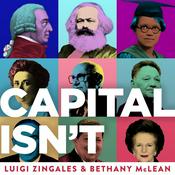
2026 Midterms: Promises vs. Economics
22/10/2026 | 37minEveryone covers the 2026 midterms like a sports match, so we pulled the candidates' actual economic platforms and stress-tested the math.
Instead of asking who is up by two points in Michigan, Texas, or South Carolina, this special 2026 Midterms Edition examines what the candidates are actually promising voters on the economy: bringing overall prices down, handing homebuyers $50,000 tax deductions, raising the federal minimum wage to $25, capping credit card interest rates at 10%, banning Wall Street from buying single-family homes, and pausing AI data centers.
When you put those 2026 campaign platforms through an economic stress test, two things become clear: it is sometimes hard to tell a Republican economic proposal from a Democratic one, and nearly every flagship promise ignores the supply bottlenecks actually driving the cost of living.
Connect with us:
📺 Subscribe to our YouTube Channel
📱 Follow Capitalisn’t on Instagram & TikTok
✉️ Email your questions and comments to capitalisntpod@gmail.com
Hosted by Simplecast, an AdsWizz company. See pcm.adswizz.com for information about our collection and use of personal data for advertising.The Case That Could End Super PACs - ft. Larry Lessig
08/10/2026 | 47minEveryone blames Citizens United for super PACs. Harvard Law professor Lawrence Lessig says they're blaming the wrong case, and he is actually taking his argument to court. The ruling that actually created super PACs, he argues, is SpeechNow.org v. FEC, a D.C. Circuit decision issued two months after Citizens United that the Supreme Court has never reviewed.
In 2024, nearly 75% of the Maine’s voters approved a $5,000 cap on contributions to super PACs. A federal judge blocked it, and the challenge now sits with the First Circuit. A ruling for Maine would break with every appeals court that has considered the question and could put it before the Supreme Court ahead of the 2028 election.
Lessig joins hosts Bethany McLean and Luigi Zingales on this episode to make his case ahead of the decision. They also get into why the corruption that matters most in American politics isn't bribery, how the fundraising treadmill fills Congress with sycophants, and why transparency alone can leave you with a transparently corrupt system.
Connect with us:
📺 Subscribe to our YouTube Channel
📱 Follow Capitalisn’t on Instagram & TikTok
✉️ Email your questions and comments to capitalisntpod@gmail.com
Hosted by Simplecast, an AdsWizz company. See pcm.adswizz.com for information about our collection and use of personal data for advertising.The Workplace Is a Dictatorship? - ft. Elizabeth Anderson
24/09/2026 | 47minAt the center of our market economy sits an institution that runs more like a dictatorship. The firm you work for writes the rules and enforces them. There is no vote, no appeal, and no constitution. The only real remedy is to leave.
University of Michigan philosopher Elizabeth Anderson, author of "Private Government" and "Hijacked: How Neoliberalism Turned the Work Ethic Against Workers," argues we spent centuries building limits on rulers who held this much power over people's daily lives, and built almost nothing for the place where most of that life is actually spent.
"Hijacked: How Neoliberalism Turned the Work Ethic Against Workers and How Workers Can Take It Back": https://www.cambridge.org/core/books/hijacked/E7E4A7D850C1E7289BA7AAF910455136
"Private Government: How Employers Rule Our Lives": https://press.princeton.edu/books/hardcover/9780691176512/private-government?srsltid=AU7gw4XkqB24hl23B55i5Stpj4twB-lI8JX8SWqtj09h0AO22q1dBlGl
Connect with us:
📺 Subscribe to our YouTube Channel
📱 Follow Capitalisn’t on Instagram & TikTok
✉️ Email your questions and comments to capitalisntpod@gmail.com
Hosted by Simplecast, an AdsWizz company. See pcm.adswizz.com for information about our collection and use of personal data for advertising.Why Congress Protects Car Dealers More Than Elon Musk - ft. Eric Zwick
17/09/2026 | 52minFor every member of the Forbes 400, there are more than 4,000 private business owners worth at least $10 million. You probably have never heard of any of them.
They own the beer distributorship in your town, the dental group with four offices, the HVAC trucks that passed your house this morning. A decade inside anonymized IRS data turned up three million of them, and the version of that story running in many outlets this month is the hopeful one: fortunes still being built in unglamorous industries, far from the coasts, by people with no degree and no connections. The American Dream, alive and hiding in plain sight.
That is one part of what the data says. The other part is that the largest fortunes are concentrated where the law limits who can compete at all, and the owners have the political weight to keep it there. Whether the first part redeems the second is the entire argument here. The economist who found the numbers doesn’t know for sure whether it’s a good or worrying story.
Eric Zwick is the Joel F. Gemunder Professor of Economics and Finance at the University of Chicago Booth School of Business and co-author, with Owen Zidar of Princeton University, of “The Everywhere Millionaire: Who Is Really Rich in America and How They Got There”: https://us.macmillan.com/books/9781250378507/theeverywheremillionaire/
Connect with us:
📺 Subscribe to our YouTube Channel
📱 Follow Capitalisn’t on Instagram & TikTok
✉️ Email your questions and comments to capitalisntpod@gmail.com
Hosted by Simplecast, an AdsWizz company. See pcm.adswizz.com for information about our collection and use of personal data for advertising.Can Capitalism Serve the Common Good? - ft. Mariana Mazzucato
10/09/2026 | 57minThe drugs in your medicine cabinet were probably discovered on your dime, in a university lab, with NIH money. You don't hold the patent. You don't set the price. Same story with the touchscreen, the GPS and the voice assistant in your pocket.
The public often helps fund breakthroughs, while private companies claim all the profits. Economist Mariana Mazzucato thinks it’s time to renegotiate. In “The Common Good Economy: A New Compass”, she makes the case for reshaping markets around the common good.
Luigi Zingales and Bethany McLean press the uncomfortable question: can a government captured by business really be trusted to change the rules?
You can find “The Common Good Economy: A New Compass” here: https://marianamazzucato.com/books/the-common-good-economy/the-common-good-economy-us/
Mariana Mazzucato is a Professor at University College London, Founding Director of the UCL Institute for Innovation and Public Purpose and author of “The Common Good Economy: A New Compass”.
Connect with us:
📺 Subscribe to our YouTube Channel
📱 Follow Capitalisn’t on Instagram & TikTok
✉️ Email your questions and comments to capitalisntpod@gmail.com
Hosted by Simplecast, an AdsWizz company. See pcm.adswizz.com for information about our collection and use of personal data for advertising.
Mais podcasts de Ciência política




Podcasts em tendência em Ciência política






Sobre Capitalisn't
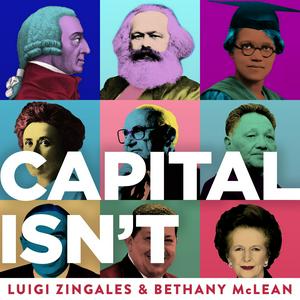
We investigate how capitalism is—or more often isn’t—working in our world today.
Hosted by economist Luigi Zingales and business journalist Bethany McLean, our podcast explains why capitalism can go wrong and what we can do to fix it.
Send us your questions or comments by emailing capitalisntpod@gmail.com
Cover photo attributions: https://www.chicagobooth.edu/research/stigler/about/capitalisnt.
Sítio Web de podcastOuve Capitalisn't, No es el fin del mundo e muitos outros podcasts de todo o mundo com a aplicação radio.pt
Obtenha a aplicação gratuita radio.pt
- Guardar rádios e podcasts favoritos
- Transmissão via Wi-Fi ou Bluetooth
- Carplay & Android Audo compatìvel
- E ainda mais funções
Obtenha a aplicação gratuita radio.pt
- Guardar rádios e podcasts favoritos
- Transmissão via Wi-Fi ou Bluetooth
- Carplay & Android Audo compatìvel
- E ainda mais funções

Capitalisn't
Leia o código,
descarregue a aplicação,
ouça.
descarregue a aplicação,
ouça.
Capitalisn't: Podcast do grupo

 Portugal