PodcastsCiênciaCORDIScovery – unearthing the hottest topics in EU science, research and innovation

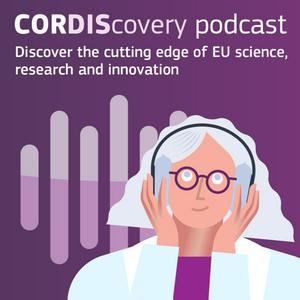
CORDIScovery – unearthing the hottest topics in EU science, research and innovation

CORDIScovery
CORDIScovery – unearthing the hottest topics in EU science, research and innovation
Último episódio

61 episódios

  • CORDIScovery – unearthing the hottest topics in EU science, research and innovation

    Rising sea levels – more data for better modelling

    08/06/2026 | 28min
    A good way to understand what’s coming is to look at what happened in the past – so what can prehistoric polar ice tell us about future sea level rise?
    The highly uncertain behaviour of the Antarctic and Greenland ice sheets will dominate the future of sea level rise: land ice loss and ocean thermal expansion contribute equally. Our three guests, all of whom have received support from EU research and innovation funding, have been working on improving our understanding of these interactions.
    Eric Wolff is an honorary fellow at the British Antarctic Survey, who studies past climate and environment, mainly from Antarctic and Greenland ice cores. He is a Royal Society research professor in the Department of Earth Sciences at the University of Cambridge.
    Alessio Rovere, a professor in the Department of Environmental Sciences, Informatics and Statistics at Ca’Foscari University of Venice, is interested in palaeo climate and sea level changes.
    A director of research at the French National Centre for Scientific Research (CNRS), Gaël Durand specialises in the modelling of polar ice sheets and the dynamics of coastal glaciers, with a focus on their impact on sea level rise.
  • CORDIScovery – unearthing the hottest topics in EU science, research and innovation

    Empowering people to ward off diabetes

    08/05/2026 | 32min
    Obesity and being overweight is impacting children in the EU, and worldwide, at epidemic levels: in some countries nearly 40 % of children are affected. The International Diabetes Federation projects the number of people in the EU, with the condition, will rise to over 72 million by 2050.
    How can we stem the tide? All three of our guests have beensupported by EU research and innovation funding. Here to share some of their findings are:
    Knut-Inge Klepp, special advisor at the Norwegian Institute of Public Health. He is interested in health promotion among children and adolescents, and how to engage with young people in a way that makes a difference.
    Sharleen O’Reilly is professor of Human Nutrition at UniversityCollege Dublin, Ireland. Her research focuses on trying to improve women and children’s health by preventing chronic diseases, such as heart disease or diabetes, through behaviour change.
    Jason Halford is a professor of Psychology at the University of Leeds. Jason is interested in obesity, eating behaviour and appetite. He is on the board of the European Coalition for People living with Obesity.
  • CORDIScovery – unearthing the hottest topics in EU science, research and innovation

    Supporting growers to keep Europe’s wine flowing!

    15/04/2026 | 31min
    People often forget just how significant the wine industry is in Europe. Across the EU there are about 2.2 million wine‑growing farms looking after roughly 3.2 million hectares of vines, and every year those vineyards turn out something like 150 million hectolitres of wine, that’s around 20 billion bottles a year.
    But growers are getting squeezed in two directions: more unstable harvests, and weaker demand. When a bottle is poured, it isn’t just a drink on the table. It’s part of a sector that keeps villages alive and brings billions into the economy.
    So, what can we do to help the situation? Our three guests, all of whom have received support from the EU’s research and innovation funding programme, have some intriguing ideas.
    Filipe Neves dos Santos develops autonomous robots and machinery, which can operatesafely on steep slopes, for the agricultural and forestry sectors. He works at the Centre forRobotics in Industry and Intelligent Systems, INESC TEC,in Portugal.
    Zoe Doulgeri is professor of Robotics and Control of Manufacturing Systems at the Aristotle University of Thessaloniki. Her current research interests include learning and control of unimanual and bimanual robotic object manipulation.
    Gustavo Pérez González is a senior project manager at the Autonomous University of Barcelona. He specialises in analytical chemistry, specifically to develop secure, traceable and immutable solutions for wine authentication.
  • CORDIScovery – unearthing the hottest topics in EU science, research and innovation

    New insights into dementia risk reduction

    05/03/2026 | 33min
    There are advances being made in the area of dementia and cognitive ageing. But sometimes it feels like a race against time, so what can the latest research reveal?
    Evidence-based solutions may help to foster better coordination between health and social care systems across the Europe. Our three guests, whose projects benefited from EU research and innovation funding, are helping to make a complex picture, clearer.
    Alina Solomon is professor of Neuroepidemiology at the University of Eastern Finland, visiting professor at Imperial College London, and senior researcher at the Karolinska Institute. She is particularly interested in dementia risk detection and therapeutic approaches for dementia risk reduction.
    Julia Neitzel is assistant professor at the Department of Radiology and Nuclear Medicine at the Erasmus University Medical Centre in Rotterdam, the Netherlands. Neitzel uses brain scans in large population studies to discover what protects and hurts brain health.
    Currently professor at the University of Luxembourg, Anja Leist will soon be taking up a professorship at the University of Heidelberg. Her research focuses on sex and gender differences, socio-economic inequalities, and risk reduction in cognitive ageing and dementia.
  • CORDIScovery – unearthing the hottest topics in EU science, research and innovation

    Commercialising the uptake of hydrogen

    06/02/2026 | 25min
    The EU is intending to have all sectors of the economy at net zero greenhouse gas production by 2050. But heavy industry and transport can be challenging to electrify directly. So renewable, low-carbon hydrogen, and its derivatives, are key tools in the box. 
    To get there, we need to create a stronger demand for the fuel, boost transport and storage networks and secure the renewable affordable electricity needed to generate cost-effective hydrogen. Our three projects today, all of which received support from the EU’s research and innovation funding, have some solutions.
    Magali Senaux, senior consultant and project manager at Environmental Resources Management Limited, is keen tosee the day when the buses passing you by in the street no longer belch out fumes, instead, leaving nothing but a dribble of water.
    Melanie Lienerth is passionately interested in hydrogen-powered flight which she brings closer at H2FLY, the company behind a test flight believed to be the first, forward flight of a vertical take-off and landing aircraft powered by liquid hydrogen.
    Benedikt Hasibar is a project coordinator at Green Gas Technologies at RAG Austria AG – Austria’s largest energy storage company. Benedikt is working on the development of effective and efficient hydrogen storage.
Mais podcasts de Ciência
Sobre CORDIScovery – unearthing the hottest topics in EU science, research and innovation
CORDIScovery is a monthly podcast featuring a panel discussion between guests at the forefront of their scientific fields. From threats to biodiversity to the future of space exploration, if you want to hear how the EU’s cutting-edge research is taking on the key issues challenging us today, then be sure to download and listen to what Europe’s leading scientists have to say. CORDIScovery is produced by CORDIS, whose mission is to share the results of the very best of EU-funded research.
Sítio Web de podcast

Ouve CORDIScovery – unearthing the hottest topics in EU science, research and innovation, Fricção Científica e muitos outros podcasts de todo o mundo com a aplicação radio.pt

Obtenha a aplicação gratuita radio.pt

  • Guardar rádios e podcasts favoritos
  • Transmissão via Wi-Fi ou Bluetooth
  • Carplay & Android Audo compatìvel
  • E ainda mais funções
Aplicações
Social
v8.10.0| © 2007-2026 radio.de GmbH
Generated: 6/16/2026 - 11:06:40 PM