

Ouve este podcast gratuitamente na aplicação: Descarrega gratuitamente na App Store
radio.pt
Sleeptimer
Guardar rádio
331 episódios
The Canada-US Trade War: A Bridge Too Far? w/ Jesse Huebsch
25/09/2026 | 1h 14minThe Canada-US trade war is escalating, threatening to unravel decades of economic integration between two of the world's closest allies. Chris Keefer is joined by returning guest Jesse Hoops to examine how we got here, what Washington hopes to achieve, and how Canada can respond to an increasingly unpredictable neighbour. From tariffs on aluminum and autos to the potential collapse of Canadian manufacturing, they explore the consequences of economic warfare between countries whose industries and supply chains have become deeply intertwined. Can Canada defend its economic sovereignty without inflicting even greater damage on itself, and what might ultimately force an end to the conflict?The conversation explores Canada's critical vulnerabilities, including the Gordie Howe Bridge, Line 5, American-controlled financial infrastructure and the F-35 fighter program. Chris and Jesse examine whether Canada needs to sacrifice some economic efficiency to secure greater strategic autonomy, including through new pipelines, domestic industrial capacity and a more independent nuclear supply chain. With billions of dollars in new nuclear construction on the horizon, what does the trade war mean for Canada's choice between CANDU and the American-designed AP1000? And if the current rupture in Canada-US relations becomes a recurring feature of American politics, how much should Canada be prepared to spend to ensure it cannot be held hostage by its largest trading partner?Listen to Decouple on:• Spotify: https://open.spotify.com/show/6PNr3ml8nEQotWWavE9kQz• Apple Podcasts: https://podcasts.apple.com/us/podcast/decouple/id1516526694?uo=4• Overcast: https://overcast.fm/itunes1516526694/decouple• Pocket Casts: https://pca.st/ehbfrn44• RSS: https://anchor.fm/s/23775178/podcast/rssWebsite: https://www.decouple.mediaMegaprojects: Some Assembly Required w/ Ian MacGregor
03/09/2026 | 54minCanada is once again attempting to build nuclear megaprojects after a long pause, making the experience of people who have actually delivered recent large industrial projects increasingly valuable.
Ian McGregor is a veteran Alberta engineer, entrepreneur and industrial project developer who helped conceive and build the $12 billion Northwest Sturgeon Refinery and the Alberta Carbon Trunk Line.In this episode we use that project to explore the realities of megaproject delivery: incomplete engineering, supply-chain delays, labour bottlenecks, cost escalation and the challenge of coordinating thousands of critical components across a vast industrial site.
We also dive into the refinery’s near-disastrous gasifier burner failure, where a mission-critical component designed to last thousands of hours failed after just 40, forcing McGregor and a small team of engineers and tradespeople to redesign it themselves. From there the conversation broadens into the economics of nation-building infrastructure, why governments often have to play a role in projects with century-long paybacks, and what Canada’s nuclear revival can learn from one of the country’s most ambitious recent industrial megaprojects.Listen to Decouple on:• Spotify: https://open.spotify.com/show/6PNr3ml8nEQotWWavE9kQz• Apple Podcasts: https://podcasts.apple.com/us/podcast/decouple/id1516526694?uo=4• Overcast: https://overcast.fm/itunes1516526694/decouple• Pocket Casts: https://pca.st/ehbfrn44• RSS: https://anchor.fm/s/23775178/podcast/rssWebsite: https://www.decouple.mediaThe State of Fusion Energy w/ Gerrit Bruhaug
13/08/2026 | 1h 24minFusion has spent nearly a century as the energy source of the future. In this episode, I’m joined by fusion scientist Gerrit Bruhaug to ask what has actually been achieved, what remains unsolved, and why progress has taken so much longer than the early pioneers expected. We start from first principles, how fusion differs from fission, why the Lawson criterion matters, and how magnetic and inertial confinement take radically different routes to the same goal. Gerrit provides an in-depth analysis of the National Ignition Facility’s breakthrough and why ignition is better understood as fusion’s Chicago Pile moment, rather than the near-term arrival of a commercial power plant.From there we get into the engineering realities behind the headlines: laser efficiency, plasma instabilities, neutron damage, divertor heat loads, tritium breeding and inventory, target manufacturing, parasitic loads, engineering breakeven and the enormous gap between making fusion happen and making cheap electricity.Gerrit also takes us through fusion’s surprisingly long history, from the optimism of the first private laser-fusion startup, KMS Fusion, to today’s new wave of heavily capitalized companies, and explains why the two constraints he watches most closely are tritium inventory and engineering gain.Listen to Decouple on:• Spotify: https://open.spotify.com/show/6PNr3ml8nEQotWWavE9kQz• Apple Podcasts: https://podcasts.apple.com/us/podcast/decouple/id1516526694?uo=4• Overcast: https://overcast.fm/itunes1516526694/decouple• Pocket Casts: https://pca.st/ehbfrn44• RSS: https://anchor.fm/s/23775178/podcast/rssWebsite: https://www.decouple.mediaSunk Costs & Diminishing Returns of Iran's Nuclear Program w/ Farzan Sabet
06/08/2026 | 1h 25minIran’s nuclear program is now more than seven decades old, stretching from the Shah’s ambitious Atoms for Peace-era plans to the Islamic Republic’s pursuit of enrichment, missile capability and nuclear latency. Iran historian Farzan Sabet joins Decouple to explain how energy development, techno-nationalism, the trauma of the Iran–Iraq War and a persistent sense of strategic isolation transformed a civilian nuclear project into an increasingly important national-security instrument.We trace the program through the Shah’s plans for 23,000MW of commercial nuclear power, the revolution, the AQ Khan network, the AMAD weapons effort, the JCPOA and the collapse of Iran’s traditional deterrence architecture. Farzan also examines the extraordinary price Iran has paid: sanctions-related economic damage measured in the hundreds of billions of dollars and, by one estimate, comparable to the economic cost of the Iran–Iraq War, yet with neither substantial nuclear power generation nor a nuclear deterrent to show for it.Listen to Decouple on:• Spotify: https://open.spotify.com/show/6PNr3ml8nEQotWWavE9kQz• Apple Podcasts: https://podcasts.apple.com/us/podcast/decouple/id1516526694?uo=4• Overcast: https://overcast.fm/itunes1516526694/decouple• Pocket Casts: https://pca.st/ehbfrn44• RSS: https://anchor.fm/s/23775178/podcast/rssWebsite: https://www.decouple.mediaBiomass Masterclass w/ Mark Nelson
31/07/2026 | 1h 10minFor almost the whole of human history, wood was the main act. It was the fuel that cooked food and smelted iron, the material that framed every house and hull, and the first bulk commodity ever moved at scale over long distances. In this episode Chris Keefer talks with energy analyst Mark Nelson about a material we almost entirely take for granted, starting with a fact hiding in plain sight: the grasping hands, binocular vision, and colour sight that define us were all built by an ancestry lived in the trees. From there the conversation turns to why wood, of all the products of photosynthesis, became civilization's battery, storing a century of sunlight in a form that can be felled and hauled away.
That storage came with a hard ceiling, because the energy available to any pre-industrial society was set by its land area multiplied by how fast the sun could regrow a forest. Chris and Mark trace that single constraint through the iron furnaces that each needed a forest standing behind them to the oak fleets that turned a Baltic chokepoint into the 19th century equivalent of the Straits of Hormuz.
Listen to Decouple on:
• Spotify: https://open.spotify.com/show/6PNr3ml8nEQotWWavE9kQz
• Apple Podcasts: https://podcasts.apple.com/us/podcast/decouple/id1516526694?uo=4
• Overcast: https://overcast.fm/itunes1516526694/decouple
• Pocket Casts: https://pca.st/ehbfrn44
• RSS: https://anchor.fm/s/23775178/podcast/rss
Website: https://www.decouple.media
Mais podcasts de Ciência








Podcasts em tendência em Ciência











Sobre Decouple
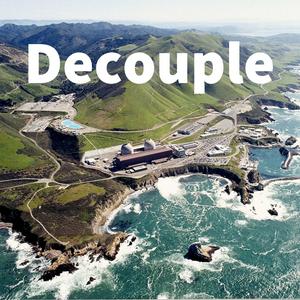
There are technologies that decouple human well-being from its ecological impacts. There are politics that enable these technologies. Join me as I interview world experts to uncover hope in this time of planetary crisis.
Sítio Web de podcastOuve Decouple, Radiolab e muitos outros podcasts de todo o mundo com a aplicação radio.pt
Obtenha a aplicação gratuita radio.pt
- Guardar rádios e podcasts favoritos
- Transmissão via Wi-Fi ou Bluetooth
- Carplay & Android Audo compatìvel
- E ainda mais funções
Obtenha a aplicação gratuita radio.pt
- Guardar rádios e podcasts favoritos
- Transmissão via Wi-Fi ou Bluetooth
- Carplay & Android Audo compatìvel
- E ainda mais funções

Decouple
Leia o código,
descarregue a aplicação,
ouça.
descarregue a aplicação,
ouça.
 Portugal