PodcastsComentários de notíciasJeffrey Epstein: The Coverup Chronicles

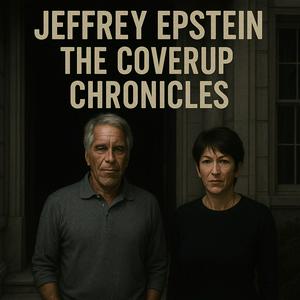
Jeffrey Epstein: The Coverup Chronicles

Bobby Capucci
Jeffrey Epstein:  The Coverup Chronicles
Último episódio

3376 episódios

  • Jeffrey Epstein:  The Coverup Chronicles

    The Law According to DOJ: Why Epstein’s Deal Was “Technically Legal" (Part 1)

    13/04/2026 | 13min
    The Department of Justice has consistently argued that the controversial 2007–2008 Epstein non-prosecution agreement did not violate the Crime Victims’ Rights Act because, in its view, the CVRA’s protections did not attach until formal federal charges were filed. DOJ lawyers maintained that during the pre-charge negotiation phase, federal prosecutors were operating within their lawful discretion to decline prosecution and enter into a resolution without notifying potential victims. According to this position, because Epstein was never federally charged at the time the agreement was reached, the government contended there were no legally recognized “crime victims” under the CVRA to notify, consult, or confer with during the negotiations.

    The government further argued that the plea deal itself was a lawful exercise of prosecutorial authority designed to secure accountability through a state-level conviction while conserving federal resources and avoiding litigation risks. DOJ filings emphasized that the CVRA was not intended to regulate prosecutorial decision-making before charges are brought, nor to force prosecutors to disclose or negotiate plea discussions with potential victims in advance. In short, the DOJ’s defense rests on a narrow interpretation of when victims’ rights legally begin, asserting that while the outcome may have been deeply troubling, it did not constitute a statutory violation under the government’s reading of federal law.

    to contact me:

    [email protected]

    source:

    Title
  • Jeffrey Epstein:  The Coverup Chronicles

    Harvard Launches A New Investigation Into The Institution's Relationship With Epstein

    13/04/2026 | 13min
    Harvard has announced that it is launching a fresh review of its connections to Epstein after new emails and documents were released showing long -standing ties between Epstein and former Harvard president Lawrence Summers. The released materials show that Summers maintained communications with Epstein well after Epstein’s 2008 conviction for solicitation of prostitution of a minor, including advice-seeking messages and email exchanges in 2017-2019. The university’s statement says the review will look into “information concerning individuals at Harvard included in the newly released Epstein documents to evaluate what actions may be warranted.”

    This comes on the heels of a previous investigation (completed circa 2020) which found that Epstein had made sizeable donations to Harvard (about $9 million between 1998–2008) and had access to Harvard campus facilities — including an office — even after his conviction. The new probe focuses not only on Summers but also on other Harvard affiliates named in the documents (including Summers’s wife, Harvard professor Elisa New). The scandal is reopening questions about how institutions handled Epstein’s donations, access and post-conviction privileges.

    to contact me:

    [email protected]
  • Jeffrey Epstein:  The Coverup Chronicles

    Inside The OIG Interview: The Warden's Statement Detailing The Death Of Jeffrey Epstein (Part 12) (4/13/26)

    13/04/2026 | 14min
    Lamine N'Diaye, in his interview with the Office of the Inspector General, essentially tried to turn the Metropolitan Correctional Center into a scapegoat while positioning himself as a bystander to its failures. He leaned heavily on the narrative that the facility was already broken—staff shortages, overtime abuse, infrastructure decay—as if that somehow absolved him of responsibility rather than underscoring the urgency of his role. What stands out is not just what he admitted, but what he avoided: there is little evidence in his account of decisive leadership, no clear record of aggressive intervention, and no meaningful acknowledgment that the buck was supposed to stop with him. Instead, he described a system failing in slow motion while he remained at the helm, fully aware of the cracks but unwilling—or unable—to reinforce them before they gave way.

    Even more troubling is how his interview reflects a pattern of deflection that mirrors broader institutional behavior in the wake of Jeffrey Epstein’s death. N’Diaye pointed to correctional officers missing rounds, falsifying logs, and working under extreme fatigue, but failed to explain why those conditions were tolerated under his command, especially after Epstein had already been flagged as a high-risk inmate following a prior incident. The responsibility didn’t disappear into the system—it sat squarely in his office, and his testimony reads less like accountability and more like damage control. The overall picture is not of a warden overwhelmed by circumstances, but of a leader who allowed a known crisis environment to persist unchecked, then attempted to retroactively frame it as inevitable once the worst-case scenario unfolded.

    to contact me:

    [email protected]

    source:

    EFTA00119019.pdf

  • Jeffrey Epstein:  The Coverup Chronicles

    The Custodial Failures That Shaped the Epstein Narrative: A Comprehensive Breakdown (Part 2) (4/13/26)

    13/04/2026 | 14min
    The official explanation of Jeffrey Epstein’s death hinges on a cascade of institutional failures—missed checks, falsified records, broken safeguards, and incomplete surveillance—but when examined closely, that narrative becomes increasingly difficult to accept at face value. The guards responsible for monitoring Epstein, including Tova Noel and Michael Thomas, admitted to fabricating logs and failing to conduct required rounds, effectively destroying the reliability of the timeline used to explain his death. At the same time, Epstein—arguably the highest-risk inmate in federal custody—was left alone without a cellmate after being removed from suicide watch, despite clear warning signs. Surveillance footage was limited, partially nonfunctional, and subject to conflicting interpretations, undermining claims that the video definitively ruled out outside involvement. Even basic evidentiary elements, such as the ligature used, were mishandled or unclear, raising further doubts about the integrity of the scene and the investigation that followed.

    The Office of Inspector General acknowledged many of these failures but framed them as systemic issues rather than aggressively pursuing their broader implications, giving the impression of an investigation more focused on closure than accountability. The legal outcome for the guards—deferred prosecution and dismissed charges—only reinforced the perception that meaningful consequences were avoided. While the medical examiner ruled Epstein’s death a suicide, that conclusion does not resolve the deeper issues surrounding the compromised custodial record, inconsistent accounts, and institutional breakdowns that made a clear reconstruction of events impossible. Ultimately, the skepticism surrounding Epstein’s death is not rooted in speculation alone, but in the government’s own admissions and the cumulative weight of unresolved inconsistencies that continue to erode confidence in the official narrative.

    to contact me:

    [email protected]
  • Jeffrey Epstein:  The Coverup Chronicles

    The Custodial Failures That Shaped the Epstein Narrative: A Comprehensive Breakdown (Part 1) (4/13/26)

    13/04/2026 | 12min
    The official explanation of Jeffrey Epstein’s death hinges on a cascade of institutional failures—missed checks, falsified records, broken safeguards, and incomplete surveillance—but when examined closely, that narrative becomes increasingly difficult to accept at face value. The guards responsible for monitoring Epstein, including Tova Noel and Michael Thomas, admitted to fabricating logs and failing to conduct required rounds, effectively destroying the reliability of the timeline used to explain his death. At the same time, Epstein—arguably the highest-risk inmate in federal custody—was left alone without a cellmate after being removed from suicide watch, despite clear warning signs. Surveillance footage was limited, partially nonfunctional, and subject to conflicting interpretations, undermining claims that the video definitively ruled out outside involvement. Even basic evidentiary elements, such as the ligature used, were mishandled or unclear, raising further doubts about the integrity of the scene and the investigation that followed.

    The Office of Inspector General acknowledged many of these failures but framed them as systemic issues rather than aggressively pursuing their broader implications, giving the impression of an investigation more focused on closure than accountability. The legal outcome for the guards—deferred prosecution and dismissed charges—only reinforced the perception that meaningful consequences were avoided. While the medical examiner ruled Epstein’s death a suicide, that conclusion does not resolve the deeper issues surrounding the compromised custodial record, inconsistent accounts, and institutional breakdowns that made a clear reconstruction of events impossible. Ultimately, the skepticism surrounding Epstein’s death is not rooted in speculation alone, but in the government’s own admissions and the cumulative weight of unresolved inconsistencies that continue to erode confidence in the official narrative.

    to contact me:

    [email protected]

Mais podcasts de Comentários de notícias

Sobre Jeffrey Epstein: The Coverup Chronicles

Jeffrey Epstein: The Coverup Chronicles is a podcast dedicated to examining not just who Epstein was and what he did, but how so many people and institutions worked—then and now—to keep it all hidden. This series cuts past the headlines and digs into the documentation: court filings, deposition transcripts, plea deals, sealed exhibits, and the bureaucratic paper trail that still tells the real story. Our focus isn’t on speculation or recycled outrage. It’s on facts—and the deliberate efforts to keep those facts out of public view.Each episode will feature in-depth analysis of newly surfaced records and underreported legal developments, alongside expert commentary that connects them to the broader machinery of power that shielded Epstein for decades. We’ll revisit the timeline from his first arrests through his 2008 plea deal, and into the re-investigations that followed his 2019 death in federal custody. And we won’t stop there—we’ll look closely at the current state of affairs: the closed probes, the lingering co-conspirators, the civil suits, and the glaring gaps in accountability.What makes The Coverup Chronicles different is that we’re not here to sensationalize the story—we’re here to document the ongoing concealment of it. This isn’t just about reliving Epstein’s crimes. It’s about following the networks that enabled them, protected him, and continue to obscure the truth. If you want an honest look at what’s still being hidden—by whom, and why—this is the podcast that pulls those threads.And I should know—I’ve spent over six years uncovering every dark corner of this case. My name is Bobby Capucci, and I’ve dedicated those same six years  exposing the truth about Epstein and the powerful figures who enabled him. From on-the-ground investigations at Epstein’s Zorro Ranch, where I spoke with insiders, to national appearances on Tucker Carlson, I’ve followed this story farther than most are willing to go.Who helped Epstein build his empire? Who protected him? And who is still pulling the strings? The answers lie in the shadows of Jeffrey Epstein's criminal empire.  .This is the truth they don’t want you to hear. And I’m here to make sure you do.
Sítio Web de podcast

Ouve Jeffrey Epstein: The Coverup Chronicles, Eixo do Mal e muitos outros podcasts de todo o mundo com a aplicação radio.pt

Obtenha a aplicação gratuita radio.pt

  • Guardar rádios e podcasts favoritos
  • Transmissão via Wi-Fi ou Bluetooth
  • Carplay & Android Audo compatìvel
  • E ainda mais funções

Jeffrey Epstein: The Coverup Chronicles: Podcast do grupo

Informação legal
Aplicações
Social
v8.8.9| © 2007-2026 radio.de GmbH
Generated: 4/13/2026 - 11:54:10 PM