
Ouve este podcast gratuitamente na aplicação: Descarrega gratuitamente na App Store
radio.pt
Sleeptimer
Guardar rádio
402 episódios
ICYMI: The 3 Stages Of Relationships, And How To Move From Enmeshment To Differentiation To Interdependence, with Baya Voce
26/10/2026 | 12minAre you deep in the infatuation stage? Or is your relationship stuck in the power struggle of trying to change each other, trying to protect your independence, or falling into an avoidant-pursuer dynamic? It turns out, we all have to go through that phase. Welcome to today’s ICYMI, where we kick off the week with a quick game-changing tip from an episode that you might have missed.
We're throwing it back to invaluable advice from renowned relationship repair expert Baya Voce, MSW, on how to move through the three stages of relationships to land in the healthy spaciousness of interdependence. We talk about the journey from infatuation, to power struggle, to disillusionment, to interdependence, with proven tools and insights for transforming conflict into deeper connection.
If you’re in love, want love, or care about love, this is the guide we all need for working towards interdependence, and creating love that lasts.
With an MSW from Columbia University, Baya specializes in couples counselling and MDMA-assisted couples therapy research, and is supervised by Esther Perel. Her work has been featured in a TED Talk, on Vice, Forbes, MTV, and ABC, and her videos on everything from boundaries, to using AI for therapy, to navigating jealousy, have been viewed by millions.
Listen to the full episode with Baya here!
Tune in every Monday for an expert dose of life advice in under 10 minutes.
Resources & Links:
Follow Baya on Instagram: @bayavoce
Baya’s website: https://bayavoce.com/
Subscribe to my Substack:
teachmehowtoadult.substack.com
Follow us on the ‘gram:
@teachmehowtoadultmedia
@gillian.berner
Follow on TikTok: @teachmehowtoadult
Subscribe on YouTube
Hosted by Simplecast, an AdsWizz company. See pcm.adswizz.com for information about our collection and use of personal data for advertising.The Psychology of Trauma Responses: Freezing, Fawning, and The Unconscious Ways We Survive Traumatic Experiences
21/10/2026 | 14minTrigger warning: This episode discusses sexual assault, trauma, and survivor experiences. Please take care of yourself and skip this one if you need to.
I’ve been thinking a lot about the Cornell 7 case recently, and how, a decade after the #MeToo movement, we’re still seeing the same backlash, criticism, victim-blaming, and lack of understanding about what actually happens to so many people during and after a traumatic experience.
So today, in hopes of creating more compassion and understanding in how we respond to victims who experience trauma, we’re unpacking the psychology of trauma responses — and why the ways people react to fear and coercion are so often misunderstood.
We hear a lot about the fight-or-flight response, but what happens when your body freezes, shuts down, or tries to appease the threat? In this episode, we explore the two lesser-understood survival responses: freeze and fawn. Fawning is when someone tries to stay safe by placating, appeasing, or complying with a threat. Freezing is a mental or physical shutdown that can involve immobility, silence, numbness, or dissociation.
These trauma responses are not conscious choices. When someone freezes instead of fights, that isn’t evidence of consent. These are involuntary responses to perceived danger, shaped by our nervous system, past experiences, and the circumstances we find ourselves in.
Whether you’re trying to make sense of your own experience, support someone you love, or better understand the psychology of trauma responses, I hope this offers some clarity and compassion.
Tune in to learn about:
How trauma responses actually work
Why survivors of a traumatic experience may freeze, shut down, dissociate, or be unable to fight back
What fawning is, why we appease or comply when we feel threatened, and how people-pleasing can become a survival response
The shame, guilt, and self-blame that often accompanies freezing or fawning
How social conditioning around politeness and people-pleasing can shape women's responses to threatening situations
Why processing and reporting sexual assault is so difficult
How to respond with more compassion and understanding when someone shares a traumatic experience
If you’re struggling with a traumatic experience, please talk to someone you love and trust, or visit a resource like RAINN.org for support.
For advertising and sponsorship inquiries, please contact Frequency Podcast Network.
Subscribe to my Substack:
teachmehowtoadult.substack.com
Follow us on the ‘gram:
@teachmehowtoadultmedia
@gillian.berner
Follow on TikTok: @teachmehowtoadult
Subscribe on YouTube
Hosted by Simplecast, an AdsWizz company. See pcm.adswizz.com for information about our collection and use of personal data for advertising.ICYMI: The Other Kind of Burnout: What To Do When Your Life No Longer Feels Like You, with Megan Hellerer
19/10/2026 | 8minWhat if your burnout isn’t just a sign that you’re doing too much... but that you’re living a life that no longer feels like you?
Welcome to today’s ICYMI, where we kick off the week with a quick game-changing tip from one of our guests that you might have missed. We explore the difference between burnout caused by overwork and the deeper exhaustion that comes from misalignment (AKA the fulfillment ache): performing a role, chasing success or following expectations that leave you disconnected from yourself.
We’re joined by career coach (to ambitious leaders like Alexandria Ocasio-Cortez), author, and former Google executive Megan Hellerer to learn why the answer isn’t always to do less, and how to reconnect with the things that make you feel alive through small, low-pressure experiments.
If you feel burnt out even after taking on less and resting more, this is a much-needed reminder on how finding meaning and alignment can be the crucial missing step.
Listen to the full episode with Megan here.
Tune in every Monday for an expert dose of life advice in under 10 minutes.
For advertising and sponsorship inquiries, please contact Frequency Podcast Network.
Subscribe to my Substack:
teachmehowtoadult.substack.com
Follow us on the ‘gram:
@teachmehowtoadultmedia
@gillian.berner
Follow on TikTok: @teachmehowtoadult
Subscribe on YouTube
Hosted by Simplecast, an AdsWizz company. See pcm.adswizz.com for information about our collection and use of personal data for advertising.How To Feel Less Overwhelmed & Make Time For What Matters, with Time Management Expert Laura Vanderkam
14/10/2026 | 1h 2minIf you feel like you never have enough time, like there just aren’t enough hours in the day, this episode is for you. Because when we intentionally prioritize and plan, even the busiest people can find more time for the things they actually want to do.
I’ve been really struggling to get a handle on my own time lately. Between everything I need to do, want to do and feel like I should do, it feels impossible to keep up. So if we all have the same 24 hours in a day, why do some people manage demanding careers, families, relationships and personal goals, while others feel like they’re perpetually running out of time?
Time management expert Laura Vanderkam joins me to unpack why so many of us feel constantly busy, overwhelmed and behind… and how to reclaim our time, prioritize the life we want to be living, and build a greater sense of time abundance without trying to optimize every minute with “bro productivity hacks”.
Laura Vanderkam has spent over 15 years studying how people actually spend their time, drawing on large-scale research and her own time-tracking experiments to understand the relationship between time, productivity and our perception of busyness. She’s written multiple books including her latest, Big Time: A Simple Path to Time Abundance, in which she explores how we can shift away from a mindset of time scarcity and make more room for the things that matter. Laura also hosts two podcasts, and her work has been featured in The New York Times, The Wall Street Journal, The Today Show, in her viral TED Talk, and on shows like The Mel Robbins Podcast.
Tune in to learn about:
Time scarcity vs. time abundance: Why we feel like we never have enough time, what the research reveals about how we actually spend our hours, and how to change our relationship with time.
Rethink your hours: Why we should plan our lives in week-long cycles rather than in 24-hour increments.
The biggest time-management mistakes we make: Why we misjudge where our time goes, overestimate the things we don’t want to do, and underestimate the things we want to make time for.
The habits of high performers: How to manage a full, demanding life, with sustainable routines and minimal decision fatigue
The “golden hours” you might be missing: Making better use of the most overlooked pockets of time in your schedule.
Revenge bedtime procrastination: Why we stay up late to reclaim our personal time.
Phone use and wasted time: The digital hobby that wastes our time, robbing us of our attention, real hobbies, and leisure.
Creating a resilient schedule: Why we should pre-schedule “rain dates” and plan for things to go wrong.
To-do lists and ruthless prioritization: How to decide what deserves your time when everything feels important, and Laura’s rule for to-do lists.
Choosing intentionally: Why the stories we tell ourselves about our time and priorities matter.
Complexity isn’t chaos: Why having a full life isn’t the problem… chaotic planning is.
Why you don’t need to choose: Laura’s philosophy on why we shouldn’t have to “give up” time with friends or time at the gym when you’re busy with work or parenting.
This conversation goes way deeper than productivity. It’s about intentionally choosing the way you want to live. Because the goal isn’t simply to simplify or to get more done… it’s to spend more time living a fulfilling life. You may not be able to create more hours in the day, but you can rethink how you use them.
Follow Laura:
https://lauravanderkam.com/
https://lauravanderkam.com/before-breakfast-podcast/
Buy Laura's latest book here
Subscribe to my Substack:
teachmehowtoadult.substack.com
Follow us on the ‘gram:
@teachmehowtoadultmedia
@gillian.berner
Follow on TikTok: @teachmehowtoadult
Subscribe on YouTube
Hosted by Simplecast, an AdsWizz company. See pcm.adswizz.com for information about our collection and use of personal data for advertising.Low-Tox Living: A Toxicologist's Guide To The Chemicals, Plastics & Endocrine Disruptors Affecting Your Hormones & Health, with Dr. Yvonne Burkart
07/10/2026 | 1h 14minWhy is literally everything we interact with daily made of plastic and chemicals?? And since avoiding them all is impossible, which ones are most toxic to us?
Toxicologist Dr. Yvonne Burkart joins me to separate the science from the fear. We break down the everyday chemicals and endocrine disruptors we're exposed to through food packaging, plastics, cookware, personal care products, fragrance, cleaning products, clothing, drinking water and more—and which changes are actually worth making.
We talk about phthalates, PFAS and “forever chemicals,” microplastics, and what the research says about their impact on our hormones, fertility, cancer risk, and overall health.
The good news? This isn’t a doomsday episode… there’s a lot of hope to be found in just a few adjustments, and Dr. Burkart shares the biggest changes she personally made to drastically improve her own health and fertility journey.
Dr. Yvonne Burkart, PhD, is a toxicologist and environmental health advocate specializing in reproductive and environmental toxicology. She is the author of the forthcoming book, The Low-Tox Solution: Simple Steps to Detoxify Your Body, Home and Environment, and she shares her valuable insights on her popular YouTube channel and on podcasts like Diary Of A CEO.
Tune in to learn about:
What “toxic load” actually means and how much exposure we’re getting from the products we interact with daily
The difference between endocrine disruptors, phthalates, PFAS (“forever chemicals”), and microplastics
How toxins impact hormones, fertility, PCOS, and sperm health
Understanding toxin exposure and cancer risk
The surprising research on generational toxin impact, how exposure in pregnancy impacts the baby, and the potential link between ADHD and endocrine disruptors
The biggest everyday sources of chemical exposure, from kitchen items to fragrance, cosmetics, and laundry
Should we all be filtering our drinking water??
Which low-tox swaps to prioritize first
How to improve the air quality in your home
How long does it take for these positive lifestyle changes to show in health testing?
How to increase glutathione, your body’s natural detoxification system
This is the sensationalism-and-fear-free conversation about plastics that we all need as we strive for progress over perfection.
Follow Dr. Yvonne:
https://dryvonneburkart.com/
instagram.com/dryvonneburkart
Dr. Yvonne's YouTube Channel
Subscribe to my Substack:
teachmehowtoadult.substack.com
Follow us on the ‘gram:
@teachmehowtoadultmedia
@gillian.berner
Follow on TikTok: @teachmehowtoadult
Subscribe on YouTube
Hosted by Simplecast, an AdsWizz company. See pcm.adswizz.com for information about our collection and use of personal data for advertising.
Mais podcasts de Carreiras


Podcasts em tendência em Carreiras
Sobre Teach Me How To Adult
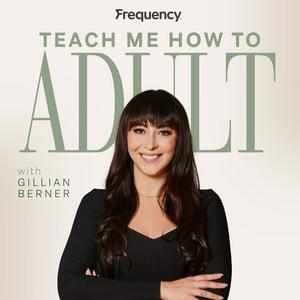
Teach Me How To Adult tackles the deep questions that help us know ourselves, and each other, a little better… how do we have better conversations? How do we grow together in our relationships, instead of apart? How do we stay optimistic when the world is a dumpster fire? Are we really in a loneliness epidemic? How do we cultivate more awe? Why are everyone’s hormones so out of whack? Is everyone having more sex than me?
Join host and writer Gillian Berner every week for expert interviews and meaningful conversations on the growth, changes, and transitions of adulthood. Wherever you are on your journey, we’re here to figure out the messiness of being human, together.
Sítio Web de podcastOuve Teach Me How To Adult, Squiggly Careers e muitos outros podcasts de todo o mundo com a aplicação radio.pt
Obtenha a aplicação gratuita radio.pt
- Guardar rádios e podcasts favoritos
- Transmissão via Wi-Fi ou Bluetooth
- Carplay & Android Audo compatìvel
- E ainda mais funções
Obtenha a aplicação gratuita radio.pt
- Guardar rádios e podcasts favoritos
- Transmissão via Wi-Fi ou Bluetooth
- Carplay & Android Audo compatìvel
- E ainda mais funções
Teach Me How To Adult
Leia o código,
descarregue a aplicação,
ouça.
descarregue a aplicação,
ouça.
 Portugal

