
Ouve este podcast gratuitamente na aplicação: Descarrega gratuitamente na App Store
radio.pt
Sleeptimer
Guardar rádio
270 episódios
Kabbalah for Everyone — Lesson 23: Chessed: The Courage to Make Room for Another Person
11/11/2026 | 1h 1minSend us Fan Mail
What if kindness isn't really about what we give, but about how much room we're willing to make for another human being?
In Lesson 23 of Kabbalah for Everyone, Rabbi Yisroel Bernath takes us on a journey from the mind into the heart as we explore Chessed, the first of the seven emotional Sefirot.
After weeks of studying Chochmah, Binah, and Daas, we discover what happens when spiritual understanding becomes emotional reality. Chessed is far more than being nice or performing occasional acts of generosity. It is the courage to step beyond ourselves and recognize that another person's life, pain, joy, and needs genuinely matter.
Drawing on the life of Avraham, the teachings of the Tanya, and the mystical principle Olam Chessed Yibaneh, the world is built through kindness, we explore why giving is essential to creation itself.
There's a challenging question at the heart of this lesson: Are we giving because someone needs us, or because we need to be needed? We examine the difference between genuine love and people-pleasing, why boundaries can actually protect kindness, and how the smallest gestures of attention can transform relationships.
Your Lesson 23 Worksheet
https://www.dropbox.com/scl/fi/ya81dp2u7eanci3jlsaqg/Lesson-23-Chessed-Student-Worksheet.pdf?rlkey=z268v1gtdeajvkrafml5e4v1b&dl=0
Key Points
From the Mind to the Heart: Chochmah brings insight, Binah develops understanding, Daas makes truth personally real, and Chessed transforms that truth into love and action.
Chessed Begins With Noticing: Before we can help another person, we must first recognize their reality. Sometimes the most meaningful kindness is simply paying attention.
Avraham's Radical Hospitality: Avraham teaches that kindness isn't an interruption of spirituality. It is spirituality expressed through human connection.
The World Is Built Through Kindness: Olam Chessed Yibaneh reminds us that existence itself is a Divine gift. We receive life so that we can become givers of life.
When Giving Becomes About the Giver: Not everything that looks generous is genuine Chessed. Sometimes our giving is driven by guilt, insecurity, control, or the desire to feel needed.
Boundaries Are Not the Opposite of Love: True kindness asks what will genuinely help another person, even when that requires saying no.
Kindness Begins at Home: Our greatest opportunities for Chessed often appear in ordinary moments with our spouses, children, friends, and colleagues.
The Power of Small Acts: A phone call, a compliment, a moment of undivided attention, or an invitation to sit together can change someone's world.
The Seven-Day Chessed Challenge: Each day, ask: Who can I notice? What can I give beyond what is required? Does my giving truly serve the other person? And once during the week, perform an anonymous act of kindness.
Become a Home for Kindness: The ultimate goal is not merely to perform acts of Chessed, but to build a life in which other people have room to belong.
#Kabbalah #kabala #chabad #chassidus #Tanya #KabbalahForEveryone #Rabbiyisroelbernath #Chessed #Chesed
Support the show
Got your own question for Rabbi Bernath? He can be reached at rabbi@jewishndg.com or http://www.theloverabbi.com
Single? You can make a profile on www.JMontreal.com and Rabbi Bernath will help you find that special someone.
Donate and support Rabbi Bernath’s work http://www.jewishndg.com/donate
Follow Rabbi Bernath’s YouTube Channel https://www.youtube.com/user/ybernath
Access Rabbi Bernath's Articles on Relationships https://medium.com/@loverabbiKabbalah for Everyone — Lesson 22: Daas: How to Close the Gap Between What You Know and How You Actually Live
04/11/2026 | 1h 20minSend us Fan Mail
We all know things we don't actually live. We know we shouldn't respond when we're angry. We know we can't control everything. We know that our worth isn't determined by other people's opinions. We know we should be more patient, grateful, and present…. yet, when life gets difficult, all that wisdom seems to disappear.
Why?
In Lesson 22 of Kabbalah for Everyone, Rabbi Yisroel Bernath explores Daas (Daat), the third intellectual faculty in Kabbalah and Chassidus, and the missing bridge between what we understand and how we actually live. Chochmah allows us to see a truth. Binah helps us understand it. But Daas is what makes that truth personal, emotionally meaningful, and real.
Drawing on the Tanya, the Zohar, and the teachings of the Chassidic masters, we discover why spiritual growth isn't about collecting more information or chasing emotional highs. It's about developing a deeper relationship with the truths we already know.
Through relatable examples involving relationships, anxiety, self-worth, and everyday decisions, Rabbi Bernath introduces a simple practice called One Truth. One Week. It's an invitation to take one truth you already believe and give it enough attention that it begins to shape your choices. Because the real test of spirituality isn't how inspired you feel during a beautiful class or on Yom Kippur. It's what remains on an ordinary Wednesday afternoon.
Download the PDF Worksheet HERE: https://www.dropbox.com/scl/fi/c2jcgszres7o16zufmumf/Lesson-22-Daat.pdf?rlkey=76snuyv1c0mw4a74afnrrqb7s&dl=0
Key Points
1. The Danger of “I Know” - Understanding something intellectually doesn't necessarily mean it has changed how we live.
2. Daas Is Connection, Not Information - The Torah uses the word yada to describe intimate connection. True knowing means developing a personal relationship with a truth.
3. The Bridge Between Head and Heart - Daas connects our intellectual understanding to our emotional world, allowing spiritual truths to influence our feelings and choices.
4. Attention Creates Intimacy - Whatever we repeatedly focus on begins to acquire emotional weight. The question is whether we're giving our attention to fear, resentment, and imagined catastrophes, or to gratitude, trust, and purpose.
5 The Key That Opens and Closes - The Zohar describes Daas as the key to the six emotional attributes. Spiritual maturity involves knowing which thoughts deserve entry into our hearts and which do not.
6. Spiritual Growth Isn't About Emotional Fireworks - You don't have to feel inspired every moment for a truth to be deeply internalized. Sometimes the greatest evidence of growth is quietly showing up and doing what matters.
7. The Four Stages of Daas - Stay with the truth. Bring it close. Let it matter. Let it last.
8. The Wednesday Test - Real transformation isn't measured by whether we stop struggling. It's measured by whether truth becomes available to us in the middle of the struggle.
Support the show
Got your own question for Rabbi Bernath? He can be reached at rabbi@jewishndg.com or http://www.theloverabbi.com
Single? You can make a profile on www.JMontreal.com and Rabbi Bernath will help you find that special someone.
Donate and support Rabbi Bernath’s work http://www.jewishndg.com/donate
Follow Rabbi Bernath’s YouTube Channel https://www.youtube.com/user/ybernath
Access Rabbi Bernath's Articles on Relationships https://medium.com/@loverabbiKabbalah for Everyone - Lesson 21: Binah: How a Flash of Insight Becomes a Life You Can Actually Build
28/10/2026 | 1h 7minSend us Fan Mail
Have you ever had a moment of incredible clarity? A flash of inspiration that made you see your life, your relationships, or your purpose completely differently? You felt certain something was about to change. Then a few days later, life went back to normal. Why does that happen?
In Lesson 21 of Kabbalah for Everyone, Rabbi Yisroel Bernath explores Binah, the second intellectual faculty of the soul, and reveals how we transform fleeting moments of inspiration into genuine understanding and lasting personal growth.
Drawing from the Tanya, Chabad Chassidut, and everyday human experience, Rabbi Bernath explains the difference between Chochmah, the initial spark of wisdom, and Binah, the patient process of developing that spark into something meaningful.
Discover why intuition isn't always truth, why overthinking can prevent genuine understanding, and how our interpretations shape our emotions, relationships, and decisions.
Through relatable stories about marriage, parenting, difficult conversations, spiritual growth, and even those text messages we probably shouldn't send, this lesson introduces the Three Dimensions of Binah: Depth, Breadth, and Length.
You'll also learn a practical 90-second exercise to help you pause, question your assumptions, and respond with greater wisdom.
At its heart, this lesson offers a beautiful perspective on love and relationships: perhaps truly loving someone means remaining curious enough to keep discovering who they are.
Because sometimes the most powerful words we can say are simply… Help me understand.
Download the PDF Worksheet HERE: https://www.dropbox.com/scl/fi/z7v81y588z41fl2ixhaeh/Lesson-21-Binah-Stay-With-It.pdf?rlkey=ijobgb6pfa4iali9pk55082za&dl=0
Key Points
Chochmah vs. Binah vs. Daat: Discover how wisdom begins as a flash, develops into understanding, and eventually becomes a truth we can internalize.
Why inspiration fades: Understand why powerful spiritual experiences and life-changing realizations don't automatically produce lasting transformation.
The Three Dimensions of Binah: Learn to develop any idea through depth (what is really true?), breadth (what else matters?), and length (how does this apply to real life?).
The danger of premature certainty: Explore how quickly we interpret situations, assume intentions, and turn incomplete information into emotional stories.
Understanding before reacting: Learn how Binah can transform difficult conversations, communication in marriage, parenting, and personal relationships.
When thinking becomes overthinking: Recognize the difference between healthy contemplation that produces clarity and endless rumination that keeps us stuck.
Wisdom and timing: Discover why even the right idea can become harmful when applied at the wrong moment, and how genuine understanding includes knowing when and how to act.
Humility without becoming a doormat: Understand why bittul, the Chassidic concept of self-transcendence, does not require abandoning personal dignity or healthy boundaries.
The 90-Second Binah Practice: Ask three questions before responding: What actually happened? What else could be true? What response fits this moment?
Binah as a form of love: Discover why deep relationships require patience, curiosity, listening, and the willingness to understand another person beyond our first impressions.
Turning knowledge into spiritual growth: Explore the Chabad practice of hisbonenus, contemplation that allows Divine wisdom to become personally meaningful.
#Binah #Chochmah #Kabbalah #chassidus #Tanya #JewishWisdom #JewishSpirituality #chabad #kabala #chassidut #personalgrowth
Support the show
Got your own question for Rabbi Bernath? He can be reached at rabbi@jewishndg.com or http://www.theloverabbi.com
Single? You can make a profile on www.JMontreal.com and Rabbi Bernath will help you find that special someone.
Donate and support Rabbi Bernath’s work http://www.jewishndg.com/donate
Follow Rabbi Bernath’s YouTube Channel https://www.youtube.com/user/ybernath
Access Rabbi Bernath's Articles on Relationships https://medium.com/@loverabbiKabbalah for Everyone - Lesson 20: Chochmah - The Power of “What?”
21/10/2026 | 1h 7minSend us Fan Mail
What if wisdom does not begin with having the answer, but with creating enough space to see something new?
In Lesson 20 of Kabbalah for Everyone, Rabbi Yisroel Bernath takes a deep dive into Chochmah, the first intellectual faculty described in Tanya: the initial flash of insight before an idea has been fully developed. Rather than treating Chochmah as simply “being smart,” this class explores it as the capacity to see the essential point before explanations, assumptions, ego, and old stories take over.
Rabbi Bernath also clarifies an important distinction from the previous lessons: the three souls and Chochmah, Binah, and Da’at are not a one-to-one map. The three souls describe who inside us is speaking and what it wants; Chochmah, Binah, and Da’at describe how an idea moves through the mind.
At the heart of the lesson is the Chassidic reading of Chochmah as “Koach Mah” - the power of “What?” Wisdom begins when “I know” becomes quiet enough to ask: What am I missing? What is really happening? What does G-d want from me here? This is not low self-esteem. It is bittul - the humility to recognize that our current perspective may not be the whole reality.
Through examples from relationships, business, anxiety, and anger, the lesson offers a practical spiritual tool: The Thirty-Second Holy Pause. Before reacting, stop the old script, ask one honest question, wait for one clear point, and then let Binah develop it later.
Sometimes it is simply seeing differently.
Download the PDF Worksheet for Lesson 20 HERE: https://www.dropbox.com/scl/fi/0hp35s9alu7f7y00zzjph/Lesson-20-The-Holy-Pause-Chochmah.pdf?rlkey=d0vbl7v05ju3qiudolcpv807y&dl=0
Key Points
Chochmah is the first point of an idea, the flash before full understanding.
Chochmah is not the same thing as being knowledgeable or intelligent.
The three souls and Chochmah-Binah-Da’at are two different maps of the same human being.
The three souls ask: Who inside me is speaking, and what does it want?
Chochmah, Binah, and Da’at ask: How is an idea moving through my mind?
A sudden thought is not automatically holy, wise, or true.
Chochmah is compared to sight because it grasps the whole point at once.
Binah is compared to hearing because it develops understanding piece by piece.
Chochmah helps us see the essence before getting lost in details.
Koach Mah - “What?” represents openness, receptivity, and intellectual humility.
Bittul does not mean “I am worthless.” It means, “I am not the entire reality.”
You cannot receive a new idea while you are busy defending the old one.
Three major enemies of Chochmah are certainty, speed, and ego.
Chochmah introduces three different movements: Maybe. Pause. What is true?
Wisdom asks not only, “What is this really?” but also, “What is this becoming?”
The Thirty-Second Holy Pause is a practical way to interrupt automatic reactions.
The goal is not to get a complete answer immediately - just one true point.
Chochmah must eventually be developed through Binah and internalized through Da’at.
A central spiritual question of the lesson is: “What does G-d want from me here?”
Real wisdom may begin with the courage to say: “Maybe I don’t know yet.”
#Kabbalah #kabala #Judaism #Jewish #Chochmah #Tanya #chabad #chassidus #chassidut #chassidic #Tanya #JewishWisdom #JewishSpirituality
Support the show
Got your own question for Rabbi Bernath? He can be reached at rabbi@jewishndg.com or http://www.theloverabbi.com
Single? You can make a profile on www.JMontreal.com and Rabbi Bernath will help you find that special someone.
Donate and support Rabbi Bernath’s work http://www.jewishndg.com/donate
Follow Rabbi Bernath’s YouTube Channel https://www.youtube.com/user/ybernath
Access Rabbi Bernath's Articles on Relationships https://medium.com/@loverabbiKabbalah for Everyone - Lesson 19: The Three Ways Your Mind Serves You | Chochmah, Binah & Da’at — From Knowing to Living
14/10/2026 | 40minSend us Fan Mail
Why is it that we can know something is true, understand it perfectly—and still struggle to actually live it? In this lesson of Kabbalah for Everyone, Rabbi Yisroel Bernath explores the three intellectual powers described in Kabbalah and Tanya: Chochmah, Binah, and Da’at.
Chochmah is the flash of insight.
Binah takes that insight apart, develops it, and understands it.
Da’at connects you to the idea deeply enough that it begins to influence your emotions, choices, and actions.
We connect these three powers of the mind to the framework we’ve been developing throughout the course: the G-dly Soul, Rational Soul, and Animal Soul, the 101st moment, and Truth. Plan. Power.
The question is no longer simply: What do I know? It becomes: Has what I know actually become part of me? Through practical examples, reflection exercises, and the 90-second Inner Team Meeting, we explore how Torah ideas can travel from inspiration, to understanding, to genuine inner change.
I put together a Lesson 19 worksheet so you can follow along, take notes, and work through the exercises afterward.
Download the PDF here:
https://www.dropbox.com/scl/fi/wxx5lf2h5ia86va6nlvp1/Lesson-19-The-Three-Ways-Your-Mind-Serves-You.pdf?rlkey=v4nqppzmx0iymjmp7h0k9lj20&dl=0
Key Points
Chochmah: the flash of wisdom, the initial spark or “aha.”
Binah: developing the idea, asking questions, understanding how and why.
Da’at: connecting to the idea until it becomes personally real.
Knowing something intellectually is not the same as being connected to it.
Da’at helps bridge the distance between what I know and how I live.
The G-dly Soul provides direction; the Rational Soul helps translate; the Animal Soul brings energy.
Inspiration without development often disappears.
Understanding without connection may never change behavior.
Real spiritual growth happens when an idea travels from the mind into the heart and then into action.
The Inner Team Meeting asks: What is true? What is my next wise step? What energy can help me do it?
Kabbalah does not ask us to destroy our natural drives, but to educate and redirect them.
Do not wait until every part of you agrees before doing something good.
The goal is not simply to learn more Torah—it is for Torah to increasingly become part of who we are.
---
The School for Sensitive Souls - Only 4 Spots Left
If you feel deeply, notice everything, absorb the emotional world around you, overthink, care intensely, or sometimes wonder whether your sensitivity is a blessing or a burden, The School for Sensitive Souls was created for you.
I’m intentionally keeping this group to just 18 participants, and there are now only 4 spots remaining.
Learn more and register:
https://www.kabbalah4everyone.com/checkout/sensitive-souls
---
Support Kabbalah for Everyone
If these classes have brought value to your life, you can help us continue making this learning accessible. You can also sponsor a class in honour or in memory of someone, for a birthday, anniversary, yahrtzeit, refuah, or another meaningful occasion.
Support or sponsor a class:
https://www.charidy.com/kabbalah4everyone
#Kabbalah #Judaism #chabad #chassidus #ChassidicTeachings #chassidut #Chochmah #Binah #Daat #Tanya #JewishSpirituality #Jewishpsychology
Support the show
Got your own question for Rabbi Bernath? He can be reached at rabbi@jewishndg.com or http://www.theloverabbi.com
Single? You can make a profile on www.JMontreal.com and Rabbi Bernath will help you find that special someone.
Donate and support Rabbi Bernath’s work http://www.jewishndg.com/donate
Follow Rabbi Bernath’s YouTube Channel https://www.youtube.com/user/ybernath
Access Rabbi Bernath's Articles on Relationships https://medium.com/@loverabbi
Mais podcasts de Espiritualidades






Podcasts em tendência em Espiritualidades




Sobre Kabbalah for Everyone
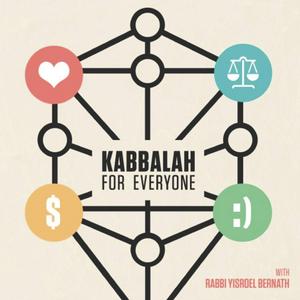
You have probably heard about Kabbalah either as a Hollywood phenomenon or something that is beyond the world that we live in. Kabbalah actually has incredible secrets that can transform your daily life. This is your chance to connect to this incredible ancient wisdom and change your life for the better. Cherished for his incredible warmth and non-judgmental personality, this hipster is not your typical rabbi. He is real, raw, unconventional and loved by thousands across the world. Rabbi Bernath has been teaching Kabbalah for over 15 years. He is also the author of three books, and continuously produces engaging content on his many social media & podcast platforms. As a professional voice-over artist, screen-writer and documentarian, he has been a part of dozens of productions, including the award winning CBC Documentary "Kosher Love".
Sítio Web de podcastOuve Kabbalah for Everyone, The David Ghiyam Podcast e muitos outros podcasts de todo o mundo com a aplicação radio.pt
Obtenha a aplicação gratuita radio.pt
- Guardar rádios e podcasts favoritos
- Transmissão via Wi-Fi ou Bluetooth
- Carplay & Android Audo compatìvel
- E ainda mais funções
Kabbalah for Everyone: Podcast do grupo
 Portugal