

Ouve este podcast gratuitamente na aplicação: Descarrega gratuitamente na App Store
radio.pt
Sleeptimer
Guardar rádio
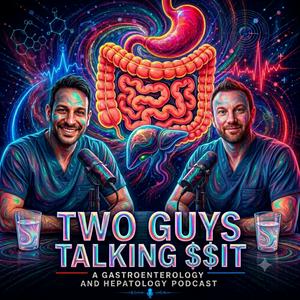
Two guys talking **it - A Gastroenterology and Hepatology podcast
A/Prof Jon Segal and Dr James Haridy
Último episódio
14 episódios
#14: Professor Nick Talley: Dyspepsia, Duodenums and the Trouble With "Functional"
09/08/2026 | 49minProfessor Nick Talley has spent 35 years building the field of neurogastroenterology, and he'd like us all to stop saying "functional". He is one of the global top medical researchers, a distinguished Australian gastroenterologist, and educator known for his seminal work on neurogastrointestinal disorders and co-authoring classic clinical examination textbooks.
His argument is that the label sends patients and doctors looking in the wrong place. A lot of these people don't have a brain problem, they have a duodenal one, and he makes the case for a term he prefers: neurogastrointestinal disorder. From there he takes us through the pathophysiology his group has spent years building, subtle duodenal eosinophilia that ordinary pathologists aren't counting, an abnormal duodenal microbiome, and food antigens setting off an immune response that eventually becomes self-sustaining.
Then the practical stuff. Why he biopsies the duodenum, why he reaches for antihistamine blockade, why amitriptyline and not nortriptyline, when mirtazapine is the right call, and what he does when everything has failed. Plus when a gastric emptying study actually changes anything, why lactulose breath tests are not helpful, his approach to cyclic vomiting, and a reminder that rumination is not vomiting.
Keywords: functional dyspepsia, DGBI, neurogastroenterology, duodenal eosinophilia, eosinophilic duodenitis, gastroparesis, Rome V, amitriptyline, microbiome, cyclic vomiting, SIBO, breath testing, Nick Talley
As always comments, questions, feedback and suggestions please send to:
X: @2guystalkingit
Email: 2guystalkingit@gmail.com
Chapters
00:19 Intro
03:32 Welcome Nick
04:22 What functional dyspepsia is, and why it's probably several diseases
06:48 Rome V, and why "functional" is a terrible word
08:14 How Nick explains the diagnosis to patients
09:00 Workup and first-line treatment: scoping, routine duodenal biopsies, PPIs, tricyclics, antihistamines
13:21 Adding an antihistamine on top of a PPI
13:49 Duodenal eosinophilia: can your pathologist actually see it?
15:43 EoE and functional dyspepsia: separate pathways
17:03 Six-food elimination, biologics, and the budesonide trial
19:28 The duodenal microbiome and swallowed streptococci
22:20 Refractory disease: mirtazapine, SNRIs, quetiapine, hypnotherapy 26:01 Smoking, alcohol, NSAIDs, exercise and diet
29:08 Exclusive enteral nutrition
30:02 Gastric emptying, gastroparesis, G-POEM and rumination
33:50 Cyclic vomiting syndrome
36:39 Why amitriptyline and not nortriptyline
37:51 Breath testing: what's useful and what's worthless
40:39 What Nick is excited about in the next five years
44:11 A weird and wonderful therapy for IBS
46:27 A career in academic medicine
50:42 Why pharma abandoned DGBI
52:16 Wrap-up#13: Jon and James - GLP-1s: From Lizard spit to liver fibrosis
12/06/2026 | 41minWe're back for Season 2, and Jon and James kick things off with one of their favourite topics: Incretin mimetics. The gut is the biggest endocrine organ in the body, and the data in steatotic liver disease is now as good as anything we have in Hepatology for steatotic liver disease.
James and Jon cover the basic pharmacology, how to start and titrate these drugs in practice, what to tell patients about stopping them, the muscle loss question, endoscopy and anaesthesia, and a brief look at where the evidence is going across cardiovascular disease, kidney disease, sleep apnoea, IBD, and cancer. There is a lot going on with these drugs and this episode is the primer.
As always comments, questions, feedback and suggestions please send to:
X: @2guystalkingit
Email: 2guystalkingit@gmail.com
Chapters
00:00 Intro: Season 2 is here
03:00 What are incretins? The gut as endocrine organ
06:30 Origin story: Gila Monster and the GLP-1 breakthrough 08:30 The drugs: semaglutide, tirzepatide, and what's coming 10:00 How they actually work: satiety, the brain, and fat oxidation
12:00 Who to start: patient selection and caution groups
13:30 Lean MASH and Southeast Asian BMI thresholds
16:00 Exercise, muscle loss, and the resistance training argument
18:30 Side effects: nausea, constipation, lipase, mood
21:00 Endoscopy and anaesthesia: what to do
24:00 Titrating in practice: James's approach
28:00 Stopping the drug: weight regain and the SURMOUNT data
33:00 Personalising treatment: who can stop, who shouldn't 35:00 Eating disorders, body image, and screening
37:00 MASH data: ESSENCE and Synergy-NASH trials
39:30 Oral formulations: what's available and caveats
40:30 Where bariatric surgery still fits
42:00 Broader indications: IBD, CVD, CKD, cancer
45:00 Global obesity trends and the public health message 47:00 Wrap-up
Papers discussed
ESSENCE trial
Synergy-NASH trial
SURMOUNT-MAINTAIN
Tirzepatide and fat oxidation, Cell Metabolism 2025
GLP-1 receptor agonists and 13 obesity-associated cancers
SELECT trial
FLOW trial
SURMOUNT-OSA
STEP 9: Semaglutide in obesity and knee osteoarthritis
Psoriatic Arthritis paper#12: Season 2 Trailer
08/06/2026 | 2minWe're back. After a longer-than-planned hiatus involving life, work, and the general chaos of being two busy clinicians: Two Guys Talking $#it is returning for Season 2.
The spark? Jon got stopped in a hospital corridor by a non-gastro colleague who'd been listening to the IBS episode with Alex Ford and had shared it with her neighbour. Turns out the show has fans in unexpected places, and that was enough to get us back in front of a microphone.
Season 2 kicks off with one episode a month and a lineup that already has a few things in the works. Same format, same vibe, no Backstreet Boys cover. Glad to have you back.
As always comments, questions, feedback and suggestions please send to:
X: @2guystalkingit
Email: 2guystalkingit@gmail.com#11: A/Prof Elliot Tapper - Liver legends, lies and lactulose
29/07/2025 | 56minToday we had the privilege of talking to a true superstar in the world of Hepatology.
Elliot B. Tapper MD is an Associate Professor in the Division of Gastroenterology and Hepatology at the University of Michigan. He is Academic Chief of Hepatology. His primary goal is to empower patients to enjoy a high quality of life. He is an expert in the management of chronic liver disease, performance of clinical trials, and big data for the study of liver disease. He has developed strategies that reduce symptoms and improve quality of life and invented tools that have helped keep patients with cirrhosis at home and away from the hospital. He is the Editor-in-Chief of Hepatology Communications.
In this episode, A/Prof Tapper discusses his journey in hepatology, the impact of social media on medical education, and his innovative research on muscle cramps and pickle juice. He debunks common myths surrounding methotrexate and liver disease, explores the complexities of ammonia levels in hepatic encephalopathy, and shares insights on frailty in liver disease management. The conversation also touches on the evolving perspectives on antibiotic prophylaxis in cirrhosis and the critical importance of diagnostic paracentesis. Elliot emphasizes the positive aspects of hepatology and the exciting developments in the field.
As always comments, questions and feedback please send to: X: @2guystalkingit
Email: 2guystalkingit@gmail.com
Chapters
05:08 Introduction to Elliot and His Work
08:14 The Power of Social Media in Medical Education
11:10 The Fascination with Pickle Juice and Muscle Cramps
14:00 Innovative Research During COVID-19
17:01 Exploring Non-Pharmaceutical Interventions
20:04 Debunking Myths Around Methotrexate and Liver Disease
23:10 Addressing Misconceptions About Medications
25:56 The Impact of AI on Medical Literature
28:56 The Ammonia Debate in Clinical Practice
30:17 Understanding Ammonia as a Clinical Biomarker
37:28 Assessing Frailty in Liver Disease Patients
44:20 Reevaluating SBP Prophylaxis in Cirrhosis
49:03 The Importance of Diagnostic Paracentesis
52:34 The Positive Side of Hepatology
Keywords
Elliot Tapper, hepatology, liver disease, medical education, social media, muscle cramps, methotrexate, ammonia levels, frailty, antibiotic prophylaxis, diagnostic paracentesis#10: A/Prof Gianluca Ianiro and Dr Benjamin Mullish - The gut microbiome in health and disease
09/07/2025 | 1h 3minToday we’re talking bugs, bowels, and breakthroughs with A/Prof Gianluca Ianiro and Dr. Ben Mullish, two microbiome maestros who make poo science strangely fascinating.
A/Prof Gianluca Ianiro is an Associate Professor of Gastroenterology at the Università Cattolica del Sacro Cuore in Rome and a Consultant at the Gastroenterology Unit of the Fondazione Policlinico Universitario Agostino Gemelli IRCCS. His clinical and research interests center on the gut microbiota, with a particular emphasis on fecal microbiota transplantation (FMT) and its applications in gastrointestinal disorders such as Clostridioides difficile infection and irritable bowel syndrome. Recognized as a leading expert in his field, Professor Ianiro has contributed extensively to international consensus guidelines and has been acknowledged for his work with the United European Gastroenterology Rising Star award. He also leads the Microbiome Clinic at Gemelli, translating cutting-edge microbiome research into clinical practice.
Dr. Benjamin Mullish is a Senior Clinical Research Fellow in the Division of Digestive Diseases at Imperial College London and an Honorary Consultant in Hepatology and Gastroenterology at St Mary’s Hospital, part of the Imperial College Healthcare NHS Trust. He is also an IPPRF Research Fellow within the Department of Metabolism, Digestion and Reproduction at Imperial College. His research focuses on the gut microbiome and faecal microbiota transplantation (FMT), particularly in the context of liver disease and gastrointestinal infections.This conversation delves into the complexities of the microbiome, particularly the gut microbiome, and its significant role in health and disease.
We discuss the dynamic nature of the microbiome, the challenges in microbiome research, and the potential for microbiome-based therapeutics. They also explore the roles of prebiotics and probiotics, the future of microbiome diagnostics, and the potential future concept for specialised microbiome clinicians to bridge the gap between research and clinical practice.
As always comments, questions and feedback please send to: X: @2guystalkingit
Email: 2guystalkingit@gmail.com
Chapters
00:20 J + J Introduction
05:11 Introduction to the Microbiome
07:16 Understanding the Gut Microbiome
10:04 The Dynamic Nature of the Microbiome
13:21 Factors Influencing the Gut Microbiome
16:15 Clinical Relevance of Stool Microbiome
19:24 Microbiome and Disease: Cancer and Liver Health
22:12 Microbiome in Inflammatory Bowel Disease (IBD) and Metabolism
25:20 Future Directions in Microbiome Research
35:20 The Uncertainty of Microbial Therapeutics
37:10 The Future of Microbiome Research
42:41 Understanding Prebiotics and Probiotics
56:49 The Need for Microbiome Clinician specialists
Mais podcasts de Medicina
 NEI PodcastEnsino, Medicina, Saúde e fitness
 Endoscopy EssentialsMedicina, Saúde e fitness
 Top of MindMedicina, Saúde e fitness
 O teu mal é sonoMedicina, Saúde e fitness
- Two guys talking **it - A Gastroenterology and Hepatology podcastMedicina, Saúde e fitness
 Médico na PráticaMedicina, Saúde e fitness
 MGFamiliarMedicina, Saúde e fitness
 The Lancet Neurology in conversation withCiência, Ciências da Vida, Ensino, Medicina, Saúde e fitness
 Endoscopy Unplugged by ESGEEnsino, Medicina, Saúde e fitness
 MedicopatiasMedicina, Saúde e fitness
Podcasts em tendência em Medicina
 Behind The Knife: The Surgery PodcastCiência, Ensino, Medicina, Saúde e fitness
 JAMA Clinical ReviewsCiência, Medicina, Saúde e fitness
 ПриемMedicina, Saúde e fitness
 The Dr. Hyman ShowMedicina, Saúde e fitness
 unPAUSED with Dr. Mary Claire HaverMedicina, Saúde e fitness, Sociedade e cultura
- Top of MindMedicina, Saúde e fitness
Sobre Two guys talking **it - A Gastroenterology and Hepatology podcast
“Two Guys Talking $#it” is a podcast where two Gastroenterologists break down complex topics into engaging, educational, and occasionally humorous conversations. From liver health to gut microbiota and everything in between, A/Professor Jonathan Segal and Dr James Haridy deliver insights, share the latest research, and discuss clinical pearls with the odd guest in tow.
Comments, suggestions, questions please contact us on twitter @2guystalkingit or leave a comment below..
Sítio Web de podcastOuve Two guys talking **it - A Gastroenterology and Hepatology podcast, NEI Podcast e muitos outros podcasts de todo o mundo com a aplicação radio.pt
Obtenha a aplicação gratuita radio.pt
- Guardar rádios e podcasts favoritos
- Transmissão via Wi-Fi ou Bluetooth
- Carplay & Android Audo compatìvel
- E ainda mais funções
Obtenha a aplicação gratuita radio.pt
- Guardar rádios e podcasts favoritos
- Transmissão via Wi-Fi ou Bluetooth
- Carplay & Android Audo compatìvel
- E ainda mais funções
Two guys talking **it - A Gastroenterology and Hepatology podcast
Leia o código,
descarregue a aplicação,
ouça.
descarregue a aplicação,
ouça.
 Portugal