

Ouve este podcast gratuitamente na aplicação: Descarrega gratuitamente na App Store
radio.pt
Sleeptimer
Guardar rádio
28 episódios
Human Entities 2026: Ana Meisel
19/06/2026 | 1h 21minHuman Entities 2026: culture in the age of artificial intelligence
Tenth edition
Tue, 2 June 2026, 6.30pm
Permacomputing: small entrances to a wide collective
Ana Meisel
Web developer and artist
Permacomputing applies permaculture, a design for Earth care, people care and fair share, to computing. It focuses on repair and inspects the all-encompassing impacts of technology through trails of ecology, conviviality and anti-capitalist politics. Communities dedicated to these ethics continue to form around the world and exercise it with art, mutual aid and practical guides to technological degrowth and maintainable systems. The aim is to impair dominant tech powers that funnel our emotions into data with seamlessly blunt interactions that coast us into a world of alienation filled with environmental harm. This momentous friction creates a new politicisation due to tech’s ubiquity and polarisation. Permacomputing’s idiosyncratic and minimal computing practices require slowness, thoughtfulness and communal knowledge sharing. This deepens relationships and sociability, and subsequently opens gateways to politics and class consciousness from ecofeminist, decolonial and communal foundations.
Ana Meisel
Ana Meisel is a Polish-German web developer and artist based in London, UK. Her focus is on historically-informed computing through the lens of critical theory, ecological responsibility, whole-systems thinking, and community organising. She is part of Superkilogirls, a collective that looks at feminist critiques of computing and automation, runs External Pages, an internet art gallery and co-organises London’s Permacomputing Club. Her work has been showcased in diverse contexts like the Cyberfeminism Index and San Jose Museum of Art. Her interests include tech resistance movements, DIY tech culture, and the Eastern Bloc.
https://ana.help
@dj_anicka
https://mastodon.social/@anmeisel
This event is part of
Human Entities 2026: culture in the age of artificial intelligence
Tenth edition
Public talks, May – June 2026Human Entities: Peter Bancel
18/06/2026 | 1h 37minHuman Entities 2026: culture in the age of artificial intelligence
Tenth edition
Wed 27 May 2026, 6.30pm
Beyond the senses: science and the mystery of psychic phenomena
Peter Bancel
Senior Researcher at the Institut Métapsychique International, Paris (France) and Fellow at the Institute of Noetic Sciences, California (US)
Anomalies – the things that don’t fit our view of the world – are often the starting point of discoveries. As physicist Richard Feynman put it, “It’s the thing that doesn’t fit that is the most interesting.” A major challenge for science today is to understand consciousness. Theories abound, progress is being made, yet there is no consensus or even a clear path forward. In situations like this, anomalies can provide crucial direction for research. In this talk, we will look at the anomaly of psi phenomena – apparent capacities of consciousness such as telepathy and precognition – and explore the scientific evidence. If the reality of psychic phenomena is established, it may serve as a signpost toward understanding how and why we experience experience at all – the core of human consciousness. We will also consider what this would imply for science more broadly and how it invites us to understand the world.
Peter Bancel
Peter Bancel is a senior researcher at the Institut Métapsychique International (IMI) in Paris and a fellow of the Institute of Noetic Sciences in California. In the early 2000s, he collaborated with the Global Consciousness Project based in Princeton (US) before joining the IMI in 2010. Alongside his scientific work, he is a long-time Buddhist practitioner and meditation teacher, with a longstanding interest in consciousness that bridges contemplative traditions and empirical research. Since joining the IMI, he has focused on how psychic phenomena – often called “psi” – can be studied using the methods of mainstream science. His work explores precognition, experimental design in psi studies, and possible connections with quantum physics. He holds a PhD in Experimental Physics from the University of Pennsylvania. After postdoctoral research at IBM, he moved to France, where he worked at the CNRS in Paris and later at the Institut des Matériaux Jean Rouxel at the University of Nantes.
https://www.imiresearch.fr
This event is part of
Human Entities 2026: culture in the age of artificial intelligence
Tenth edition
Public talks, May – June 2026
Ficha Técnica/Credits
Organised by CADA in partnership with Lisbon Architecture Triennale
Programmed by Jared Hawkey/Sofia Oliveira with guest programmers: Andrea Pavoni, Kaitlyn Davies, Zagalo Pereira.
CADA is funded by: República Portuguesa – Cultura, Juventude e Desporto / Direção-Geral das Artes
ApoiosSupport: Câmara Municipal de Lisboa, Universidade Nova de Lisboa, Faculdade de Ciências e Tecnologia – NOVA LINCS, Instituto Ciências Sociais, Universidade de Lisboa; DINAMIA’CET (ISCTE-IUL), Faculdade de Belas Artes, Universidade de Lisboa, Departamentos de Design de Comunicação e Arte Multimédia
Art direction + graphic design: Emir Karyo
Photography: Joana Linda
Sound: Diogo Melo, Fernando FadigasHuman Entities 2026: Paris Marx
18/06/2026 | 1h 30minHuman Entities 2026: culture in the age of artificial intelligence
Tenth edition
Wed 20 May 2026
Reclaiming Digital Sovereignty
Paris Marx
Tech critic
For several decades, we’ve allowed ourselves to become deeply dependent on US technologies, platforms, and digital services. The alliance between Silicon Valley and the Trump administration has shown us how that choice hasn't just made us vulnerable; it’s now empowering anti-democratic and authoritarian forces. Paris Marx will discuss how we became so dependent on US tech and what it might look like to chart of different course. Getting off US tech won’t be easy, but it presents an opportunity to reimagine how we use digital technology for the better.
Paris Marx
Paris Marx is a Canadian tech critic. He hosts the award-winning Tech Won’t Save Us podcast and speaks around the world about the politics of technology. Paris is the author of Road to Nowhere and his next book Hyperscale comes out later this year.
https://parismarx.com
https://techwontsave.us
https://roadtonowherebook.com/
This event is part of
Human Entities 2026: culture in the age of artificial intelligence
Tenth edition
Public talks, May – June 2026
Ficha Técnica/Credits
Organização CADA em parceria com a Trienal de Arquitectura de Lisboa
Organised by CADA in partnership with Lisbon Architecture Triennale
Programado por Jared Hawkey/Sofia Oliveira com programadores convidados/ Programmed by Jared Hawkey/Sofia Oliveira with guest programmers: Andrea Pavoni, Kaitlyn Davies, Zagalo Pereira.
O CADA é uma estrutura financiada por/CADA is funded by: República Portuguesa – Cultura, Juventude e Desporto / Direção-Geral das Artes
Apoios/Support: Câmara Municipal de Lisboa, NOVA-LINCS, Universidade Nova de Lisboa, Faculdade de Ciências e Tecnologia – NOVA LINCS; Instituto Ciências Sociais, Universidade de Lisboa, DINAMIA’CET (ISCTE-IUL) e/and Faculdade Belas Artes, Universidade de Lisboa, Departamentos de Design de Comunicação e Arte Multimédia.
Direção de arte + design gráfico/ Art direction + graphic design: Emir Karyo
Fotografia/ Photography: Joana Linda
Som/Sound: Diogo Melo, Fernando Fadigas
Foto/Photo: Anne Barth/re:publicaHuman Entitites 2025: Daniel Felstead
20/06/2025 | 1h 54minHuman Entities 2025: culture in the age of artificial intelligence
Ninth edition
Wed 14 May 2025, 6.30pm
Artist Talk: Welcome to Jankspace, babesDaniel FelsteadContent producer
Jankspace is the leaking residual of the stack as it metabolises meatspace into hallucinogenic sludge. It’s the Uberdriver’s chaotically impressive multi-display setup of knotted cables, flashing screens and beeping notifications. It’s literally us and our gorgeously fucked-up, uncomputable bodies that we know aren’t quite programmed right and no amount of optimization is going to fix. In this artist talk Daniel will use the concept of jankspace to explore some of the central themes of his practice, namely, the aesthetic derangement of everyday digital culture, our unhinged mediated bodies, and the idiotic delusions of transhumanism.
Daniel FelsteadDaniel Felstead is an academic and content producer whose practice focuses on the relationship between the body, technology, and culture. e is the course leader of MA Fashion Media & Communication at the London College of Fashion (UAL). Daniel has spoken and exhibited internationally including Architectural Association, Berlin Critics Week, Die Angewandte, Fundació Foto Colectania, Global Art Forum, MAPS, ICA, PAF, RCA, RISD, Shedhalle, Transmediale and V&A Museum. His PhD explored speculative modes of production, complex systems and the platform in relation to participatory art. Most recently Daniel has produced a series of critically acclaimed short film commissions that explore the myths, ideologies and realities of the metaverse, AI, biotech and neural media.
https://www.instagram.com/felstead.daniel
Credits
Organised by CADA in partnership with Lisbon Architecture Triennale and Faculty of Fine Arts, University of Lisbon
Programmed by Jared Hawkey/Sofia Oliveira with guest programmers: Andrea Pavoni, Lavínia Pereira and Olivia Bina.
CADA is funded by: República Portuguesa – Cultura / Direção-Geral das Artes
Support: Câmara Municipal de Lisboa; Universidade NOVA de Lisboa, Faculdade de Ciências e Tecnologia – NOVA LINCS; Instituto Ciências Sociais, Universidade de Lisboa; DINAMIA’CET (ISCTE-IUL) and Faculdade Belas Artes, Universidade de Lisboa, Departamentos de Design de Comunicação e Arte Multimédia.Art direction + graphic design: Emir KaryoPhotography: Renato Chorão
Sound: Fernando FadigasHuman Entities 2025: Paco Calvo
18/06/2025 | 1h 40minHuman Entities 2025: culture in the age of artificial intelligence
Ninth edition
Thur 5 June 2025, 6.30pm; book-signing session at 6pm
Planta Sapiens: Rethinking Intelligence in the Living World
Paco Calvo
Professor of Philosophy of Science, Principal Investigator of the Minimal Intelligence Laboratory (MINT Lab) at the University of Murcia (Spain)
Our conventional understanding of intelligence has long been shaped by human and animal models, leaving little room to consider the cognitive potential of plants. However, emerging research challenges this perspective, revealing that plants engage with their surroundings in ways that suggest problem-solving, flexible adaptation, and even anticipatory forms of behavior.In this talk, I will present key findings, exploring how plants process information, respond to stimuli, and coordinate their actions through sophisticated signaling mechanisms. Beyond the scientific discoveries, these insights prompt deeper philosophical questions. Why do we struggle to conceive of plants as more than passive organisms? What assumptions shape our tendency to separate the human from the nonhuman, intelligence from instinct, or agency from environment? Our conceptual and linguistic frameworks are often ill-equipped to accommodate the possibility that plants, too, participate in the web of cognition. By questioning these biases, we open the door to a more expansive and inclusive view of life; one that recognizes intelligence as a broader, more distributed phenomenon across biological systems. This shift in perspective not only deepens our understanding of plants but also challenges us to rethink fundamental ideas about mind, perception, and the interconnected nature of all living beings.
Paco Calvo
Professor of Philosophy of Science, Principal Investigator of the Minimal Intelligence Laboratory (MINT Lab) at the University of Murcia (Spain). His research interests range broadly within the cognitive sciences, with special emphasis on plant intelligence, ecological psychology and embodied cognitive science, robotics and AI. He uses time-lapse photography to explore perception-action and learning in plants. His scientific articles have appeared in Annals of Botany, Biochemical and Biophysical Research Communications, Frontiers in Neurorobotics, Frontiers in Robotics and AI, Journal of the Royal Society, Plant, Cell & Environment, Plant Signaling & Behavior, Scientific Reports, and Trends in Plant Science, among other journals. He is author of the popular science book Planta Sapiens ( 2023; with Natalie Lawrence).
https://www.um.es/mintlab/index.php/about/people/paco-calvo
Credits
Organised by CADA in partnership with Lisbon Architecture Triennale
Programmed by Jared Hawkey/Sofia Oliveira with guest programmers: Andrea Pavoni, Lavínia Pereira and Olivia Bina.
CADA is funded by: República Portuguesa – Cultura / Direção-Geral das Artes
Support: Câmara Municipal de Lisboa; Universidade NOVA de Lisboa, Faculdade de Ciências e Tecnologia – NOVA LINCS; Instituto Ciências Sociais, Universidade de Lisboa; DINAMIA’CET (ISCTE-IUL) and Faculdade Belas Artes, Universidade de Lisboa
Art direction + graphic design: Emir Karyo
Photography: Joana Linda
Sound: Diogo Melo
Mais podcasts de Arte
 FoodieArte, Gastronomia
 Sem ReservasArte, Gastronomia
 Os Cinéfilos Que Ninguém PediuArte, Sociedade e cultura
 RefeitórioArte
 Blitz Posto EmissorArte, Música, Sociedade e cultura
 O Homem Que Comia TudoArte, Gastronomia
 Prazeres InterrompidosArte, Livros
 Fashion Neurosis with Bella FreudArte, Moda e beleza, Relacionamentos, Sociedade e cultura
 O Poema Ensina a CairArte, Livros
Podcasts em tendência em Arte
 Work in Progress with Sophia BushArte, Comédia, Música
 This Cultural LifeArte, Diários pessoais, Sociedade e cultura
 Fotografia Na TeoriaArte, Artes visuais
- Os Cinéfilos Que Ninguém PediuArte, Sociedade e cultura
 Livros para OuvirArte, Ensino, Livros, Sociedade e cultura
- Prazeres InterrompidosArte, Livros
 The Lazy Genius PodcastArte, Crianças e família, Ensino, Guias, Pais e mães
 The First Ever PodcastArte, Entrevistas de música, Música
 Walking With DanteArte, Cristianismo, Ficção, Livros, Religião e espiritualidades
 Só se estraga uma estanteArte, Livros
 La librairie de l'écoArte, Ensino, Livros, Negócios
 Design Matters with Debbie MillmanArte, Design
Sobre Human Entities Podcast
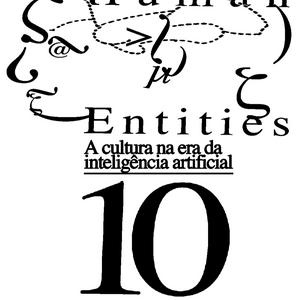
Human Entities is a series of public talks focused on technological change and its impacts – the ways in which culture and technology shape and influence each other.
Organised by CADA, the programme takes place annually in Lisbon.
Listen to recordings from 2026 to 2016.
In partnership with the Lisbon Architecture Triennale and the Fine Arts Faculty, ULisbon
Funded by: The Dir.-Gen. for the Arts of the Portuguese Ministry of Culture
Sítio Web de podcastOuve Human Entities Podcast, The Book Club e muitos outros podcasts de todo o mundo com a aplicação radio.pt
Obtenha a aplicação gratuita radio.pt
- Guardar rádios e podcasts favoritos
- Transmissão via Wi-Fi ou Bluetooth
- Carplay & Android Audo compatìvel
- E ainda mais funções
Obtenha a aplicação gratuita radio.pt
- Guardar rádios e podcasts favoritos
- Transmissão via Wi-Fi ou Bluetooth
- Carplay & Android Audo compatìvel
- E ainda mais funções

Human Entities Podcast
Leia o código,
descarregue a aplicação,
ouça.
descarregue a aplicação,
ouça.
Human Entities Podcast: Podcast do grupo
 Portugal