

Ouve este podcast gratuitamente na aplicação: Descarrega gratuitamente na App Store
radio.pt
Sleeptimer
Guardar rádio
275 episódios
The Gay Science #24 (V.364-371)
28/07/2026 | 1h 37minWe incomprehensible ones - how our thought branches in every direction, how willing we are to shed our bark, to grow, to change! In this episode, we discuss, among many other sections, important passages such as "What is Romanticism" - in which Nietzsche explains how he departed from the romantic pessimism of Wagner and Schopenhauer. He opposes the theater to music, fully breaking with his earlier views in Birth of Tragedy. Nietzsche also flips the script on some of his previous views regarding academics, and suggests that the scholarly specialist is a type of higher value than the so-called "man of letters", the master of nothing who represents himself as everything. Here, the hermit and the cynic speak, and Nietzsche spares no one his criticism.
Episode art: The Tree of Life by Gustav KlimtThe Gay Science #23 (V.356-363)
21/07/2026 | 2h 21minIn this chapter of our readthrough, we confront "the problem of the actor". Nietzsche predicts that things shall become ever more "artistic" in Europe, as the actor's talent self-falsification becomes developed in all members of society. Whereas in the Middle Ages, the individual was bound to his role as an unchangeable identity, the modern person picks up and discards roles: he gives the appearance of being a given type, but is often obliged to change roles. Nietzsche continues to increasingly offer reversals of perspective, at times even differing with previous assertions in this very same work.
Episode art: Giandomenico Tiepolo, Pulcinella in Love, 1797 (A depiction of the masked actors of the Commedia dell'arte).The Gay Science #22 (V.348-355)
14/07/2026 | 1h 54minThe grand experiment continues with a series of naturalistic explanations for the origins of ideas or modes of life. The scholar's intellectual habits are inherited "in blood and instinct"; Spinoza's philosophy is sourced to his sickliness; Darwinian theories of evolution are a product of the "musty air" of English overpopulation; religious and moralistic perspectives are the post hoc rationalizations of the weak and the tame. In this episode we'll also discuss the very important section, "On the Genius of the Species", which treats consciousness as an organ of communication.
Episode art: The Anatomy Lesson of Dr. Deijman by RembrandtThe Gay Science #21 (V.343-347)
07/07/2026 | 2h 5min"You tremble, carcass?" After a long hiatus, we shall now fearlessly embark upon book V of The Gay Science, added to the text in 1887. In this final division of the text, we'll see Nietzsche's attempt to incorporate his late philosophy, as the conclusion of his middle period meditations. Some of the hardest-hitting sections in the book appear here. Join me on this quixotic journey for the truth... after all, we, too, are still pious!
Episode art: Portrait of Henri de la Tour d'Auvergne, Vicomte de Turenne (1611–1675), as Marshall of France on horseback, by Charles le BrunQ&A #15
30/06/2026 | 2h 49minYou know what it is. Questions get answered. The Gay Science readthrough begins in a week's time.
Mais podcasts de Filosofia
 Pergunta SimplesCiência, Ciências Sociais, Comentários de notícias, Diários pessoais, Documentário, Enriquecimento individual, Ensino, Filosofia, Gestão, Negócios, Notícias, Sociedade e cultura
 Align PodcastFilosofia, Saúde alternativa, Saúde e fitness, Sociedade e cultura
 The Gray Area with Sean IllingFilosofia, Notícias, Política, Sociedade e cultura
 The Shawn Ryan ShowFilosofia, Sociedade e cultura
 Within ReasonFilosofia, Religião e espiritualidades, Sociedade e cultura
 Philosophize This!Ensino, Filosofia, Sociedade e cultura
 History of Philosophy Without Any GapsFilosofia, Sociedade e cultura
Podcasts em tendência em Filosofia
 The What Is Stoicism? PodcastEnriquecimento individual, Ensino, Filosofia, Saúde e fitness, Saúde mental, Sociedade e cultura
 Lavando Louça com SócratesFilosofia, Sociedade e cultura
- Align PodcastFilosofia, Saúde alternativa, Saúde e fitness, Sociedade e cultura
 WAKE THE DEADFilosofia, Sociedade e cultura
 Urgency of Change • The Krishnamurti PodcastFilosofia, Religião e espiritualidades, Sociedade e cultura
 Philosophy BitesEnsino, Filosofia, Sociedade e cultura
 Palestras Filosóficas Nova AcrópoleFilosofia, Sociedade e cultura
 Philosophy For Our TimesFilosofia, Sociedade e cultura
 Acid HorizonCiência, Ciências Sociais, Filosofia, Notícias, Política, Sociedade e cultura
- The Gray Area with Sean IllingFilosofia, Notícias, Política, Sociedade e cultura
 ConspiritualityCiência, Ciências Sociais, Espiritualidades, Filosofia, Religião e espiritualidades, Sociedade e cultura
 N'UniversoFilosofia, Sociedade e cultura
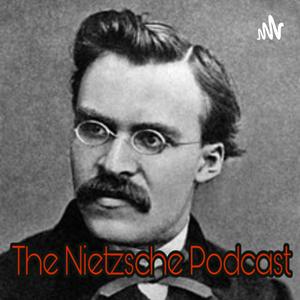
Sobre The Nietzsche Podcast
A podcast about Nietzsche's ideas, his influences, and those he influenced. Philosophy and cultural commentary through a Nietzschean lens.
Support the show at Patreon: https://www.patreon.com/untimelyreflections
A few collected essays and thoughts: https://untimely-reflections.blogspot.com/
Sítio Web de podcastOuve The Nietzsche Podcast, Gravidez No Esporte e muitos outros podcasts de todo o mundo com a aplicação radio.pt
Obtenha a aplicação gratuita radio.pt
- Guardar rádios e podcasts favoritos
- Transmissão via Wi-Fi ou Bluetooth
- Carplay & Android Audo compatìvel
- E ainda mais funções
Obtenha a aplicação gratuita radio.pt
- Guardar rádios e podcasts favoritos
- Transmissão via Wi-Fi ou Bluetooth
- Carplay & Android Audo compatìvel
- E ainda mais funções
The Nietzsche Podcast
Leia o código,
descarregue a aplicação,
ouça.
descarregue a aplicação,
ouça.
 Portugal