

Ouve este podcast gratuitamente na aplicação: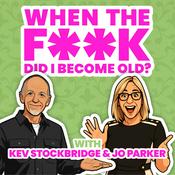 Descarrega gratuitamente na App Store
radio.pt
Sleeptimer
Guardar rádio
79 episódios
Healthspan v Lifespan - What if you run out of time before you run out of money?
06/08/2026 | 34minMost of us spend years planning for a financially secure retirement, but how often do we stop to ask whether we'll actually be well enough to enjoy it? In this episode, we dig into three interconnected timelines that shape how we age: lifespan, health span, and work span. The gaps between them are bigger than most people realise, and understanding them might just change when, and why, you decide to stop working.
Key Takeaways
The health gap is significant. In the UK, average healthy life expectancy is just 60.7 years for men and 60.9 for women, yet average lifespan stretches into the mid-80s. That leaves a potential 15+ years living with chronic illness, reduced mobility, or cognitive decline.
Where you live matters. Health span varies dramatically by region. Surrey averages 65 (men) and 66 (women). The Orkney Islands top the UK charts at 73 and 74 respectively.
Work span is the one you can change. The traditional model assumes you work from roughly 22 to 67, sacrificing your healthiest, most energetic years. But the labour market is already pushing people out after 50, while governments are pushing the pension age up. That gap has to be funded from somewhere.
Redefining wealth is the shift. If wealth only means money and assets, you're not ready to change anything. But once you redefine it to include time, freedom, energy, and health, different decisions start to make sense.
You can time travel. Aging is not a fixed decline. Lifestyle choices around movement, food, sleep, stress, alcohol, and social connection genuinely influence how fast your body ages at a cellular level. Genetics accounts for only 10 to 30% of lifespan variation.
Practical levers for your work span. Max out employer health cover now. Build savings outside of pension vehicles to bridge the gap. Consider flexible working, which you have a legal right to request in the UK. Invest in transferable skills if a career change is on your radar. And if a separation is possible, get independent asset valuations before any decisions are made.
Timestamps
00:09 Introduction and framing: why we focus too much on money and not enough on health in retirement planning
02:31 Defining the three clocks: lifespan, health span, and work span
04:57 UK and US lifespan statistics, and the sobering health span data from the ONS
07:24 What good health span actually looks like in daily life, according to Harvard Medical School
09:50 Introducing work span, the 45-year trade of time and energy for economic security
12:16 Why the deal is getting worse: rising pension age, a hostile job market for over-50s, and no state support to fill the gap
16:54 The light bulb moment: flipping the trade and redefining what wealth means
21:35 Time travel is real: how lifestyle choices influence the hallmarks of aging
28:31 Practical steps to shorten your work span and fund the gap on your own terms
https://www.health.harvard.edu/healthy-aging-and-longevity/lifespan-vs-healthspan-why-how-you-age-matters-more-than-how-long-you-liveWhat Do You Want Your Retirement To Be & Are You Ready?
30/07/2026 | 41minHere are the show notes:
When the Fk Did I Become Old? | Episode: What Do You Want Your Retirement To Be?**
Are you actually ready for retirement, or just ready to stop working? In this episode we dig into those questions live on mic, using exercises from Early Retirement Wanderlust by Richard and Jackie Pickles. With one of us weeks away from leaving a 12-year estate agency role and the other mid-redundancy, the timing could not be more personal.
Key Takeaways
Retirement is not a day, it is a life phase that could run 20 to 30 years. Going in without a plan for what you are moving towards, not just away from, is a mistake.
The life check-in scorecard from the book surfaces things you already know but have not said out loud. Curiosity and learning scored lowest for us, which was not a surprise but was a useful prompt.
Four exit criteria signal when you are genuinely ready: kids raised and empty-nested, parents no longer needing support, mortgage paid off, and enough of work. We are close on all four.
The three phases, go-go, slow-go and no-go, will compress or stretch depending on your health and finances. Everyone wants the go-go years to be the longest, so front-load the big adventures.
Concrete plans for the go-go years: a motorcycle tour across Morocco in September and three months training as a snowboard instructor in the Alps this winter. Starting strength training now, not later.
For the slow-go years, local community matters more than we have planned for. Most of our close friends are geographically scattered. Building a local peer network is a goal we are starting now.
On end-of-life care, we are both firmly in the Dignitas camp. At least one of our kids knows. The others have been told several times.
Timestamps
00:10 Introduction and where we both are right now in our working lives
02:36 Why the book frames retirement as a new life chapter, not an escape
04:33 Running through the life check-in scorecard: time, money, energy, connection
06:00 Curiosity and simplicity scores, and why the guitar is still untouched
08:05 The deeper reflection questions: richest areas, what feels out of balance
10:38 Our four personal exit criteria for knowing when the time is right
15:05 Where the go-go, slow-go and no-go framework came from (Michael Stein, 1998)
17:31 Go-go years: what they look like and why spending peaks here
19:59 Slow-go years: slower pace, grandchildren, package holidays and listening to your body
22:24 No-go years: connection, legacy, accepting care and end-of-life planning
24:23 Live exercise: what experiences feel most important while energy is high
29:44 What would you genuinely regret not doing in the go-go years
32:03 Slow-go years: where we want familiarity, routine and a sense of belonging
33:35 Adventures that could still work in the slow-go years (skiing in your 70s, absolutely)
36:00 No-go years: what a life well-lived looks like and who to protect
38:12 Stories we want to pass on, and how we want to be cared for at the end
Sources:
Early Retirement WanderlustA New Man in Number 10 - What Difference Does it Make...to me!
23/07/2026 | 30minBritain has a new Prime Minister. Andy Burnham walked into Number 10 on Monday 20 July, making him the seventh PM in a decade. We recorded this on his first day in office, so some of this may already be history by the time you're listening. We break down what his first 24 hours actually looks like behind the scenes, and then get into the financial policies being floated that could hit our wallets hard.
Key Takeaways
The first day as PM is far more dramatic than anyone tells you. Before lunch, Burnham had to handwrite four letters of last resort for Trident submarine commanders and draw up a nuclear bunker shortlist.
The mansion tax threshold may drop from £2m to £1.5m, which would pull in 146,000 more London homes almost immediately.
Inheritance tax could be scrapped and replaced with a health and social care levy. We still do not know whether that would leave us better or worse off.
The 25% tax-free pension withdrawal remains in play as a target. It was nearly cut to £100k under Reeves and could be on the table again.
The triple lock on the state pension looks safe for now, but the OECD is already pressuring the government to reform it given an ageing population.
Mortgage holders on fixed rates expiring soon are facing a painful jump. We are personally looking at a fivefold increase when our 1.4% fix ends in six weeks.
Annuity rates are the best they have been in a decade. Legal and General were quoting 7.37% last week for a 65-year-old, which makes them worth looking at again.
The honest advice: do not panic, and do not make big financial moves until the autumn budget lands in November.
Timestamps
00:00 Introduction and context: why we recorded on day one
02:30 The James Bond schedule: nuclear briefing, letters of last resort, bunker shortlist
07:18 Setting up Number 10 North and the Manchester security problem
09:38 Mansion tax: the £1.5m threshold and what it means for the housing market
12:00 Inheritance tax: scrapping it and the social care levy alternative
14:20 Income tax thresholds and a possible wealth tax
16:47 Stamp duty, council tax reform, and the north/south divide
19:04 State pension, the triple lock, and OECD pressure
21:28 Private pensions: the 25% tax-free cash withdrawal and what might change
23:49 Interest rates rising and our very personal mortgage problem
26:17 Annuities: why we are suddenly paying attention
28:36 Final thoughts: hold steady until the budgetI Know What You Did Last Summer Part 2 - Trains, Cars, Bikes & Boats
16/07/2026 | 31minIn this episode we pick up where we left off on our epic French road trip, covering everything from a stolen jumpsuit and a runaway camera, to an Aston Martin covered in warning lights and gale force winds on the Harley. We also open up about a major life change that landed the day before we left for holiday and what it means for the next chapter.
Key Takeaways
Holidays rarely go to plan and the chaos is often what makes the story worth telling.
A packed itinerary can feel like several holidays in one, but it comes at the cost of rest.
Overbooking dinners (even brilliant ones) can leave you needing to slow down halfway through a trip.
Redundancy hits differently depending on your age and stage of life. What felt manageable in your 30s and 40s feels far heavier as retirement age approaches.
Even when you've been mentally preparing for a life transition for years, the reality of it still catches you off guard.
Many close friendships form through work, so a career ending can quietly reshape your social circle. It's worth thinking early about which relationships you want to carry forward.
Planning for retirement isn't just financial. It's emotional too, and it's worth asking what you want your time, purpose and relationships to look like next.
Timestamps
00:00 – Recap of the trip so far: Aston Martin to the south of France, collecting the Harley, days of motorbike touring, and a boat trip to the Porquerolles islands
01:00 – The missing jumpsuit saga: an alterations shop mix up, a stranger walking off with it, and a promise to replace it
04:00 – The Insta360 camera disaster: it falls off the bike and gets run over
05:30 – The Aston Martin's rocky return from the garage: a cracked windscreen, warning lights, and a locked door drama in a car park
07:30 – A last minute scare when the booked Harley is involved in an accident before pickup
09:00 – Reflecting on an ambitious route with long driving days and constant movement
11:30 – Extreme weather on the bike: sudden rain and dangerously strong winds
13:00 – Too many booked dinners and the reality of five course meals night after night
14:00 – Highlights from the route: Saint-Rémy de Provence, Fréjus, Bandol, and more
16:00 – Arriving at the villa and finally slowing the pace down
18:00 – A luxury dinner at a hotel used as a filming location for a well known TV series
19:30 – Sharing the news of redundancy the day before the holiday began
21:00 – Looking back on previous redundancies at different ages and why this one feels different
23:30 – Thinking about retirement after a 39 year career and the habits that come with it
24:30 – A book on early retirement and a favourite quote about designing a more deliberate life
26:00 – A discussion on friendships built through work and how they can shift after retirement
29:00 – What retirement might mean for time spent together versus time spent apart
30:00 – Wrapping up and looking ahead to future episodes on this journeyOld is cancelled - The Ageing Myths, Money and Marketing Special
09/07/2026 | 37minAbout This Episode
By 2050, 2.1 billion people on Earth will be over 60. That is one in four humans globally, and one in three in Europe and North America. So what does that actually mean for how we live, how we are perceived, and how brands are (badly) trying to sell to us? In this episode we dig into some genuinely surprising survey data on aging stereotypes, generational attitudes, and the enormous economic power that the over-55 cohort holds -- power that marketers are largely still failing to tap into.
Key Takeaways
Every generation thinks "old" starts just far enough away from their current age to feel safe -- Gen Z puts it at 61, boomers put it at 72
Boomers are statistically more progressive on gender roles and trans rights than Gen Z males, which runs completely counter to the narrative we are fed
Only 8% of global ads feature a mature adult in a primary role, and when they do, it tends to be elasticated trousers, funeral plans, or Saga cruises
Over-55s are highly brand loyal and driven by quality, customer service, and peer reviews -- not advertising
The silver economy is worth $330 billion now and heading to $680 billion by 2035, yet brands are still largely ignoring it
Retirement is no longer a single life stage -- researchers are now segmenting older adults into four behavioural tribes: Simple Contentment, Strivers, Strugglers, and Chill Indulgence
Timestamps
00:09 – Opening stat: 2.1 billion people over 60 by 2050
00:45 – When did you first think someone was "old"? And when do you think it starts now?
03:30 – The Ipsos Attitudes to Aging survey: 24,000 people, 32 countries, and what each generation actually said
05:30 – Millennials think old age starts at 65; Gen Z puts it at 61
06:30 – No age is too old to get married or start a degree -- what the data says about perceived capability
08:00 – What would you still be doing at 80? Driving, mobility, and why stopping the car shrinks your world
11:56 – Exercising into your 80s and what functional fitness actually looks like
13:00 – The Silver Marketing Association survey and a preview of their July report
14:20 – AI and technology: older adults are less scared of it than younger generations
15:30 – The gender roles surprise: boomers more supportive of stay-at-home dads than Gen Z males
18:40 – The Andrew Tate manosphere effect and what it might be doing to Gen Z survey data
20:00 – If you had to work until 70, what would you do? (Record shop gets a mention)
22:30 – The silver economy: $330 billion now, $680 billion by 2035
24:42 – The midlife men and brands survey: how over-55 males actually make purchasing decisions
27:03 – Only 1.5% of TV characters are over 65, and 92% of ads cast younger adults
29:26 – Brand loyalty, what makes men switch, and why customer service matters so much
31:47 – Why retirement is no longer one life stage and age is a poor segmentation tool
33:30 – The four tribes of the silver economy: Simple Contentment, Strivers, Strugglers, and Chill Indulgence -- which one are you?
https://www.ipsos.com/en/ipsos-generations-report-2025
https://www.ipsos.com/en/golden-years-golden-opportunities
https://www.ipsos.com/en-us/ipsos-ai-monitor-2024
Mais podcasts de Ensino
 Fundo BrancoEnsino
 Hoy Hablamos: Podcast diario para aprender español - Learn Spanish Daily PodcastAprendizagem de idiomas, Cursos, Ensino
 anything goes with emma chamberlainDiários pessoais, Enriquecimento individual, Ensino, Sociedade e cultura
 DespolarizaEnsino, Notícias, Política, Sociedade e cultura
 Vida de TerapeutaEnriquecimento individual, Ensino
 Somos InfinitosEnsino
 100 TABUSEnsino
 Português SuaveAprendizagem de idiomas, Ensino
 Amiga, faz parteEnriquecimento individual, Ensino
 Vulneravelmente FalandoEnriquecimento individual, Ensino
Podcasts em tendência em Ensino
 Conversations with TylerEnsino, Sociedade e cultura
 N'A CaravanaEnriquecimento individual, Ensino
 Motivational Speeches by Coach Pain and MotiversityEnriquecimento individual, Ensino, Saúde e fitness, Saúde mental
 The Rich Roll PodcastEnriquecimento individual, Ensino, Saúde e fitness, Sociedade e cultura
 Excepcionais - Marcelo ToledoEnriquecimento individual, Ensino
 Le français avec FluiditéAprendizagem de idiomas, Cursos, Ensino
 Little Talk in Slow FrenchAprendizagem de idiomas, Cursos, Ensino
 The Wellness CafeEnriquecimento individual, Ensino
 Learning English from the NewsAprendizagem de idiomas, Ensino
 Canal EstoicoEnriquecimento individual, Ensino
 Thinking in EnglishAprendizagem de idiomas, Ensino
 Learning English ConversationsAprendizagem de idiomas, Ensino
 KológicaEnriquecimento individual, Ensino, Espiritualidades, Religião e espiritualidades, Saúde e fitness, Saúde mental
 Easy French: Learn French through authentic conversations | Conversations authentiques pour apprendre le françaisAprendizagem de idiomas, Cursos, Ensino, Lugares e viagens, Sociedade e cultura
 Coffee Break FrenchAprendizagem de idiomas, Cursos, Ensino
 InnerFrenchAprendizagem de idiomas, Ensino
 Professor HOCEnsino
 The Poetry of Reality with Richard DawkinsEnsino
Sobre When the f**k did I become old?
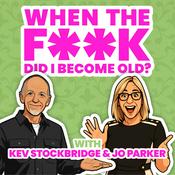
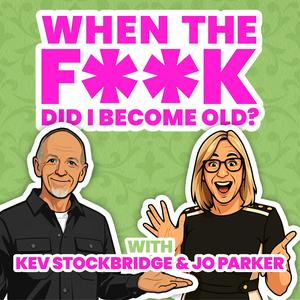
When the Fuck Did I Become Old? is the no-holds-barred podcast for everyone over 55 who is done being invisible. Co-hosted by Jo Parker and her partner Kev Stockbridge, this is real talk about ageing from 55 onwards. With humour, honesty and a healthy dose of profanity, Jo and Kev tackle everything from hot flushes and shit sleep to grief, reinvention, sex after 55 and dating in later life. Plus menopause, loneliness, retirement, mental health and the art of staying visible when society wants you to disappear.If you’re over 55 and feel like life is shifting fast physically, emotionally, financially and nobody’s talking about it properly, this is your podcast. Each episode blends Jo and Kev’s raw reflections with unfiltered conversations from guests who have lived a little (and learned a lot).Jo and Kev’s mission? To break the silence around ageing, smash the stereotypes and make getting older something we can laugh at, cry through and fully own….together.It’s ageing, without the airbrushing Season 1 - The Journney Begins...Season 2 - The Search for a Co-HostSeason 3 - A new Co-Host; my partner Kev StockbridgeSubscribe to the podcast on Apple Podcasts or Spotify Follow us onInstagram https://www.instagram.com/whenthefkdidibecomeold/Facebook https://www.facebook.com/WhenthefkdidIbecomeold/TikTok https://www.tiktok.com/@whenthefkdid_i_becomeoldYouTube https://www.youtube.com/@WhentheFdidIbecomeoldEmail us whenthefkdidibecomeold@gmail.com
Sítio Web de podcastOuve When the f**k did I become old?, Fundo Branco e muitos outros podcasts de todo o mundo com a aplicação radio.pt
Obtenha a aplicação gratuita radio.pt
- Guardar rádios e podcasts favoritos
- Transmissão via Wi-Fi ou Bluetooth
- Carplay & Android Audo compatìvel
- E ainda mais funções
Obtenha a aplicação gratuita radio.pt
- Guardar rádios e podcasts favoritos
- Transmissão via Wi-Fi ou Bluetooth
- Carplay & Android Audo compatìvel
- E ainda mais funções
When the f**k did I become old?
Leia o código,
descarregue a aplicação,
ouça.
descarregue a aplicação,
ouça.
 Portugal