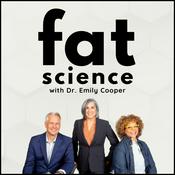
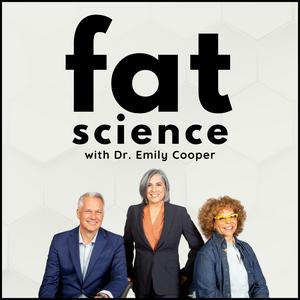
Fat Science

Dr Emily Cooper
Fat Science
Último episódio

122 episódios

  • Fat Science

    Why GLP-1 Medications Work Even When the Scale Doesn't Move

    02/2/2026 | 43min
    What if the scale isn't moving, but your health is dramatically improving?
    If you've ever felt discouraged because the number on the scale won't budge—even on a GLP-1 medication—this episode will change how you think about these drugs. Dr. Cooper breaks down the research showing that the biggest benefits have nothing to do with weight loss. It's all about metabolic health.
    This Week on Fat Science
    Dr. Emily Cooper, Mark Wright, and Andrea Taylor explore the research proving GLP-1 medications are far more than "weight loss drugs." The team explains how cardiovascular outcome trials revealed unexpected heart protection, why inflammation reduction may be the real mechanism behind these benefits, and what the latest FDA approvals for kidney disease, sleep apnea, and fatty liver mean for patients. Plus: the new oral Wegovy pill, what's coming next in metabolic medicine, and why everyone should be screened for metabolic dysfunction regardless of weight.
    What You'll Learn
    Why two-thirds of cardiovascular risk reduction from GLP-1s is completely independent of weight loss

    How these medications reduce inflammation, stabilize arterial plaque, and improve vascular function

    The difference between MASLD and MASH—and why the name change matters

    What the Flow Trial revealed about kidney protection (and why it was stopped early)

    How Zepbound earned FDA approval for sleep apnea

    Why metabolic screening should happen regardless of what the scale says

    Notable Quote
    "You can still become incredibly healthier even if the weight is more stubborn. So I think that's the thing, is to discuss with your doctor not 'Oh, I want to lose X amount of pounds' or 'How much weight do you think I should lose?' That is not the conversation. It's more, let's take a look at the health parameters."
    — Dr. Emily Cooper
    Links & Resources
    Podcast Home: fatsciencepodcast.com

    Cooper Center for Metabolism: coopermetabolic.com

    Resources from Dr. Cooper: coopermetabolic.com/resources

    Submit Your Question: [email protected] or [email protected]

    Fat Science is supported by the Diabesity Institute, a nonprofit dedicated to increasing access to effective, science-based metabolic care.
    Disclaimer: This podcast is for informational purposes only and is not intended as medical advice. Please consult with a qualified healthcare provider for personalized recommendations.
  • Fat Science

    Mailbag: Food Tracking, Mechanical Eating Troubleshooting, COVID & Metabolism, and Metformin + GLP-1 Synergy

    26/1/2026 | 41min
    This week on Fat Science, Dr. Emily Cooper, Mark Wright, and Andrea Taylor answer listener mailbag questions from California, the UK, France, Washington, Wyoming, and beyond. 
    The team breaks down why Dr. Cooper does not recommend calorie tracking (and when limited tracking can make sense), how to build confidence in eating without data, and why “mechanical eating” sometimes needs medical customization—especially for people with slow gut transit or gastroparesis-like symptoms. 
    They also dig into bile acid malabsorption after gallbladder removal, when metformin side effects deserve a second look, what we currently know about COVID-19’s potential impact on metabolic health, and why metformin and GLP-1 medications can be complementary—particularly in PCOS.
    Key Takeaways
    • Long-term calorie tracking can override physiologic cues and reinforce diet mentality.
    • Short-term, targeted tracking may be useful when guided by a clinician (e.g., nutrient deficiencies ).
    • Obesity and abnormal appetite are both manifestations of metabolic dysfunction—not simple cause and effect.
    • Mechanical eating is a framework, not a rigid rule—timing and food choices may need medical tailoring.
    • Post-gallbladder diarrhea may reflect bile acid malabsorption and can be treatable.
    • Metformin and GLP-1s often complement each other because they target different metabolic states (fasting vs fed).
    Dr. Cooper’s Actionable Tips
    • Stop daily calorie counting—focus on consistent patterns and metabolic nourishment.
    • Use mechanical eating basics: eat every few hours, include all food groups, and reduce chemical additives when possible.
    • If you’re transitioning away from tracking, consider a dietitian skilled in diet-mentality recovery.
    • If frequent eating worsens sleep or bloating, work with a medical dietitian to adjust intervals and food types (especially with slow GI transit).
    • If chronic diarrhea appears (especially after gallbladder removal), ask your clinician about bile acid malabsorption and treatment options.
    • Use labs to guide therapy: fasting insulin can signal metformin benefit; post-meal patterns can point toward GLP-1 needs.
    Notable Quote
    “Once you start using tracking to stay in a calorie range or a carbohydrate range, you’re putting your brain in front of your physiologic intuition—your body is sending you important cues all the time.”
    —Dr. Emily Cooper
    Links & Resources
    The Metabolic Links to PCOS, Release Date 2/24/25
    The COVID Connection to Diabetes & Metabolic Health, Release Date 12/16/24
    Podcast Home: https://fatsciencepodcast.com/
    Episode References: https://fatsciencepodcast.com/wp-content/uploads/2025/06/Scientific-References-Fat-Science-Episodes.pdf
    Cooper Center: https://coopermetabolic.com/podcast/
    Resources from Dr. Cooper: https://coopermetabolic.com/resources/
    Submit a Question: [email protected]

    *Fat Science: No diets, no agendas—just science that makes you feel better. This podcast is for informational purposes only and is not intended to be medical advice.
  • Fat Science

    Mailbag: GLP-1 Weight Regain, Meals vs Snacks, and Why Some People Don’t Respond

    19/1/2026 | 41min
    his week on Fat Science, Dr. Emily Cooper, Mark Wright, and Andrea Taylor answer listener mailbag questions that get to the heart of metabolic health. The team explains the real difference between meals and snacks, discusses whether GLP-1 medications can be appropriate for children in complex cases, explores why some people appear to be “non-responders” to Wegovy, and breaks down why alarming headlines about rapid weight regain miss the bigger metabolic picture. They also explain how to set a goal weight using body composition, labs, and overall health—rather than the scale alone.
    Key Questions Answered
    • What separates a meal from a snack metabolically?
    • Why can grazing all day backfire—even with healthy food?
    • Are GLP-1s ever appropriate for kids?
    • Why do some people feel hungrier as GLP-1 doses increase?
    • How are PCOS and insulin dysregulation connected?
    • What is a mixed meal tolerance test, and why does it matter?
    • Do GLP-1 users really regain weight faster?
    • How should goal weight be determined after major weight loss?
    Key Takeaways
    • Meals provide structure; snacks prevent long gaps—both matter.
    • GLP-1 “non-response” often signals deeper metabolic issues.
    • Weight regain reflects underlying dysfunction, not personal failure.
    • Maintenance dosing must be individualized.
    • Body composition matters more than BMI or scale weight.
    Dr. Cooper’s Actionable Tips
    • Eat structured meals with carbs, protein, and fats.
    • Use snacks strategically to avoid long gaps.
    • Ask about deeper glucose/insulin testing when progress stalls.
    • Prioritize DEXA body composition over scale-based goals.
    • Avoid compounded GLP-1s—especially in children.
    Notable Quote
    “If you stop treating the metabolic dysfunction, the dysfunction is still there—and the body will drive weight back to where it was headed all along.”
    —Dr. Emily Cooper
    Links & Resources
    Podcast Home: https://fatsciencepodcast.com/
    Episode References: https://fatsciencepodcast.com/wp-content/uploads/2025/06/Scientific-References-Fat-Science-Episodes.pdf
    Cooper Center: https://coopermetabolic.com/podcast/
    Resources from Dr. Cooper: https://coopermetabolic.com/resources/
    Submit a Question: [email protected]
    Fat Science: No diets, no agendas—just science that makes you feel better. This podcast is for informational purposes only and is not intended to be medical advice.
  • Fat Science

    What the Headlines Get Wrong About GLP-1 Drugs and Metabolism

    12/1/2026 | 45min
    This week on Fat Science, Dr. Emily Cooper, Mark Wright, and Andrea Taylor break down two GLP-1 studies that challenge a major media myth: GLP-1 medications don’t drive weight loss just because people eat less. Instead, drugs like tirzepatide and semaglutide create direct metabolic shifts—including increased fat oxidation and improved fuel partitioning—regardless of appetite.
    The team also explores mechanical eating, the psychological impact of “diet food,” and Andrea’s 13-year metabolic recovery journey.

    Key Questions Answered
    If both groups are dieting, why does the tirzepatide group lose more weight?
    What is metabolic adaptation, and why does dieting slow metabolism so sharply?
    How do GLP-1s directly increase fat oxidation?
    What is mechanical eating, and why do GLP-1 users need it?
    Why does ad-lib eating produce different metabolic responses than calorie restriction?
    Can mindset alone change hunger hormones? (Yes—the milkshake study.)
    Why do diet foods and diet sodas fail to improve metabolic health?
    Why is response to GLP-1s so different from person to person?

    Key Takeaways
    GLP-1s are metabolic drugs—not appetite suppressants.
    Their power comes from hormonal effects on fat burning, not reduced food intake.
    Calorie restriction still slows metabolism.
    Even on GLP-1s, dieting triggers significant metabolic slowdown.
    Ad-lib eating outperforms dieting in the research.
    Semaglutide users who ate freely did not show the extra metabolic slowdown seen in dieters.
    Mechanical eating is the most durable long-term approach.
    Regular meals and snacks protect lean mass and prevent famine signaling.
    Mindset shapes hormones.
    Believing a food is “diet” vs. “indulgent” alters ghrelin and satisfaction.
    Track body composition—not just the scale.
    DEXA scans show whether you’re losing fat, muscle, or bone.

    Dr. Cooper’s Actionable Tips
    Don’t diet on GLP-1s. Focus on fueling, not restriction.
    Use mechanical eating: predictable meals and snacks, no long gaps.
    Prioritize satisfaction: diet foods often backfire hormonally.
    Follow your real-world data: long-term changes matter more than short-term scale shifts.
    Ask about body composition testing if possible.

    Notable Quote:
    “What that study proved is that doing the calorie restriction is causing the metabolic slowing… and that’s why it’s so confusing to me that we keep advising people to restrict calories when they’re trying to improve their metabolic function.” —Dr. Emily Cooper

    Links & Resources
    Podcast Home: https://fatsciencepodcast.com/
    Episode References: https://fatsciencepodcast.com/wp-content/uploads/2025/06/Scientific-References-Fat-Science-Episodes.pdf
    Cooper Center: https://coopermetabolic.com/podcast/
    Resources from Dr. Cooper: https://coopermetabolic.com/resources/
    Submit a Question: [email protected]
    Dr. Cooper Email: [email protected]

    Fat Science: No diets, no agendas—just science that makes you feel better. This podcast is for informational only, and is not intended to be medical advice.
  • Fat Science

    GLP-1 Mailbag: Weight Regain, Leptin Resistance, Hypoglycemia & Why Calories Aren’t the Problem

    05/1/2026 | 39min
    This week on Fat Science, Dr. Emily Cooper, Mark Wright, and Andrea Taylor tackle a wide-ranging mailbag episode with listener questions from the U.S., UK, and Europe. Topics include unexpected weight regain on GLP-1s, post-meal sleepiness and hypoglycemia, metabolic dysfunction despite normal labs, GLP-1 dosing strategies, and why these medications are about metabolism, not appetite suppression.
    Key Questions Answered
    Why can weight regain happen on GLP-1s even when habits haven’t changed?
    How do leptin, ghrelin, injury, stress, and under-fueling affect weight regulation?
    What does it mean if you get extremely sleepy after meals—is it hypoglycemia?
    Do GLP-1s increase insulin in a harmful way for non-diabetics?
    Can you have metabolic dysfunction with normal A1C, cholesterol, and blood pressure?
    Do GLP-1 medications “wear off,” and how should dosing be adjusted long term?
    Are GLP-1s just appetite suppressants—or true metabolic treatment?
    Is it possible to undo decades of calorie counting and restriction-based thinking?
    What are the risks of the return to extreme thinness in celebrity culture?
    Key Takeaways
    Calories don’t explain metabolism. GLP-1 and GIP work across the brain and body—repairing signaling, not just reducing appetite.
    Leptin matters after dieting. Years of restriction and weight cycling can weaken leptin signaling, making the brain defend weight gain.
    Fueling is foundational. Medication can’t replace adequate food, sleep, and recovery.
    Post-meal fatigue is a clue. Reactive hypoglycemia is common and often misunderstood.
    Lowest effective dose wins. GLP-1 success is about pacing, not racing to the max dose.
    Chasing the “last 10 pounds” can backfire. Cosmetic restriction can create new metabolic problems.
    Dr. Cooper’s Actionable Tips
    If weight gain appears after injury or stress, focus first on sleep, regular meals, and full fueling, not restriction.
    Suspected hypoglycemia? Ask about a mixed meal tolerance test to assess glucose and insulin response.
    Stay on the lowest GLP-1 dose that’s working and adjust only when progress truly stalls.
    Push back on “appetite suppressant” language—these meds amplify hormones your body already makes.
    Notable Quote
    “GLP-1s aren’t about eating less—they’re about strengthening metabolic signaling” — Dr. Emily Cooper
    Links & Resources
    Podcast Home: Fat Science Podcast Website – https://fatsciencepodcast.com/
    Podcast Episode References: https://fatsciencepodcast.com/wp-content/uploads/2025/06/Scientific-References-Fat-Science-Episodes.pdfCooper Center for Metabolism & Fat Science Episodes: https://coopermetabolic.com/podcast/
    Resources from Dr. Cooper: https://coopermetabolic.com/resources/
    Submit a Show Question: [email protected]
    Dr. Cooper direct show email: [email protected]
    Fat Science breaks diet myths and advances the science of real metabolic health. No diets, no agendas—just science that makes you feel better. This show is informational only and does not constitute medical advice.

Mais podcasts de Saúde e fitness

Sobre Fat Science

Fat Science is a podcast on a mission to explain where our fat really comes from and why it won’t go (and stay!) away. In each episode, we share little-known facts and personal experiences to dispel misconceptions, reduce stigma, and instill hope. Fat Science is committed to creating a world where people are empowered with accurate information about metabolism and recognize that fat isn’t a failure. This podcast is for informational purposes only and is not intended to replace professional medical advice.
Sítio Web de podcast

Ouve Fat Science, Podcast 80/20 e muitos outros podcasts de todo o mundo com a aplicação radio.pt

Obtenha a aplicação gratuita radio.pt

  • Guardar rádios e podcasts favoritos
  • Transmissão via Wi-Fi ou Bluetooth
  • Carplay & Android Audo compatìvel
  • E ainda mais funções
Informação legal
Aplicações
Social
v8.4.0 | © 2007-2026 radio.de GmbH
Generated: 2/5/2026 - 11:16:01 AM