

Ouve este podcast gratuitamente na aplicação: Descarrega gratuitamente na App Store
radio.pt
Sleeptimer
Guardar rádio
251 episódios
Everything We Now Know About Women's Health. Nobody Told the Women. | MEGHAN RABBITT
07/08/2026 | 1h 2minSend us Fan Mail
Meghan Rabbitt has been a health journalist for 25 years. And the thing she said to me about reporting this book was: why don't I know this?
If she didn't know it, what are the rest of us working with?
Meghan writes about women's health for Women's Health, Oprah Daily, Prevention, and Maria Shriver's Sunday Paper. Her book, The New Rules of Women's Health, came out of years of interviews with the people actually doing the research. Her phrase for what she wants for all of us is that we become our own health journalists.
🔹 Your pregnancy history is heart information. Preeclampsia, gestational diabetes, even recurrent miscarriage. Pregnancy is the heart's first stress test, and the results don't expire when the baby arrives.
🔹 The lifetime breast cancer risk number you can calculate yourself. Meghan ran hers, brought it in, and that is the only reason she got her first MRI.
🔹 Why joining a research study can mean free care. She got a thousand dollars of genetic testing out of one.
🔹 Vaginal estrogen, and the applicator that was clearly invented by a dude. Zero instructions in the box. I spend real time counseling people through this.
🔹 What happened when she finally went to pelvic floor PT, and why "just do your Kegels" was never an assessment
Something I say on air and mean: ask us. We will talk to you for days. Nobody has to pry this out of us.
What questions have YOU been waiting to have answered?
Meghan's book: newrulesofwomenshealth.com · Instagram: @MeghanRabbitt
The Active Mom Podcast — a real mom's guide to pregnancy, postpartum, perimenopause & beyond, for active moms and the professionals who help them get there.
Quick-hit conversations with moms, providers, and researchers... because you don't have a lot of free time (you're probably listening at 1.5x right now).
Follow so you don't miss an episode. Rate & review ⭐⭐⭐⭐⭐ — it's how the next mom searching for these answers actually finds them. Share it with the friend who needs it.
Questions or topic requests? DM me 💌REWIND // Everything you've been afraid to ask about prolapse — answered by a urogynecologist — DR. CHERYL IGLESIA, MD
05/08/2026 | 39minSend us Fan Mail
Prolapse might be the single most fear-loaded word in postpartum health. Not because of what it is. Because of how little anybody tells you about it.
This week we're rewinding to one of our season one conversations, with Dr. Cheryl Iglesia, MD, urogynecologist here in Washington DC and one of the very first mentors I had in pelvic health.
My first pelvic health job was at National Rehab Hospital back in 2001, and a couple days a week I was over in her office with absolutely no idea that I was standing next to a LEGEND in the field. (I figured that out later. Much later.)
Here's what I want you to hear in this one. She says out loud that part of being a good surgeon is knowing when NOT to operate. Then she spends the rest of the hour showing you what that actually looks like.
🔹 What prolapse is, and how urogynecologists actually grade it
🔹 Why "elective" does not mean "cosmetic"
🔹 How much bigger conservative care is than most people realize: pelvic floor PT, pessaries, local hormones, bulking agents
🔹 What changed in prolapse surgery over 30 years, and the honest version of the mesh story
🔹 The average age of a prolapse surgery patient, which is younger than you're picturing
🔹 Why two women with the same exam can have completely different symptoms, and what muscle tone has to do with that
🔹 How to tell whether the provider in front of you is actually listening
If you've been handed a diagnosis and a surgery date and not a whole lot in between, this is the conversation I want in your ears. You are not doomed to a life in an armchair. You have options, and you're allowed to ask for all of them.
Which option did nobody explain to you?
ABOUT OUR GUEST
Dr. Cheryl Iglesia, MD, FACOG, FPMRS is Director of the Section of Female Pelvic Medicine and Reconstructive Surgery at MedStar Washington Hospital Center and Director of the National Center for Advanced Pelvic Surgery at MedStar Health. She is also Professor of Obstetrics/Gynecology and Urology at Georgetown University School of Medicine, and is double board-certified in Ob/Gyn and female pelvic medicine and reconstructive surgery with more than 30 years in the field. Find her on X at @cheryliglesia.
Free resources for pregnancy, postpartum and perimenopause are at carriepagliano.com.
Time Stamps
1:00 introduction
3:15 fear surrounding pelvic organ prolapse
10:00 conservative care before surgery
18:14 pelvic floor prolapse or decreased tone
26:45 recommendations for getting additional care
28:45 tissue healing and RED-S
30:10 PTs collaborating with surgeons
CONNECT WITH CARRIE
IG: https://www.instagram.com/carriepagliano/
Website: https://carriepagliano.com
CONNECT WITH CHERYL
IG: https://www.instagram.com/cbiglesia/
Website: https://www.medstarhealth.org/doctors/cheryl-bernadette-iglesia-md
The Active Mom Podcast is A Real Moms' Guide to pregnancy, postpartum, perimenopause & beyond for active moms & the professionals who help them in their journey.
This show has been a long time in the making!
You can expect conversation with moms and professionals from all aspects of the industry.
If you're like me, you don't have a lot of free time (heck, you're probably listening at 1.5x speed), so theses interviews will be quick hits to get your the pertinent information FAST!
If you love what you hear, share the podcast with a friend and leave us a 5 start rating and review. It helps us become more visible in the search algorithm! (Helps us get seen by more moms that need to hear these stories!!!!)
The Active Mom Podcast — a real mom's guide to pregnancy, postpartum, perimenopause & beyond, for active moms and the professionals who help them get there.
Quick-hit conversations with moms, providers, and researchers... because you don't have a lot of free time (you're probably listening at 1.5x right now).
Follow so you don't miss an episode. Rate & review ⭐⭐⭐⭐⭐ — it's how the next mom searching for these answers actually finds them. Share it with the friend who needs it.
Questions or topic requests? DM me 💌Pulmonary Embolism in Pregnancy: Symptoms You Shouldn’t Ignore — with RACHEL ROSOVSKY, MD
31/07/2026 | 1hSend us Fan Mail
"It is probably nothing."
The swelling is probably the third trimester. The breathlessness is probably the stairs. The ache in your calf is probably that run you should not have done. And most of the time, all of that is exactly right.
Most of the time is doing a lot of work in that sentence.
Dr. Rachel Rosovsky is a hematologist at Massachusetts General Hospital, where she has spent twenty years on blood clots, and she co-authored the first ever AHA/ACC guideline on acute pulmonary embolism.
The American Heart Association reached out about this one, and I said yes immediately, because this is the conversation I do not think most of us have ever actually had.
🔹 What a blood clot actually is, explained the way a former math and science teacher explains it
🔹 Why the symptoms of a clot and the symptoms of a normal pregnancy look almost identical
🔹 The risk factors worth raising before you are pregnant, not after
🔹 Why the postpartum window is the highest risk stretch, and also the one with the fewest appointments
🔹 Why the standard D dimer cutoff does not work in pregnancy, and what the guideline uses instead
🔹 Whether imaging is actually off limits when you are pregnant, and the honest answer
🔹 Blood clot history and hormones later on, including what the evidence says about the patch
🔹 Dr. Rachel Rosovsky's rule: take it out of your hands and put it in mine
This is not an episode about being afraid of your body. It is an episode about being allowed to ask a question without needing a good enough reason first.
Most of the women in the largest survey we have on this were never told what to watch for. That part is fixable. That is the whole reason this conversation exists.
Guest: Dr. Rachel Rosovsky, MD, MPH, hematologist, Massachusetts General Hospital. With thanks to @american_heart.
Time Stamps
0:00 introduction
3:10 from math teacher to hematologist
6:13 having a baby during med school
10:10 choosing hematology
12:31 explaining blog clots
17:11 addressing the guidelines for pregnancy
20: are you at higher risk if you’re pregnant?
24:41 potential problematic symptoms
31:47 seeing a rise in risk postpartum
35:53 where to seek care
40:23 what care can look like
47:12 looking ahead to perimenopause and menopause
52:50 follow your intuition
CONNECT WITH CARRIE
IG: https://www.instagram.com/carriepagliano/
Website: https://carriepagliano.com
Course waitlist: https://course.carriepagliano.com/RSAWL
R2R Screen: https://course.carriepagliano.com/R2Rreadyscreen
CONNECT WITH RACHEL:
LinkedIn: https://www.linkedin.com/in/rachel-rosovsky
Website: https://www.massgeneral.org/doctors/17898/rachel-rosovsky
Guidelines: https://pubmed.ncbi.nlm.nih.gov/41712898/
The Active Mom Podcast is A Real Moms' Guide to pregnancy, postpartum, perimenopause & beyond for active moms & the professionals who help them in their journey.
This show has been a long time in the making!
You can expect conversation with moms and professionals from all aspects of the industry.
If you're like me, you don't have a lot of free time (heck, you're probably listening at 1.5x speed), so theses interviews will be quick hits to get your the pertinent information FAST!
If you love what you hear, share the podcast with a friend and leave us a 5 start rating and review. It helps us become more visible in the search algorithm! (Helps us get seen by more moms that need to hear these stories!!!!)
The Active Mom Podcast — a real mom's guide to pregnancy, postpartum, perimenopause & beyond, for active moms and the professionals who help them get there.
Quick-hit conversations with moms, providers, and researchers... because you don't have a lot of free time (you're probably listening at 1.5x right now).
Follow so you don't miss an episode. Rate & review ⭐⭐⭐⭐⭐ — it's how the next mom searching for these answers actually finds them. Share it with the friend who needs it.
Questions or topic requests? DM me 💌REWIND // YOUR ESTROGEN TANKED AND NOBODY TOLD YOU WHY POSTPARTUM & PERIMENOPAUSE DR. RACHEL RUBIN
29/07/2026 | 34minSend us Fan Mail
You leave the hospital with a healthy baby, a folder of paperwork, and zero mention of the fact that your estrogen just went from about 3,000 to almost nothing.
That is where this conversation starts. In 2022, I sat down with Dr. Rachel Rubin, urologist and sexual medicine specialist, back in season one, long before she became the person everyone quotes about hormones. I've known her since she walked into the PT department at Georgetown as a resident and asked if she could shadow somebody and learn about Pelvic Floor Physical Therapy. This is her before the rest of the world caught up.
We're rewinding it now because almost everything she predicted in this episode has since happened.
🔹 The estrogen arc, in actual numbers: baby, teenager, cycling, pregnant, postpartum
🔹 Why breastfeeding puts you in a menopause-like state, and what that does to tissue
🔹 Why the bladder and urethra are full of hormone receptors nobody talks about
🔹 What to say when you're told to use more lubricant and wait until you're done nursing
🔹 Birth control, IUDs and local hormones: what actually interacts with what
🔹 The 2000s study that scared a generation off hormones, and how badly it was reported
🔹 The postpartum visit she wishes every woman got, mirror included
Since we recorded, the FDA moved on the estrogen warning label and the AUA published its first guideline on genitourinary syndrome of menopause. Rachel was already saying all of it into my microphone. Come hear where it started.
A correction on my intro: I say "FDA approval" for local vaginal estrogen in the open, and I want the record straight. Vaginal estrogen was already approved. What changed, in November 2025, is that the FDA moved to remove the black box warning from estrogen products, the warning that scared a generation of women and their doctors off it. The approval was never the problem. The label was.
This episode is education, not medical advice. If you want a clinician who actually knows this material, The Menopause Society keeps a practitioner finder at menopause.org.
Time Stamps
1:00 introduction
4:01 hormone health and changes
11:10 advocating for yourself
17:30 hormones and the urinary tract
21:30 HRT misconceptions
27:45 testing and perimenopause
29:30 advice for moms
CONNECT WITH CARRIE
IG: https://www.instagram.com/carriepagliano/
Website: https://carriepagliano.com
CONNECT WITH RACHEL
IG: https://www.instagram.com/drrachelrubin/
Website: https://www.rachelrubinmd.com/
The Active Mom Podcast — a real mom's guide to pregnancy, postpartum, perimenopause & beyond, for active moms and the professionals who help them get there.
Quick-hit conversations with moms, providers, and researchers... because you don't have a lot of free time (you're probably listening at 1.5x right now).
Follow so you don't miss an episode. Rate & review ⭐⭐⭐⭐⭐ — it's how the next mom searching for these answers actually finds them. Share it with the friend who needs it.
Questions or topic requests? DM me 💌The Thoughts You're Too Scared to Say Out Loud — Birth Trauma, Intrusive Thoughts & Postpartum Mental Health with DR. VANESSA KOMAREK (@heavy_lifting_psychologist)
24/07/2026 | 47minSend us Fan Mail
There's a thought a lot of moms have had and almost none of them have said out loud. Maybe it was an image of dropping the baby. Maybe it was something worse. And the second it showed up, the next thought was: what is wrong with me?
Dr. Vanessa Komarek is a psychologist who specializes in trauma and PTSD recovery, a powerlifter, and a mom of two under two. She came on to talk about mental load and we ended up somewhere much more honest: birth trauma, intrusive thoughts, and why so much well-meaning postpartum advice lands flat.
🔹 What mental load actually is (the cognitive part and the emotional part nobody names)
🔹 What "birth trauma" includes, and why it's broader than most people think
🔹 What's a normal reaction after a hard delivery, and the signals that it's worth reaching out
🔹 Intrusive thoughts: what they are, why fighting them backfires, and what actually helps
🔹 Why "sleep when the baby sleeps" and "take time for yourself" fall flat for so many women
🔹 The trade-offs nobody admits are baked into "balance"
🔹 All-or-nothing thinking, exercise snacks, and Vanessa's phrase for it: embracing messy action
🔹 The pelvic health parallel: what happens when the brain decides the body is fragile
This one is worth your time whether you're in it right now or 15 years past it. And if any of it lands a little too close, that's information, not a verdict.
Resources mentioned:
Postpartum Support International: postpartum.net · HelpLine 1-800-944-4773 (call or text) · free online support groups and a provider directory
If you are in crisis in the US, call or text 988.
Find Vanessa on Instagram: @heavy_lifting_psychologist
This podcast is for education and is not medical advice. Please loop in your own provider.
Time Stamps
0:00 introduction
6:07 talking about mental load
9:48 what got Vanessa into psychology
12:55 helping moms deal with trauma and expectations
19:55 ignoring the bad advice
23:48 the athlete identity
28:17 balance is a myth
35:58 helping moms overcome perfectionism
37:41 what she has learned in her journey
45:19 being an active mom
CONNECT WITH CARRIE
IG: https://www.instagram.com/carriepagliano/
Website: https://carriepagliano.com
Course waitlist: https://course.carriepagliano.com/RSAWL
R2R Screen: https://course.carriepagliano.com/R2Rreadyscreen
CONNECT WITH VANESSA:
IG: https://www.instagram.com/heavy_lifting_psychologist/
Website: www.adaptpsych.org
The Active Mom Podcast — a real mom's guide to pregnancy, postpartum, perimenopause & beyond, for active moms and the professionals who help them get there.
Quick-hit conversations with moms, providers, and researchers... because you don't have a lot of free time (you're probably listening at 1.5x right now).
Follow so you don't miss an episode. Rate & review ⭐⭐⭐⭐⭐ — it's how the next mom searching for these answers actually finds them. Share it with the friend who needs it.
Questions or topic requests? DM me 💌
Mais podcasts de Ensino
 ̶N̶ã̶o̶ fica bem falar de...Enriquecimento individual, Ensino
 Português SuaveAprendizagem de idiomas, Ensino
 Vida de TerapeutaEnriquecimento individual, Ensino
 100 TABUSEnsino
 Fundo BrancoEnsino
 The Rich Roll PodcastEnriquecimento individual, Ensino, Saúde e fitness, Sociedade e cultura
 DespolarizaEnsino, Notícias, Política, Sociedade e cultura
 Amiga, faz parteEnriquecimento individual, Ensino
 Somos InfinitosEnsino
 The Mel Robbins PodcastEnriquecimento individual, Ensino, Relacionamentos, Saúde e fitness, Saúde mental, Sociedade e cultura
Podcasts em tendência em Ensino
 Speak English Now Podcast: Learn English | Speak English without grammar.Aprendizagem de idiomas, Ensino
 Luke's ENGLISH Podcast - Learn British English with Luke ThompsonAprendizagem de idiomas, Comédia, Ensino
 Фінансова терапіяEnsino, Guias
 Black Mango PodcastEnsino
 Beginner Portuguese PodcastAprendizagem de idiomas, Ensino
 Learn French with French Podcasts - Français avec PierreAprendizagem de idiomas, Ensino
 Practice PortugueseAprendizagem de idiomas, Ensino
 CompletamenteCiência, Ciências da Vida, Enriquecimento individual, Ensino
 Learning English For WorkAprendizagem de idiomas, Ensino
 Speak French Avec Moi – Learn French Podcast for BeginnersAprendizagem de idiomas, Cursos, Ensino
 Listening Time: English PracticeAprendizagem de idiomas, Ensino
 How to Be a Better HumanEnriquecimento individual, Ensino
 Slow GermanAprendizagem de idiomas, Ensino, Lugares e viagens, Sociedade e cultura
 Motivational Speeches by Coach Pain and MotiversityEnriquecimento individual, Ensino, Saúde e fitness, Saúde mental
 Life KitCrianças e família, Enriquecimento individual, Ensino, Negócios, Saúde e fitness
 Conselhos do ConsultorEnriquecimento individual, Ensino, Investimentos, Negócios
- The Rich Roll PodcastEnriquecimento individual, Ensino, Saúde e fitness, Sociedade e cultura
Sobre Active Mom Podcast: Pregnancy, Postpartum, Perimenopause, Menopause & Beyond
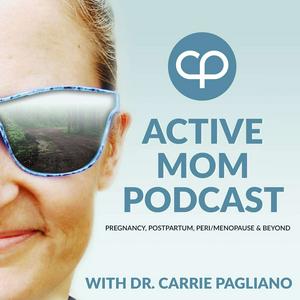
Welcome to the Active Mom Podcast — where real motherhood stories meet real science.Hosted by Dr. Carrie Pagliano, double board-certified physical therapist, runner, mom of two, and internationally recognized expert in pregnancy, postpartum, pelvic floor, and perimenopause performance.Whether you’re a mom navigating running with prolapse or leakage, a clinician supporting active women, or a lifelong athlete trying to stay strong through every hormonal season — this show gives you evidence-based guidance and real life mom stories without the fear, confusion, or shame.Each week, Dr. Carrie brings candid conversations with researchers, clinicians, elite athletes, and everyday moms to explore what it actually takes to run, lift, jump, and live confidently through pregnancy, postpartum, perimenopause, and beyond.We talk about: • Postpartum return to running & lifting • Pelvic floor symptoms (leakage, prolapse, pain) • Pregnancy exercise myths & safety • Strength training at every age • Perimenopause performance & hormone changes • Mental health, identity shifts & motherhood • The realities of being an active mom in a busy lifeReal talk. Real science. Real moms.Because you deserve to feel strong and supported — at every stage of your active life.
Sítio Web de podcastOuve Active Mom Podcast: Pregnancy, Postpartum, Perimenopause, Menopause & Beyond, ̶N̶ã̶o̶ fica bem falar de... e muitos outros podcasts de todo o mundo com a aplicação radio.pt
Obtenha a aplicação gratuita radio.pt
- Guardar rádios e podcasts favoritos
- Transmissão via Wi-Fi ou Bluetooth
- Carplay & Android Audo compatìvel
- E ainda mais funções
Obtenha a aplicação gratuita radio.pt
- Guardar rádios e podcasts favoritos
- Transmissão via Wi-Fi ou Bluetooth
- Carplay & Android Audo compatìvel
- E ainda mais funções

Active Mom Podcast: Pregnancy, Postpartum, Perimenopause, Menopause & Beyond
Leia o código,
descarregue a aplicação,
ouça.
descarregue a aplicação,
ouça.
Active Mom Podcast: Pregnancy, Postpartum, Perimenopause, Menopause & Beyond: Podcast do grupo
 Portugal