

Ouve este podcast gratuitamente na aplicação: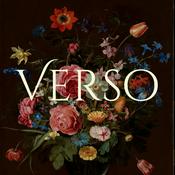 Descarrega gratuitamente na App Store
radio.pt
Sleeptimer
Guardar rádio
24 episódios
Hilma af Klint, Wassily Kandinsky, and Who Really Invented Abstract Art
07/09/2026 | 43minIn 1914, Hilma af Klint and Wassily Kandinsky showed work in the same building in Malmö. He had five paintings in the grand galleries and a reviewer comparing them to bacteria. She had one conventional landscape in a women's section near the fire exit, and ten enormous abstract canvases she'd finished seven years earlier sitting somewhere else entirely.
A century later, that coincidence has turned into a contest: the Swedish mystic who got there first, and the well-connected man who took the credit. But af Klint never used the word abstract, Kandinsky spent years insisting he wasn't ready to abandon the visible world, and nobody in 1912 could agree on what to call any of it.
This episode is about what af Klint actually made and who helped her make it, the twenty years she spent trying to find an audience for it, and why the story of a new idea always seems to need one name attached. Featuring séances in Stockholm, a museum that fit inside a suitcase, a conference in London where almost nothing happened, and the question of what we close off when we hand her the title we took from him.
Buy Me a Coffee: https://buymeacoffee.com/versopod
Follow Me on TikTok: https://tiktok.com/@versopod
Email me: hello@versopod.com
Further Reading:
Bashkoff, Tracey, ed. Hilma af Klint: Paintings for the Future. New York: Solomon R. Guggenheim Museum, 2018.
Dickerman, Leah, ed. Inventing Abstraction, 1910–1925: How a Radical Idea Changed Modern Art. New York: The Museum of Modern Art, 2012.
Voss, Julia. Hilma af Klint: A Biography. Translated by Anne Posten. Chicago: University of Chicago Press, 2022.
Voss, Julia, and Daniel Birnbaum. Hilma af Klint and Wassily Kandinsky: Dreams of the Future. New York: David Zwirner Books, 2026John Singer Sargent, Madame X, and The Strap That Scandalized Paris
24/08/2026 | 47minIn 1884, John Singer Sargent unveiled a portrait at the Paris Salon that he was certain would make him the most celebrated painter in France. Instead, a single fallen shoulder strap turned into the scandal of the season, and the room laughed at both the artist and his sitter.
The woman in the black dress was Virginie Amélie Avegno Gautreau, a New Orleans–born Creole beauty who had spent nearly her whole life in Paris and was still described in the papers as American. Sargent was an American too, born in Italy, raised nowhere in particular, and equally desperate to be claimed by a French art world that would never quite claim him. They staked their reputations on the same canvas.
Then their paths split. Sargent lost commissions, fled to London, and was back on top within five years. Amélie commissioned portrait after portrait trying to replace the image that had defined her, and watched Paris stop caring. The painting that ruined her made him, and by the time it reached the Metropolitan Museum of Art in 1916, her name had been removed from it entirely.
This episode covers the Paris Salon of 1884, the professional beauties of the Third Republic, the nineteenth-century debate over cosmetics and artifice, and what happens when two outsiders take the same risk and only one of them is allowed to recover from it.
Buy Me a Coffee: https://buymeacoffee.com/versopod
Follow Me on TikTok: https://tiktok.com/@versopod
Email me: hello@versopod.com
Further Reading:
Elizabeth L. Block, "Virginie Amélie Avegno Gautreau: Living Statue," Nineteenth-Century Art Worldwide 17, no. 2 (Autumn 2018)
Alina Cohen, "Why Madame X Scandalized the Art World," Artsy, April 9, 2019
Deborah Davis, Strapless: John Singer Sargent and the Fall of Madame X (New York: Tarcher, 2004)
Justine De Young, "1884 – John Singer Sargent, Madame X (Virginie Gautreau)," Fashion History Timeline
Stephanie L. Herdrich, "Sargent and Gautreau: Fashioning Celebrity in Paris," in Sargent and Paris (New York: Metropolitan Museum of Art, distributed by Yale University Press, 2025).The Mystery of the Lost Amber Room
10/08/2026 | 40minThe Amber Room was an entire chamber made of carved amber, backed in gold, and once called the Eighth Wonder of the World. Prussia built it, gave it to Russia, and the Nazis looted it in 1941. In 1945 it vanished in the ruins of Königsberg and has never been found. For eighty years people have searched mines, lakes, bunkers, and shipwrecks for it. This is the story of what most likely happened to it, the curator who spent his life refusing to accept it, and why a lost treasure is so much easier to live with than a destroyed one.
Buy Me a Coffee: https://buymeacoffee.com/versopod
Follow Me on TikTok: https://tiktok.com/@versopod
Email me: hello@versopod.com
Further Reading:
Catherine Scott-Clark & Adrian Levy, The Amber Room: The Controversial Truth About the Greatest Hoax of the Twentieth Century (Atlantic Books, 2004)
Russell Shor, "The History and Reconstruction of the Amber Room," Gems & Gemology, vol. 54, no. 4 (Winter 2018), Gemological Institute of America
"The Amber Room," History's Greatest Mysteries, narrated by Laurence Fishburne (A&E / The HISTORY Channel, 2022).The Art Thief and His Attic Full of Masterpieces
27/07/2026 | 57minStéphane Breitwieser stole more than 200 works of art from the museums of Europe, hid them in his mother's attic, and swore he was never a thief. No masks, no weapons, no ransom. Just a young couple in nice clothes, walking out in broad daylight with a fortune in Renaissance paintings, silver, and ivory.
He called museums "prisons for art." He said he only stole for love, never money. This episode follows the most prolific art thief in history from his first stolen pistol to a canal full of silver, and to the fire in the Alsatian woods that no one can fully explain. It's a story about beauty, obsession, and what happens when loving something means you have to be the only one who has it.
Buy Me a Coffee: https://buymeacoffee.com/versopod
Follow Me on TikTok: https://tiktok.com/@versopod
Email me: hello@versopod.com
Suggested Further Reading:
Michael Finkel, The Art Thief: A True Story of Love, Crime, and a Dangerous Obsession (Knopf, 2023)
Vincent Noce, La Collection égoïste (J. C. Lattès, 2005)
Stéphane Breitwieser with Yves de Chazournes, Confessions d'un voleur d'art (Anne Carrière, 2006).The Salon des Refusés: How Napoleon III Accidentally Opened the Door to Modern Art
13/07/2026 | 50minIn 1863, the Paris Salon rejected thousands of paintings, including Édouard Manet's Déjeuner sur l'herbe, and a nervous Napoleon III made a snap political decision: exhibit the rejects and let the public decide. The Salon des Refusés became the scandal of the season, and the laughingstock exhibition quietly set off a chain of rejections, refusals, and workarounds that led straight to the first Impressionist exhibition of 1874 and the birth of modern art. The story of the emperor who accidentally changed art history, the jury that judged eighty paintings an hour, and the painters who finally stopped asking permission.
Buy Me a Coffee: https://buymeacoffee.com/versopod
Follow Me on TikTok: https://tiktok.com/@versopod
Email me: hello@versopod.com
Suggested Further Reading
Ross King, The Judgment of Paris: The Revolutionary Decade That Gave the World Impressionism (Walker & Company, 2006)
Albert Boime, "The Salon des Refusés and the Evolution of Modern Art," Art Quarterly 32 (Winter 1969)
Patricia Mainardi, Art and Politics of the Second Empire: The Universal Expositions of 1855 and 1867 (Yale University Press, 1987)
Beth Archer Brombert, Édouard Manet: Rebel in a Frock Coat (University of Chicago Press, 1996)
Charles Baudelaire, The Painter of Modern Life (1863).
Mais podcasts de Arte
 Fashion Neurosis with Bella FreudArte, Moda e beleza, Relacionamentos, Sociedade e cultura
 O Homem Que Comia TudoArte, Gastronomia
 Vale a pena com Mariana AlvimArte, Livros
 Tantos Tempos PodcastArte, Diários pessoais, Relacionamentos, Sociedade e cultura
 O Poema Ensina a CairArte, Livros
 99% InvisibleArte, Design
 TEATRAArte
 Enterrados no JardimArte, Livros, Notícias, Política, Sociedade e cultura
 The Great Women ArtistsArte
Podcasts em tendência em Arte
 FRAMES Photography PodcastArte, Artes visuais, Tecnologia
 Pilha de LivrosAprendizagem de idiomas, Arte, Ensino, Livros
- Fashion Neurosis with Bella FreudArte, Moda e beleza, Relacionamentos, Sociedade e cultura
 DishArte, Comédia, Gastronomia, Sociedade e cultura
- TEATRAArte
 Tetragrammaton with Rick RubinArte, Filosofia, Sociedade e cultura
 The MothArte, Artes performativas
 Rádio CompanhiaArte
 The Go To Food PodcastArte, Gastronomia
 Off Camera with Sam JonesArte, Ensino, Sociedade e cultura, TV e cinema
 The Lazy Genius PodcastArte, Crianças e família, Enriquecimento individual, Ensino, Guias, Pais e mães
 ArtCurious PodcastArte, Artes visuais, História
 Japan House SPArte, Artes visuais, Design
 The Week in ArtArte, Artes visuais
 In Deep GeekArte, Ficção, Livros, TV e cinema
 Audiobooks Daily, presented by Public Domain MediaArte, Livros
 Snap JudgmentArte, Artes performativas
 Literature and HistoryArte, História, Livros
Sobre Verso: An Art History Podcast
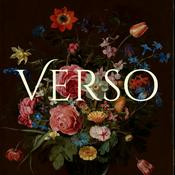
Discover the hidden side of art history with Verso. Every other week, we peel back the layers of famous and forgotten masterpieces to reveal the stories that shaped them—art heists, secret paintings, scandals, and more. Whether it’s uncovering the drama behind the canvas or exploring the unexpected connections between art and culture, Verso will change how you see the art, and the world, around you.
Want to support the show? Buy me a coffee here: https://buymeacoffee.com/versopod
Email me: hello@versopod.com
Sítio Web de podcastOuve Verso: An Art History Podcast, Fashion Neurosis with Bella Freud e muitos outros podcasts de todo o mundo com a aplicação radio.pt

Obtenha a aplicação gratuita radio.pt
- Guardar rádios e podcasts favoritos
- Transmissão via Wi-Fi ou Bluetooth
- Carplay & Android Audo compatìvel
- E ainda mais funções
Obtenha a aplicação gratuita radio.pt
- Guardar rádios e podcasts favoritos
- Transmissão via Wi-Fi ou Bluetooth
- Carplay & Android Audo compatìvel
- E ainda mais funções
Verso: An Art History Podcast
Leia o código,
descarregue a aplicação,
ouça.
descarregue a aplicação,
ouça.
 Portugal