Episode Description
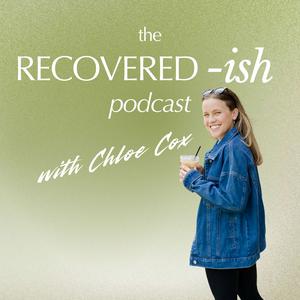
One of the most common questions I get — from clients, from Instagram, from people deep in the trenches of recovery — is this: does the eating disorder voice ever actually go away?
In this episode, I get honest about my own experience with the ED voice: what it sounded like at its worst, how it shifted through different stages of recovery, and where it lives now (spoiler: it's a lot more like an intrusive thought about tap dancing in a grocery store than a voice running my life).
This isn't a tidy yes-or-no answer, because recovery isn't tidy. But it is a real one — and one I don't think the internet talks about honestly enough.
In This Episode:
What the eating disorder voice actually is — and why it can feel like a separate voice in your head (and no, that doesn't mean you're "crazy")
The difference between ego syntonic and ego dystonic thinking, and why that shift matters in recovery
My personal experience with the ED voice from its loudest point to where it lives now
Why the voice often gets louder when you start recovering — and what that actually means
The beach ball analogy: why trying to "shut up" the ED voice often backfires
What actually moves the needle: building your own voice, not silencing theirs
The near-relapse I've talked about before — and why it happened even without a constantly active voice
Why "if I can't fully recover, why even try?" is one of the most dangerous traps in recovery
Practical tools for when the voice feels all-consuming
Timestamps:
0:44 Intro & life update 3:22 Episode topic intro: the eating disorder voice question 7:19 What is the "eating disorder voice"? 10:56 Who asks this & why 13:39 My personal experience: the voice at its worst 14:38 Do I still have disordered thoughts? My honest answer 20:42 How I got to where I am today 28:06 The beach ball metaphor: giving the voice less space 32:24 My answer: yes and no 36:54 Practical tips if the voice is all-consuming 40:03 Outro
Practical Tools Mentioned:
Name the voice: learn to label thoughts as "eating disorder thoughts" without immediately fighting them
Hear it, don't obey it: practice acknowledging the ED voice and giving yourself permission to have a different opinion — even if you don't know what that is yet
Identify the feeling underneath: fear, panic, sadness — and ask what you need that isn't an eating disorder behavior
The "noise" technique: when all else fails, just say it out loud — noise, noise, noise
Quotes from This Episode:
"The goal maybe isn't to stop having an eating disorder voice entirely. Maybe the goal is to stop having it rule your life."
"It stopped being just about the eating disorder. I started writing more about meeting new people and discovering new parts of me."
"Even if your life can be 50% better than it is right now — that is so worth it compared to the 100% hell that is living with an eating disorder."
Keywords/Tags: eating disorder recovery, eating disorder voice, ED voice, does the eating disorder voice go away, quasi-recovery, restrictive eating disorder, disordered eating, food guilt, recovery mindset, anorexia recovery, bulimia recovery, Recovered-ish podcast, Chloe Cox, recovered-ish, eating disorder therapist, eating di
Resources + Connect with Me:
Instagram: @recoverwithchloe
Recovery Skills Training: use code PODCAST for $57 off!
Leave a 5-star review on Spotify or Apple Podcasts
Subscribe on YouTube!






























 Portugal