
Ouve este podcast gratuitamente na aplicação: Descarrega gratuitamente na App Store
radio.pt
Sleeptimer
Guardar rádio
44 episódios
S3 | E8 Matt Schmidt
26/11/2026 | 46minToday I'm talking with another Matt. Matt Schmidt is a quantum healing practitioner in Green Bay, Wisconsin, who got his roots in the Dolores Cannon lineage. I worked with him a few years ago after Laura O'Malley sent me his way, and I've wanted to have him on ever since, partly because of the work he does and partly because of where he came from: a deeply left-brain, scientific world.
Matt trained in medicinal and natural products chemistry and worked in drug development, looking for treatments for central nervous system disorders and cancer. His research focused on Salvia divinorum and its potential for chronic pain and opioid addiction. Through all of it he was struggling himself. He tells me he first tried methamphetamine in pill form at 14 and kept using for about 25 years, justifying it with degrees and a number-one class rank. By the time he found this work he was on 14 medications, drinking heavily, and having grand mal seizures every week.
What changed things was a ten-year stretch of doors closing, capped by a cancer research center that lost $15 million in funding right before launch. That was his surrender. He found Dolores Cannon's work, booked a session with a practitioner in Wisconsin, and walked out with his world turned upside down. Matt says the seizures stopped that day, that he tapered off all 14 medications within two months, and that he dropped 60 pounds without changing anything else. He also got a clear message about what he was here to do, and he argued with it right there on the table.
We talk about:
Growing up knowing he came here for something big, and pushing religion away to find his own answers
What it was like to be a functioning addict whose friends only got worried once he quit
The "pill for everything" mindset and why he had to unlearn so much of what he knew
What a quantum healing session looks like, from trance to past lives to the higher self
The session where his higher self said, "You're supposed to be doing what she's doing"
What came through his sessions about COVID as a "virus of fear"
Working with everyone from a seven-year-old to a 97-year-old, an atheist one week and a nun the next
His radio dial analogy for shifting realities, and the stories his clients have brought back
Why people rubber-band back after peak experiences, and what integration takes
How changing himself ended two years of daily arguments with his boss
Forgiveness, and the question he asks himself: "Is this worth my happiness?"
The self-improvement trap, and being a human being instead of a human doing
Matt's take is that all rivers lead to the ocean, and that nobody needs him in order to heal. He puts guided processes out for free on YouTube for exactly that reason.
The experiences shared in this episode are personal stories and are not medical advice. Please talk with a qualified professional before changing any medication or treatment.
Connect with Matt: mattschmidtqh.com and on YouTube at Matt Schmidt QH
Special Guest: Matt Schmidt.S3 | E7 Jenny Stevens
19/11/2026 | 59minJenny Stevens and I met a little over three years ago, when our mutual friend Stephanie sent her my way for photos for her divorce coaching website. I've now done two full-day shoots in her Oak Park home, so it was a treat to sit across from her with microphones instead of cameras and lights. Jenny is a licensed clinical professional counselor, a therapist, and a divorce coach, and I told her straight away that I wish someone like her had been around when my own marriage came apart in 2009. Divorce coaching wasn't really a thing then. As Jenny explains it, the work is about separating the emotional storm from the rational decisions so that attorneys and mediators can stay in their lane.
Before she worked for herself, Jenny spent the bulk of her career as a high school counselor, including twelve years at The Latin School of Chicago. She came by her feel for adolescents honestly: nine schools in twelve years because of her dad's jobs, a hard stretch at boarding school, and a fifth year of high school. Her senior yearbook even predicted she'd end up working with high school students. That background turns out to be excellent training for divorce coaching, and it gave her a front-row seat to something parents rarely hear — kids walking into her office saying they wished their parents would just get divorced, while those same parents were vowing to hold on until graduation.
Jenny's own marriage was, in her words, "mid" while everything else in her life was going well. At 48, with her daughters five and seven, she looked in the mirror and knew she couldn't keep going. Nobody in her circle of friends, family, or neighbors had divorced, and for a long time she couldn't even say the word. I knew that feeling well. When my marriage ended in River Forest, my kids were five and eight, we had just joined the tennis club, and it felt like we were the first people on earth to fail at this. We talk about the shame of that, and about the friend who answered Jenny's news with a simple "Congratulations" — a shift that helped her see divorce as an opportunity rather than a failure. As she puts it, you're always going to be a family. You're just not married.
From there we get into codependency, which both of us are recovering from. Jenny describes it as not knowing where your happiness and validation come from, and letting your needs and feelings become a reaction to the other person — a death by a thousand cuts that slowly dimmed her light. I share how my own version was tangled up with workaholism, a childhood where I was told that what I wanted didn't matter, and an affair that became the thing that finally showed me there was another way and set me on a path of healing. Jenny cites research suggesting the partner who wants out has typically been thinking about it for close to four years, which matched her experience of stuffing the feeling down until the suitcase wouldn't zip.
Both of us believe the body eventually speaks up when we won't. A year and a half after her divorce, Jenny was diagnosed with breast cancer — she's now four years cancer-free — and she's convinced that repressed anger and sadness played a part. My own stuffing continued well after my divorce until I got sick too. We talk about learning to notice where emotions live in the body, the question she taught her daughters to ask (does your heart feel light or dark around this person?), and knowing your non-negotiables so you stop betraying yourself.
Jenny also shares how losing her father to a glioblastoma when she was 18 led her, at 25, to the Hoffman Process, where she learned about the four parts of the self — spiritual, emotional, physical, and intellect — and the idea that you are not the patterns you picked up from your parents. That landed for me: I tell the story of sitting at the Amitabha Stupa in Sedona when a voice that wasn't my usual one announced, "You are not your father."
We close on identity and permission. Jenny had to let go of being the counselor at a prestigious school, and later of the body she had before cancer treatment, before she could step into what was next. I talk about the masks I wear — photographer, podcast host, psychonaut — and why I say I work as a photographer rather than I am one, about borrowing $50,000 to work with a coach and calling it a PhD in me, and about how long I circled both photography and the ManKind Project before walking in the door. Jenny's advice for anyone on the edge of a change: get clear on your what and your why, and stop trying to control the how and the when. She's now opening part of her week to working with high school students again.
You can find Jenny at jennystevenscoach.com and on Instagram at @jennystevens_coach.
Special Guest: Jenny Stevens.S3 | E6 Amber Renee Schwartz
12/11/2026 | 1h 18minAmber Renee Schwartz came over to my house for this one, which felt fitting. We've known each other for about five years now. I first found her as a massage therapist around the corner, started regaling her with my psychedelic stories, and we've since sat together for a number of people's medicine journeys. Amber is also my bridge to Renee, whose session sparked this entire podcast.
Amber grew up in a Mormon home in Portland, Oregon, never really buying into it, and that inner conflict showed up as depression, brain fog, and chronic pain, compounded by scoliosis. Instead of college and journalism, she wound up in cosmetology school, where it quickly became clear people were coming to her for her touch. Massage school cracked her world open: the links between emotion, trauma, and pain, and her first introduction to Reiki. That path eventually led to energy work, shamanic tools, and guided inner journeying.
We talk about why so many of her clients arrive burned out after exhausting Western medicine, and why she sees depression, anxiety, and body pain as inseparable. Amber explains Reiki as universal life force energy, with the practitioner acting like jumper cables or a clear channel, and describes the more intuitive layer she brings: tuning into the conversation between the body and that energy. As someone who's aphantasic, I loved her reminder that intuitive information doesn't have to arrive as pictures. It can be a knowing, a phrase, a feeling. And it doesn't have to make sense right now.
From there we go into the guided inner journey work she learned in her two-year mentorship with Renee: a light, hypnotic, drug-free process where the client journeys through their own imagination, starting in nature, meeting guides and allies, and using the body as a portal. Amber describes energy extraction, where we personify something like depression or anxiety and ask what it really needs (usually love), and how this echoes Tsultrim Allione's Feeding Your Demons practice. The demon isn't slain. It's nourished, and it becomes an ally.
We also cover:
Tarot as a way to reflect your own story back to you, not predict the future, and my take on it as training wheels for synchronicity
Why AI can feel divinatory but comes with confirmation bias built in
A client whose year and a half of weekly Reiki transformed her life, and the mystery of sleep paralysis and shadow people
Validation through direct experience, from a room filling with white light at a Paul Selig event to beings moving through my body on retreat
Spiritual bypassing, including my own, and seeing the collective shadow for what it is
Why there's no end point to healing, and Starhawk's idea of the spiral dance
If you're in Chicago, I highly recommend having the Amber experience in person. If you're not, her guided journeys and Reiki work beautifully remotely.
Connect with Amber: prismatichealing.com
VhGEqFtn7vz62gmZTbfb
Special Guest: Amber Renee Schwartz.S3 | E5 Jonathan Hammond
05/11/2026 | 1h 31minI'm joined from Maui by Jonathan Hammond, an author, teacher, transpersonal counselor, and shamanic practitioner whose work bridges transpersonal and depth psychology, shamanism, magic, and the occult. Jonathan trained in theater at Michigan and Harvard and spent nearly two decades as an actor, including on Broadway, before a series of events in his late thirties led him to devote himself to spiritual work full time. He explains why actors and shamans have so much in common: instead of feeling into characters on a page, he now feels into the people who come to see him.
We zoom out to this moment in history. Jonathan points to indigenous prophecies that describe a dark "near miss" followed by a generations-long evolution of consciousness, and he frames what's emerging as a return to indigenous mind, where everything is alive, sentient, and interconnected. We talk about the Cree concept of Wetiko, the three worlds of shamanic cosmology, and how your outer world reveals what you believe about yourself. I share my own shift from "I could never afford it" to opening to possibility.
One of my favorite parts is Jonathan's walkthrough of Ho'oponopono, the Hawaiian practice of making things doubly right. I share how I led one at my mother's service and how it came back to me during a solo psilocybin journey. We close on masculine and feminine polarity, men's work, and the missing rites of initiation for young men.
In this episode, we talk about:
Why acting and shamanic work draw on the same skills
Indigenous prophecies, the Aquarian Age, and why truth may matter more than love in the age ahead
Wetiko, the "mind virus" of greed and disconnection from nature
The upper, lower, and middle worlds, and how the inner dream creates the outer dream
Seeding the unconscious with who you want to become, and why thoughts need movement in them
What each phrase of Ho'oponopono really means, and why the practice is "tedious and incessant"
Effectiveness as the measure of truth: the doctor sets the broken bone, the shaman asks why you broke it
Men's work, the Mankind Project, two-spirit traditions, and initiation for young men
Jonathan's new book, Rewilding Consciousness: Shamanism and Natural Magic, comes out in March 2027. You can find him and his work at jonathanhammond.com.
Special Guest: Jonathan Hammond.S3 | E4 Ashley Carmen
02/11/2026 | 1h 4minI'm joined from Austin by Ashley Carmen, a licensed marriage and family therapist and the founder of the Psychedelic Guide Network (PGN), where she trains practitioners in the ethics and interior work of guiding others through non-ordinary states. Ethics isn't the sexy part of psychedelic medicine, but Ashley makes the case that it's where the real transformation happens, for guides as much as for the people they serve.
Ashley traces her path on two tracks: a childhood without much honor or respect, a connection she made during an ayahuasca experience, and a clinical career where hundreds of hours of required consultation showed her what was missing in the psychedelic space. Her own road to the medicine ran from mushrooms on a pizza in sixth grade, to witnessing substance-induced psychosis in inpatient rehab, to finally answering the call with intention in Tahoe, then training with MAPS and the School of Consciousness Medicine.
From there we get into Kylea Taylor's InnerEthics model, which asks practitioners to look at the motivation and intention behind everything they say and do in the journey room, and then we get very practical about how to find a safe guide. I share some of my own experiences as a guide, including times my projections crept into someone else's journey.
In this episode, we talk about:
Why inner ethics beats a rulebook, and how it becomes shadow work for practitioners
The practitioner as the container, and what a "clean container" really means
How medicines amplify attraction, projection, and a guide's need to feel useful
The questions to ask a facilitator, and why operating in isolation is a red flag
Why a guide who won't tell you what you're taking is violating your sovereignty
Co-facilitation, group ceremony ratios, and who should avoid solo journeys
Integration, aftercare, and why three prep and three integration sessions is the minimum
Why the FDA is only one umbrella over psychedelic work, and the case for standards for coaches
You can find Ashley, and PGN's free monthly live events, at psychedelicguidenetwork.com.
Special Guest: Ashley Carmen, LMFT.
Mais podcasts de Enriquecimento individual





Podcasts em tendência em Enriquecimento individual







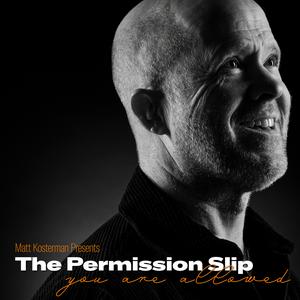
Sobre The Permission Slip
I love everything to do with consciousness - personal growth books, meditation, psychedelics, bodywork, Tantric retreats, chakras, Human Design, channeled works, you name it! For the past fifteen years, I’ve been on a deep healing journey. I regularly engage relative strangers in conversation about topics relating to consciousness, transformation and psychedelics (sometimes to their annoyance). I've been dancing around starting a podcast for a couple years now. My imposter syndrome has kept me thinking I don't have anything worthwhile to share, while I vainly attempt to find a community with whom I resonate. I've been fortunate to work with some really gifted practitioners during my journey. They not only gave me tools to heal, they gave me PERMISSION to heal. My intention in producing and distributing The Permission Slip podcast is to share knowledge of their talents with the rest of the world. Many of us have been programmed to believe that healing only comes from those in the medical profession who have gone through a particular set of training protocols. This is not true. Doctors and therapists and the like are (mostly) well-meaning and very good at what they do. Sometimes, more often than we are maybe lead to believe, what they recommend or do is not what is truly needed for healing. In the spirit of the following passage, I'm committing to a minimum of six podcasts that will be discussions with practitioners and healers from whom I've derived personal benefit. The purpose of this effort is therefore to shed light on the diverse ways of healing as well as moving into right relationship with oneself. Credits Renee LaVallee McKenna for the inspiration to create this in the first place. Abby Bruce (ma soeur) for the encouragement along the way. Damian Wiseman for the audio engineering expertise.
Sítio Web de podcastOuve The Permission Slip, Kológica e muitos outros podcasts de todo o mundo com a aplicação radio.pt
Obtenha a aplicação gratuita radio.pt
- Guardar rádios e podcasts favoritos
- Transmissão via Wi-Fi ou Bluetooth
- Carplay & Android Audo compatìvel
- E ainda mais funções
 Portugal